

Tables
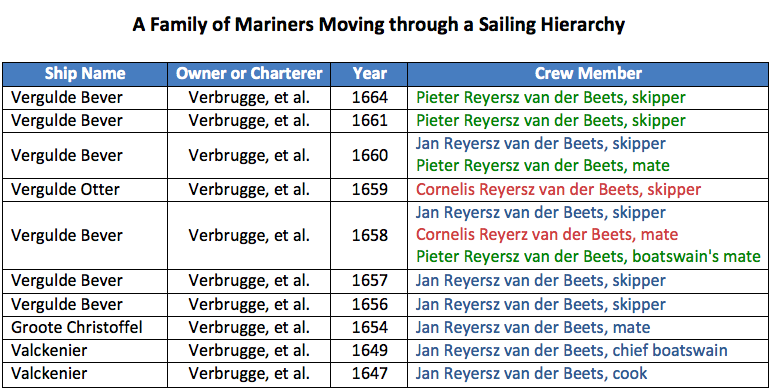
This table shows a family of mariners moving up through a sailing hierarchy. The shared patronymic, Reyersz (son of Reyer), indicates that these men may have been brothers, and certainly from the same extended family. It is remarkable that the Verbrugge family merchants appear to have engaged these same seafarers for repeated voyages, building a trusted network. This career track for family mariners helped ensure a continual supply of skippers.
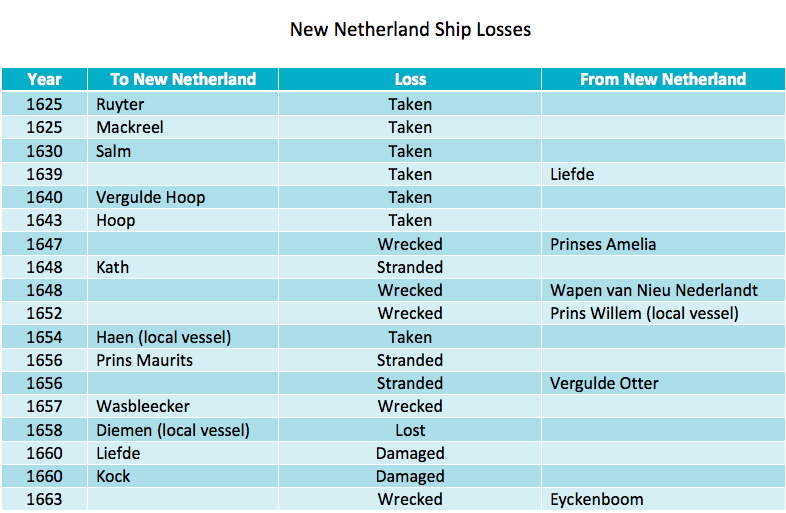
This table shows ships that were damaged, stranded, lost, wrecked, or taken, which represented major losses for New Netherland and the colonial network. These losses, affecting lives, animals, cargoes, property (including the ship itself), as well as hopes and dreams, had a ripple effect that flowed between the Dutch Republic, New Netherland, and Curaçao.
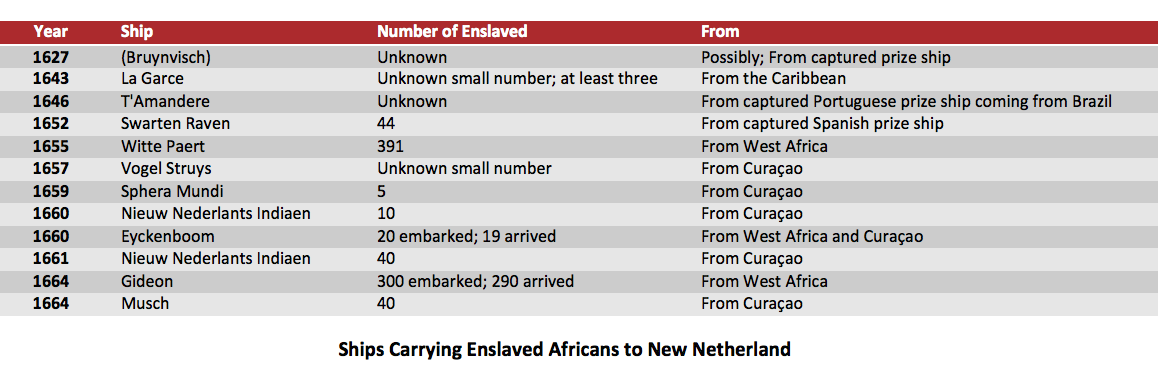
This table lists ships, by arrival year, known to have brought enslaved Africans to New Netherland. Two ships, the Witte Paert and the Gideon, brought large numbers of enslaved Africans to New Netherland. The Witte Paert is the only ship to have brought captives directly from West Africa to New Netherland. The Gideon exchanged some of its West African captives in Curaçao before arriving in New Netherland.