Translations & Transitions Govert Loockermans, a Manhattan Merchant’s Correspondence & Papers More → |
Voyages Maritime routes that shaped the Dutch North Atlantic world More → |
Zotero Bibliography Research Source: 17th century scholarly, non-fiction publications More → |
Genealogical Research What’s in a Name? Discover your ancestors’ origins More → |
Translations & Transitions Govert Loockermans, a Manhattan Merchant’s Correspondence & Papers More → |
Voyages Maritime routes that shaped the Dutch North Atlantic world More → |
Zotero Bibliography Research Source: 17th century scholarly, non-fiction publications More → |
Genealogical Research What’s in a Name? Discover your ancestors’ origins More → |

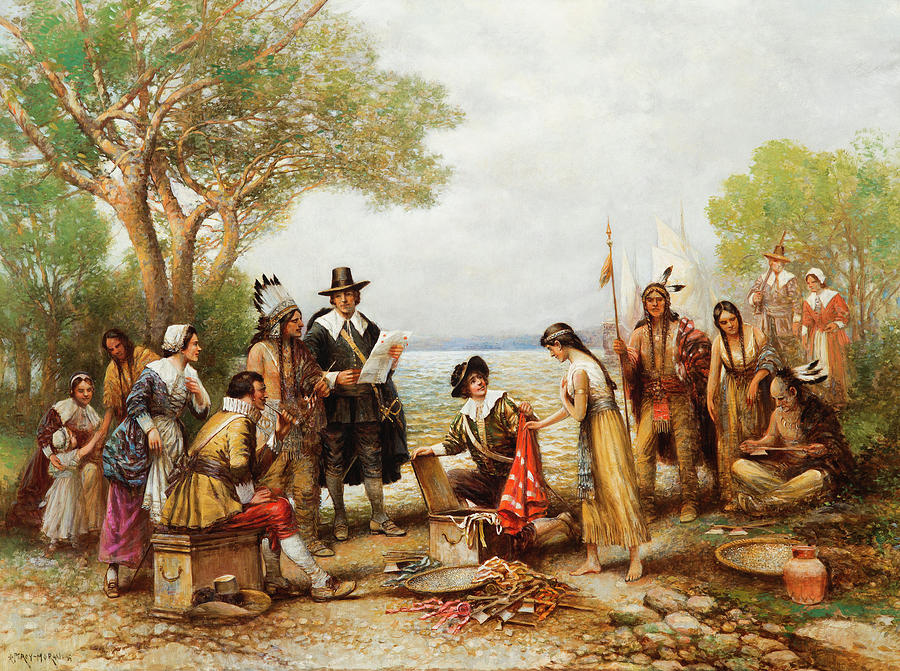
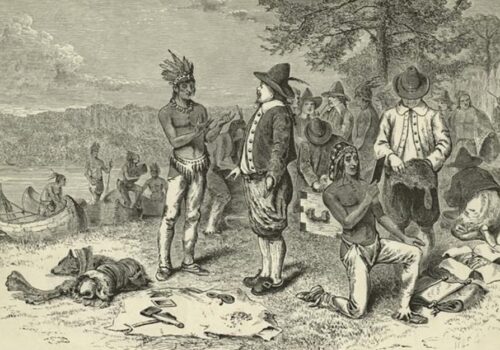
The acquisition of Indian lands by the Dutch, necessary for the success of New Netherland, began with the 1626 purchase of Manhattan (Manna-hata, Manahata, Manahatin), a Munsee word meaning ‘the place where we get bows’. Soon the Dutch secured lands in New Jersey, western Long Island, and Westchester, and in summer 1630, the vast tract around Fort Orange forming the patroonship of Rensselaerswijck. Over the next two decades and in response to the rapid depletion of beaver, the Indians in the middle Hudson Valley turned to selling land in exchange for trade goods. The process by which land was alienated by the Indians and purchased by the Dutch appears straightforward and generally absent wrongdoing or trickery by either party. From what is known, Dutch officials either sought out potential “sellers” or were approached by Native “proprietors.” The resulting conveyances contained information sufficient to fulfill the legal requirements of the colony, and apparently, what would satisfy the Indians. It is likely that Native people were quick to recognize that the Dutch wanted to purchase their land, and in selling it, they would receive valuable and needed goods in return. What is clear is that the Dutch and Indians alike saw advantages in these transactions. But land was a scarce and valuable resource for both the Indians and the Dutch, and contests over land led to the violence and brutality of war. Over time the Native people in New Netherland would find it increasingly difficult to hold the land and their place on it.
THE DUTCH AMONG THE NATIVES
We use cookies to enhance your experience on our site. By continuing, you agree to our use of cookies. See our privacy policy page for the details.
Welcome! You can explore everything you're looking for in the NNI library. Simply type a keyword into the search bar and press Enter to begin your search.
Sign in to access exclusive features and keep track of your favorite content on NNI!
New membership are not allowed.
For over three decades, NNI has helped cast light on America's Dutch roots. In 2010, it partnered with the New York State Office of Cultural Education to establish the New Netherland Research Center, with matching funds from the State of the Netherlands. NNI is registered as a 501(c)(3) non-profit organization. Contributions are tax-deductible to the extent permitted by law.