
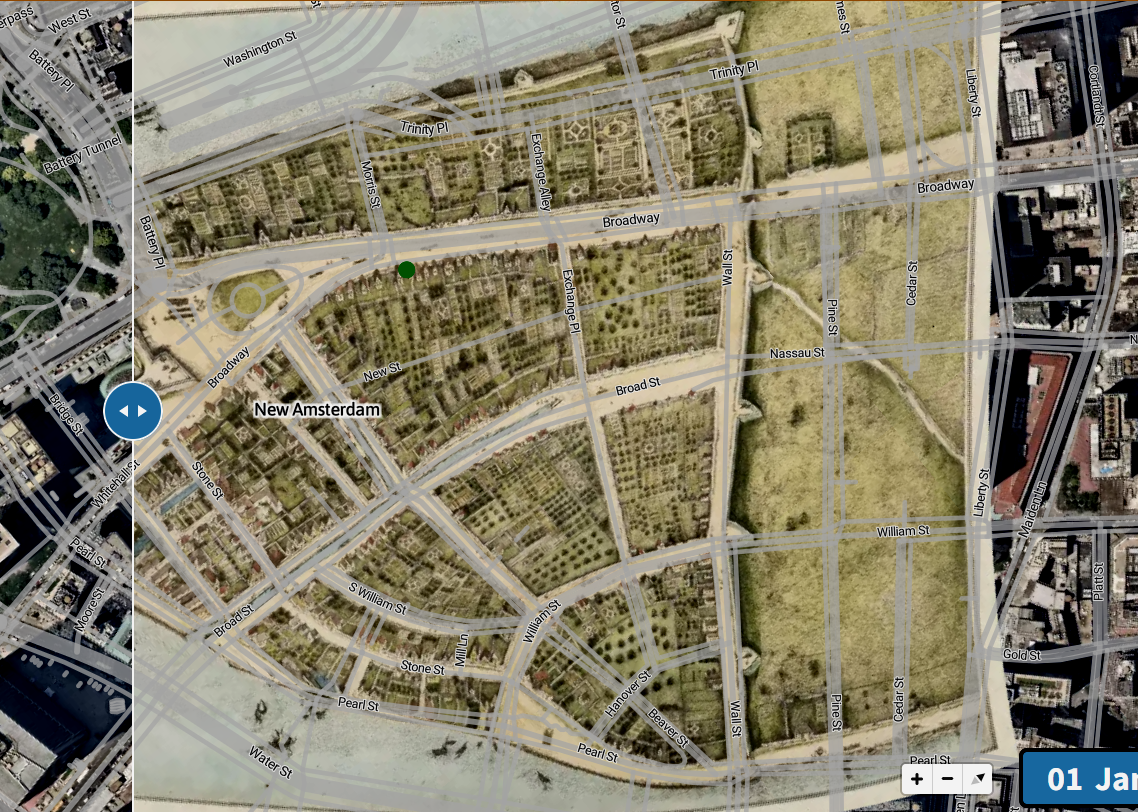
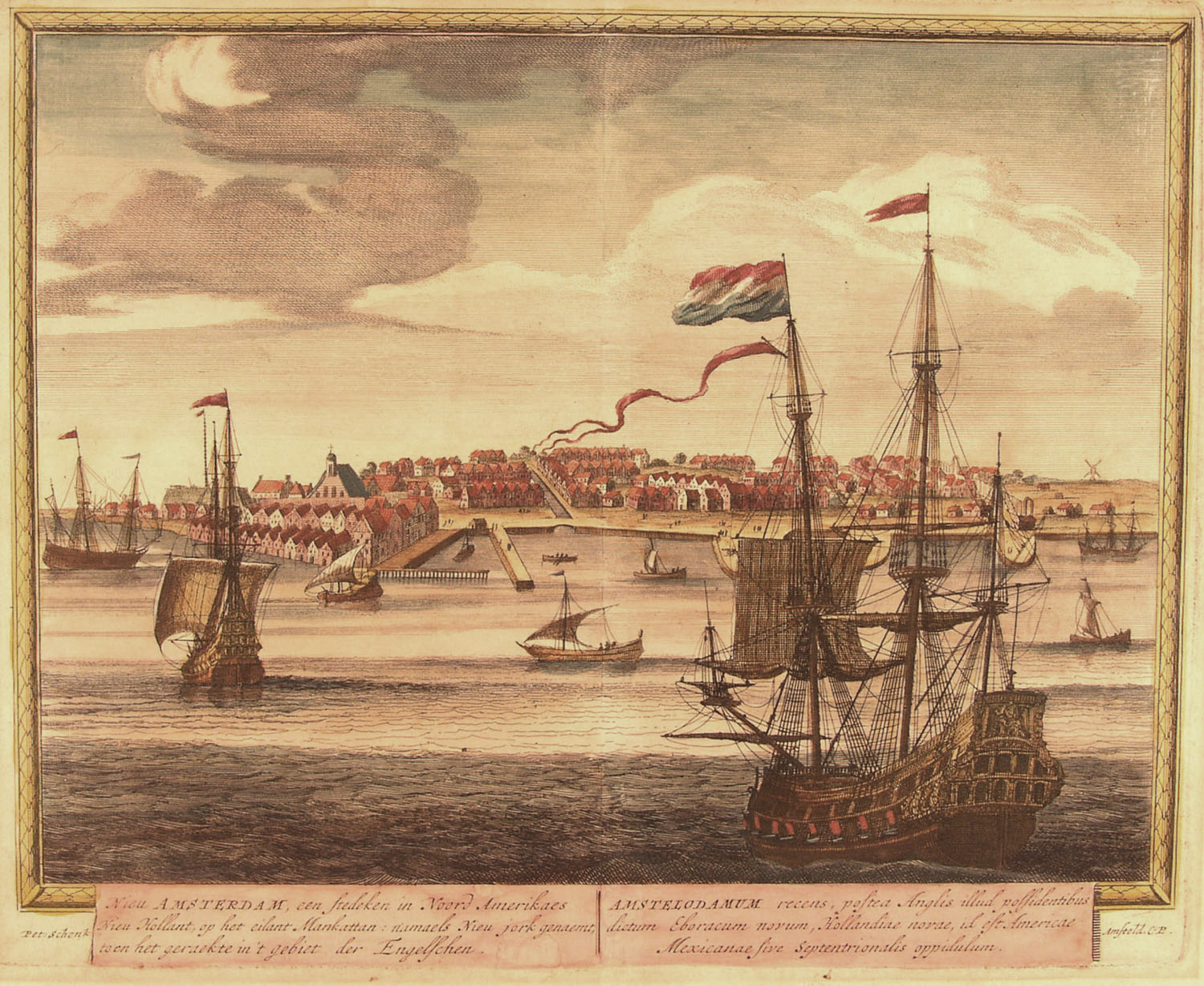
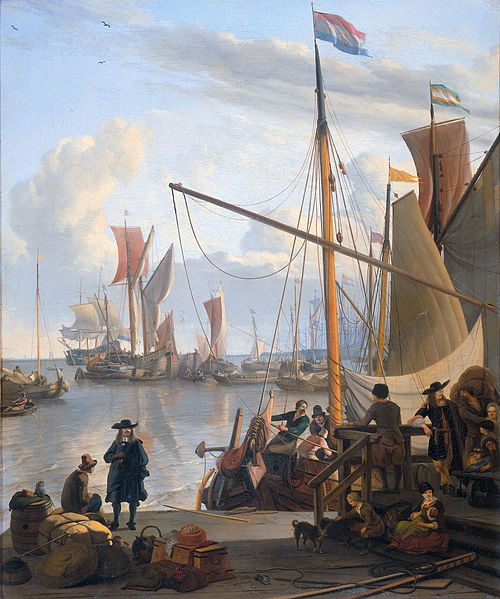

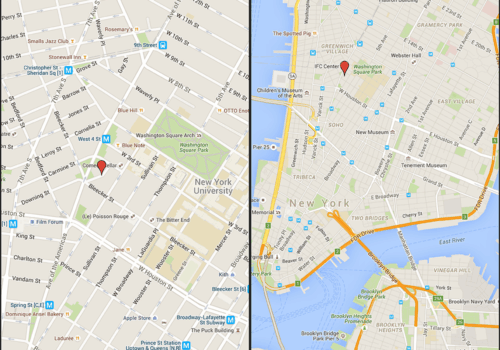
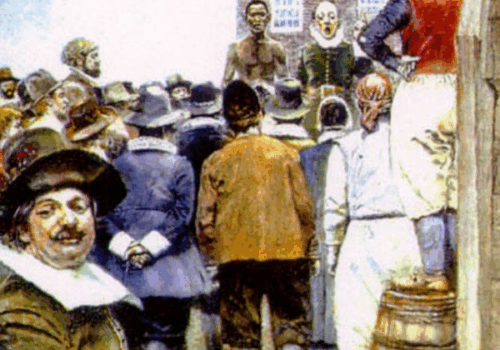
In June of 2015, Mayor Bill De Blasio unveiled a plaque in lower Manhattan to commemorate the eighteenth-century slave market that once operated at the foot of Wall Street. Together with the monument at the African Burial ground (about ten blocks north of Wall Street), these markers make up the few public reminders of slavery in the region. Although the memorials are few, the history of slavery in the city and state span a two hundred-year period, starting as early as 1626. In fact, enslaved men, women, and children helped lay the foundation of the city and state.

Slavery in New York changed considerably over the course of these two hundred years. The lives of New Netherland’s enslaved population looked nothing like those of the men, women, and children who would be traded at the Wall Street slave market a century later. Manuel de Gerrit de Reus, Sijmon Congo, and Paulo Angola were among the first enslaved men who lived in New Netherland. They had been brought to the colony only a year or two after the first Europeans settled in the region, and as Company slaves they helped build the colony’s early infrastructure. New Netherland’s enslaved population often lived, worked, and worshipped beside free white settlers. Unlike their eighteenth-century counterparts, some of these enslaved people earned wages, owned property, married and baptized their children in the Dutch Reformed Church, obtained conditional freedom, and received farmland in Manhattan.
Because New Netherland’s enslaved population did not leave any written records, their stories often remain untold. Thankfully, court records, land deeds, church records, and official correspondence, among others, do mention Manuel de Gerrit de Reus, Sijmon Congo, Paulo Angola, and many of their fellow enslaved Africans, thus leaving invaluable resources that allow us to tell at least part of their stories. Like the plaque and monument in Lower Manhattan, this exhibit hopes to draw attention to this important part of New York history, a history that is often forgotten.
Credits:
This exhibit was developed by Andrea Mosterman, assistant professor in Atlantic History at the University of New Orleans.
With special thanks to Dr. Dennis Maika for his editorial assistance and Steve McErleane for his technical skill and support.
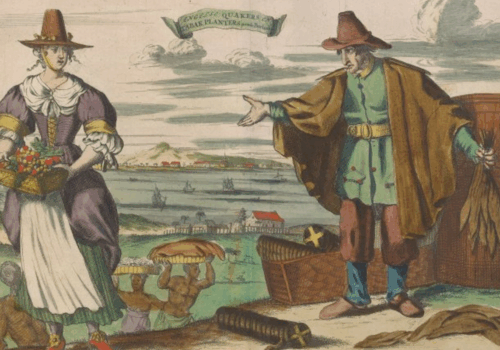
Unlike the plantation systems of the southern and Caribbean colonies, New Netherland's economy did not rely on a cash crop cultivated by unfree laborers. Nevertheless, the enslaved population proved very valuable to the colony's growth and development.
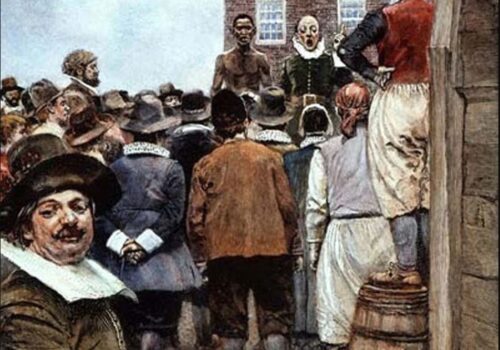
Most of New Netherland's enslaved people were brought to the colony either through the inter-colonial or transatlantic slave trade. The first enslaved laborers arrived in New Netherland as early as 1625.
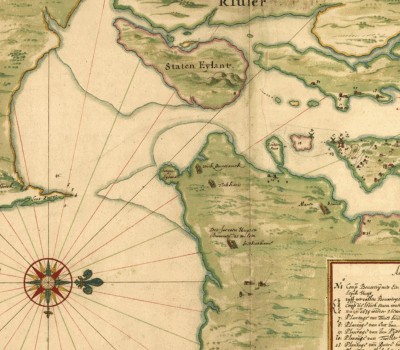
Unlike the plantation systems of the southern and Caribbean colonies, New Netherland's economy did not rely on a cash crop cultivated by unfree laborers. Nevertheless, the enslaved population proved very valuable to the colony's growth and development.
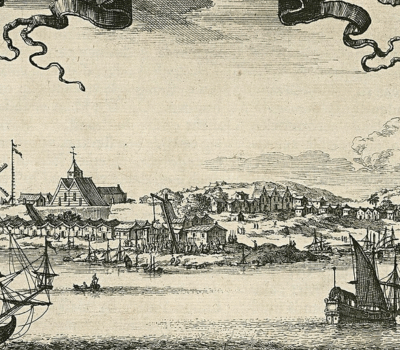
Unlike the plantation systems of the southern and Caribbean colonies, New Netherland's economy did not rely on a cash crop cultivated by unfree laborers. Nevertheless, the enslaved population proved very valuable to the colony's growth and development.
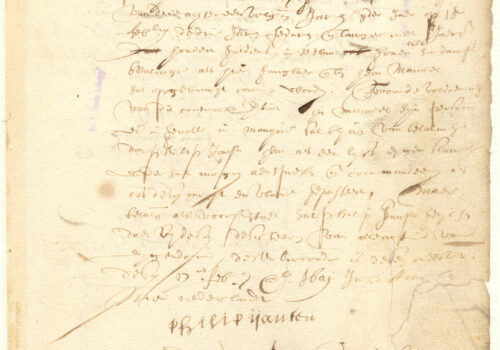
On February 25, 1644, eleven enslaved men and their wives were granted half-freedom by the Dutch West India Company after petitioning the Council, citing long service and broken promises.
Although most Africans in New Netherland were enslaved, not all interactions were oppressive—some were amicable. Whites witnessed Black marriages, socialized with enslaved people, and occasionally intermarried and raised families together.
Slavery in New York State officially came to an end in 1827, roughly 200 years after the first enslaved men arrived in the region. Although slavery outlasted Dutch rule, its legacy remained strong.
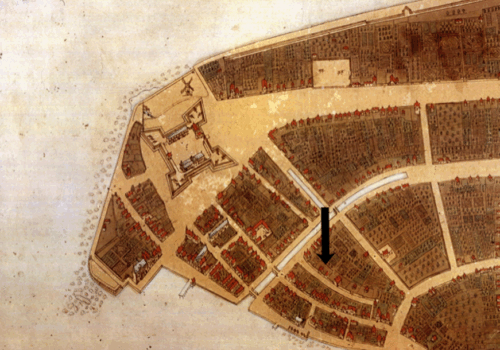
Although they lived their lives in bondage, New Netherland's enslaved Africans created some stability in their lives by trying to keep families together and establishing a tight-knit community.
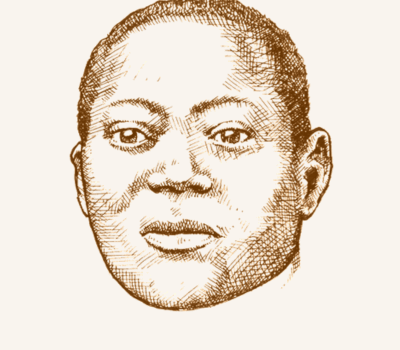
On January 24, 1641, Manuel de Gerrit de Reus survived a failed hanging. Spectators saw it as divine intervention and successfully petitioned the Council to spare his life.
A comprehensive bibliography highlighting scholarship on slavery, African American life, intercultural relations, and the Atlantic Creole experience in New Netherland and Colonial New York. These works explore the roles of Africans and African Americans in the Dutch Atlantic world, from early settlement and cultural exchange to resistance, emancipation, and legacy.