




The famous Dutch navigator, cartographer, and explorer Willem Barentsz led three expeditions into the Arctic in the last years of the sixteenth century in search of a northeastern trade route to Asia. Accompanying Barentsz on the first two voyages was a Dutch navigator whose name has not survived to the present day with such prominence as his fellow explorer. Unlike Barentsz, no sea was named for Cornelis Corneliszoon Nay, who is known to history through his association with two of the Barentsz expeditions.
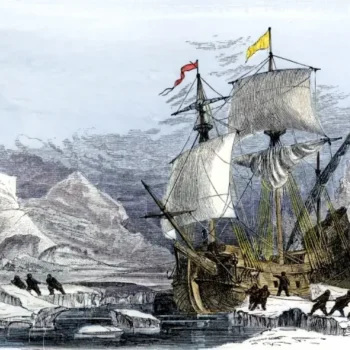
With the New Netherland Institute’s dedication to Dutch matters, you may wonder what the English Captain James Cook is doing here. In many of the other Totidem Verbis articles you can witness the courage of Dutch navigators whose place in global exploration and discovery deserves attention and fair consideration.
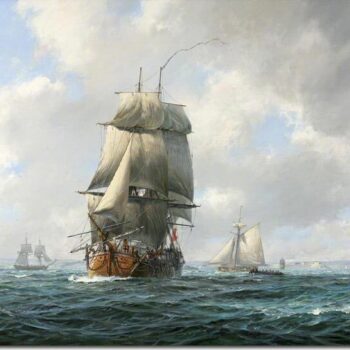
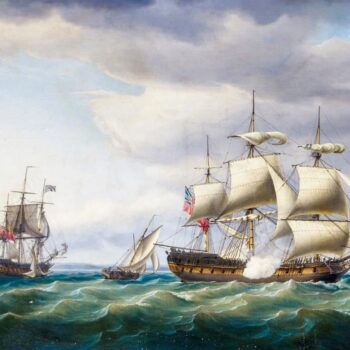
Discovery, commerce, and patriotism were the fundamental driving forces that committed the Netherlands, along with other European powers, to sending fleet after fleet of ships into the many hazards of the scarcely charted maritime world of the sixteenth and seventeenth centuries. These forces had to be undeniably powerful to convince so many men so many times to risk their fortunes and their very lives to sail the world for years on end, in extreme danger and discomfort, to bring back home the strange seeds, fruits, roots, and bark of exotic plants that grow only in hot climates. In a word: spices.
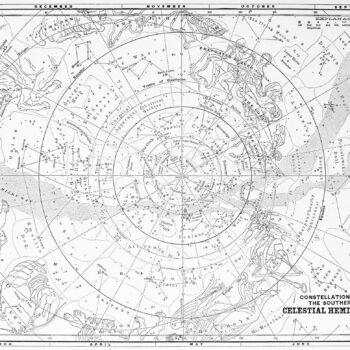
On a warm, cloudless night in February I walked into the rustling garden of my friends’ house and looked up at the sky. What I saw up there wasn’t a complete surprise, and yet it was still striking, and very strange to me. Despite the lights of the city I could see plenty of stars, and yet I was unable to link them together into any discernable pattern, as I was so used to doing at
home. The simple reason for both my awe and my confusion was that I was in Auckland, New Zealand. This was the southern sky, presenting me with an unfamiliar clutter of stars.
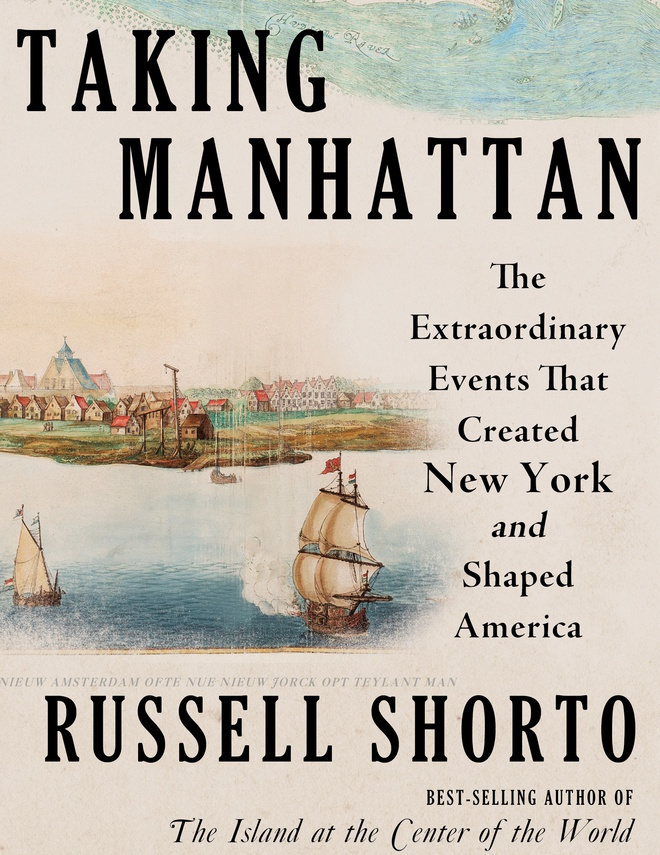
It’s a serious loss to historians that no Dutch or American archive contains any kind of
contract, receipt, or deed of transfer to serve as proof of the so-called “purchase” of Manhattan.
Apart from anything else, such a document would have put a stop to much of the endless
theorizing and half-baked legend-making associated with this event.
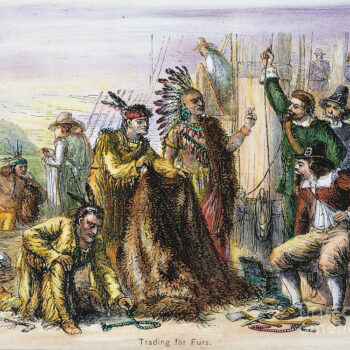
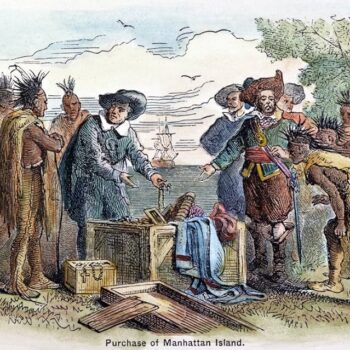
The Dutch “purchase” of Manhattan from the Indians has been called “the deal of the millennium,” though some say it was the 1803 Louisiana Purchase, or that of Alaska in 1867, that was the most lucrative real estate deal in American history.
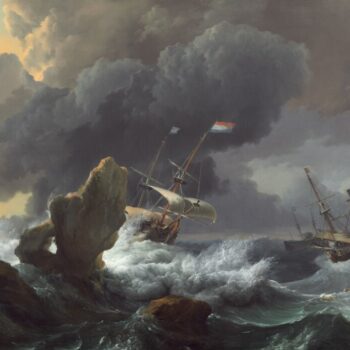
During the first decade of trade with the East Indies, a Dutch retourschip leaving Texel bound for the East Indies followed the old route that Arab and Portuguese sailors took—south
down the west coast of Africa, around the Cape of Good Hope, northeast through the Mozambique Channel and across the Indian Ocean, sometimes via India or Ceylon.
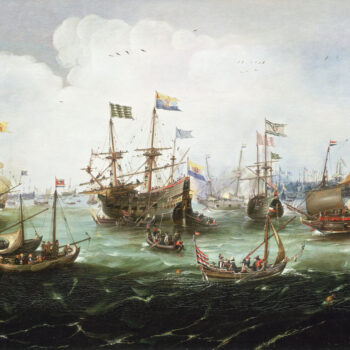
In the 1590s, the Dutch began to turn their attention to the East Indies, the lands and islands of Southeast Asia, and in time this interest grew into a vast moneymaking concern.
One the many myths that blur the story of the Dutch “purchase” of Manhattan—one that is firmly cemented in the popular psyche—says that the price was mere “beads and baubles.”
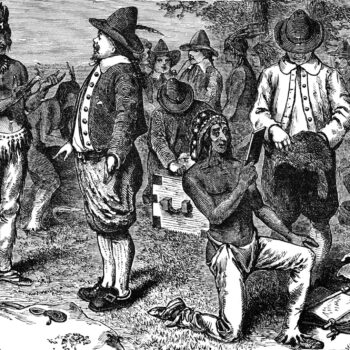
Whatever you believe to be true about the Dutch acquisition of Manhattan—notably the tale of the baubles and beads and the $24—there is another broader myth that underlies all of this.