

Purchased, Leased, Borrowed, or Shared: How Did the Dutch and the Indians View the Manhattan Deal?
Whatever you believe to be true about the Dutch acquisition of Manhattan—notably the tale of the baubles and beads and the $24—there is another broader myth that underlies all of this.
by Peter A. Douglas
This focuses on the basic idea of the so-called “purchase” itself, that the Dutch actually bought the land. “Purchase” is invariably the word used to describe the transaction but it’s certainly a misleading one when applied to what took place in 1626, in the minds of the Indians at least. It’s gratifying to note, however, that current references to the transaction tend to use quotation marks to indicate its vague and disputed nature.
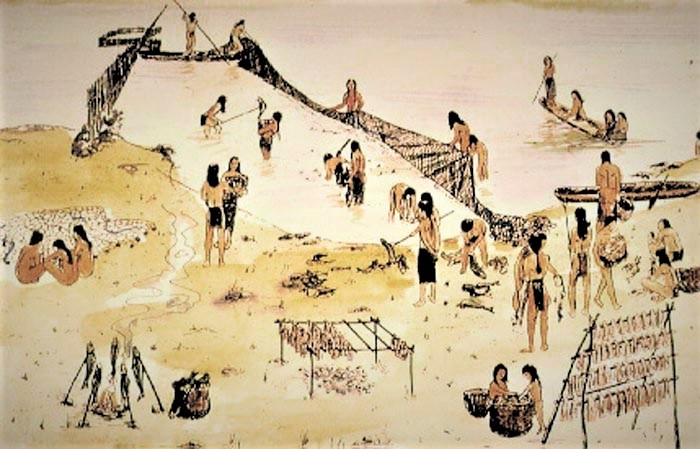
The Lenape: Native inhabitants of the St. Paul’s area (U.S. National Park Service)
Modern accounts of the event usually outline the Indians’ particular and openhanded view of the land they occupied and therefore how the deal with Peter Minuit remains wooly and ambiguous. While this idea is happily finding its way into the “purchase” story, often the result is that it does nothing to discourage the idea that the Dutch conned the Indians by ignoring, or pretending to go along with, their different perception of the deal.
Certain obvious questions arise when two cultures interact like this. Basically, did the Indians understand what the Dutch wanted? If not, can it be said the contract was entered into freely, and was a true contract even made in view of the Indians’ ignorance of the Dutch notion of ownership rights?
Even if it can be readily surmised that the Indians did not understand the European idea of land purchase, at least at first, to dismiss this treaty as illegitimate, or even fraudulent, is to mistake it for an act of clumsy imperialism. The colonists wanted a legally recognized and harmonious trading relationship, not conquest or an occupation based on deceit. This recognition of local land entitlement is, in fact, despite some presumed mutual misunderstanding, a rare instance of fair treatment of native people by Europeans.
When contemplating land deals and other involvement with the natives, the West India Company issued explicit orders concerning the necessity to respect the Indians’ rights and avoid conflict, showing them “honesty, faithfulness, and sincerity in all contracts, dealings, and intercourse without being deceived by shortage of measure, weight, or number.” As the Indians appeared content with the deal, the Dutch would have thought that exchanging useful goods “to the value of 60 guilders” for the land was consistent with these orders. While we can’t know what these native “sellers” thought, they seem to have been satisfied despite having a limited frame of reference with which to grasp the Dutch concept of land acquisition.
As the Indians remained on the island afterwards it’s clear that they didn’t intend to convey the exclusive rights of the land to the Dutch, and their continued presence on the shared land must have helped the Dutch understand to some degree what their “purchase” actually signified to the Indians. There was ample room for both groups to co-exist, and the Dutch had, in any case, no reason to want the Indians to leave. They were useful trading partners, and the Dutch relied on them for the vital supply of furs, which the natives exchanged for European products. Fittingly, the two supporters depicted on the Seal of the City of New York shows one to be a European sailor colonist and the other is an Indian.
It has been conjectured that the natives interpreted Minuit’s trade goods not as payment but as gifts, given as a nominal tribute for the privilege to use and share the land. The goods have even been referred to as a “guest gift,” a respectful and friendly gesture, like bringing flowers or chocolates to a dinner party. They were what it cost for a kind of “leasing” of the land, a token of good faith for drawing on the natural resources of the island along with its first inhabitants. In current terms, the two parties might be called co-stewards, as well as co-beneficiaries, of the land.
What the Indians believed they had obtained (or relinquished, if anything) through the transaction remains uncertain. They probably saw it as simply having acquired “partners” in the use of the land’s amenities and secured amicable relations. The Indians’ relationship with the land was a spiritual one; for them, Nature was a gift to be shared by all, and they were surely unaware that the Dutch viewed land quite differently—as a valuable personal possession that could, like any other, be bought and sold between individuals or groups. The idea that the transaction was for perpetual “ownership” of the land in the European legal tradition was alien to Indians’ thinking. As for specific gains, it’s been suggested that the Manhattan natives may have appreciated and even welcomed the presence of the Dutch as allies, or at least as a buffer, against the ever-present danger of raids by neighboring tribes.
It’s likely that the Dutch had no wish, or even the ability, to educate the Indians on their meaning of a sale. The Indians, in turn, would have naturally anticipated that, lacking any conception of alienable real estate, the arrangement meant that the Dutch would be using Manhattan’s resources with them. For them, land, like water and air, was an unbounded and common amenity that could be made use of for daily needs but never owned or traded. Similarly it’s hard to say just how acquainted the Dutch were with these strange and elusive native concepts; for them the idea of an enduring “purchase” was what was familiar. In his note to the West India Company that mentions this event, Peter Schaghen uses the word gekocht, meaning “bought,” for he too would have had no understanding of the Indians’ distinctive concept of the transaction he reported.
It’s safe to say that there was no true “meeting of the minds” that spring day in 1626, though clearly an understanding was reached—the Indians understood one thing and the Dutch understood another. But as neither party could be sensitive to the other’s philosophy of land rights and usage, each was satisfied in its own dissimilar way. What the Dutch-Indian deal reveals is the obvious thing: a wide cultural gap between the two groups, and one easily filled by bias, misapprehension, and error. Although content, both parties went away with quite different interpretations of what had taken place.
It’s been said that Minuit wasn’t just acquiring land but buying peace with the Indians, and that this was, in fact, his true bargain. The good deal was not that he paid the equivalent of only sixty guilders for the land; it was that he succeeded in buying the future of New Netherland, its harmony and security, at a price he could well afford to pay. Good relations were maintained with their new neighbors for very little cost. Under such circumstances, the lack of mutual understanding, which was doubtless not recognized at the time anyway, is of scant consequence. In achieving the satisfaction of the Indians as well as themselves, the Dutch had done right and had every reason to be pleased; they had no cause for self-reproach, and nor have we any grounds to say they were greedy or duplicitous.
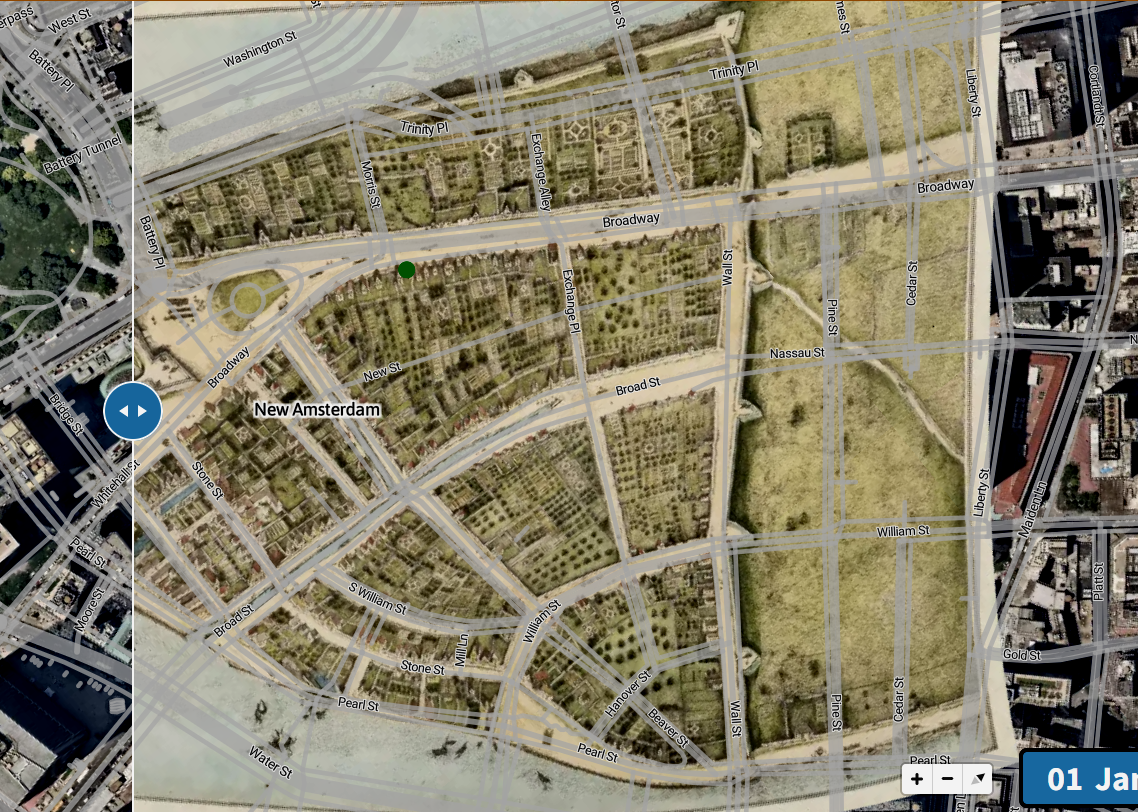
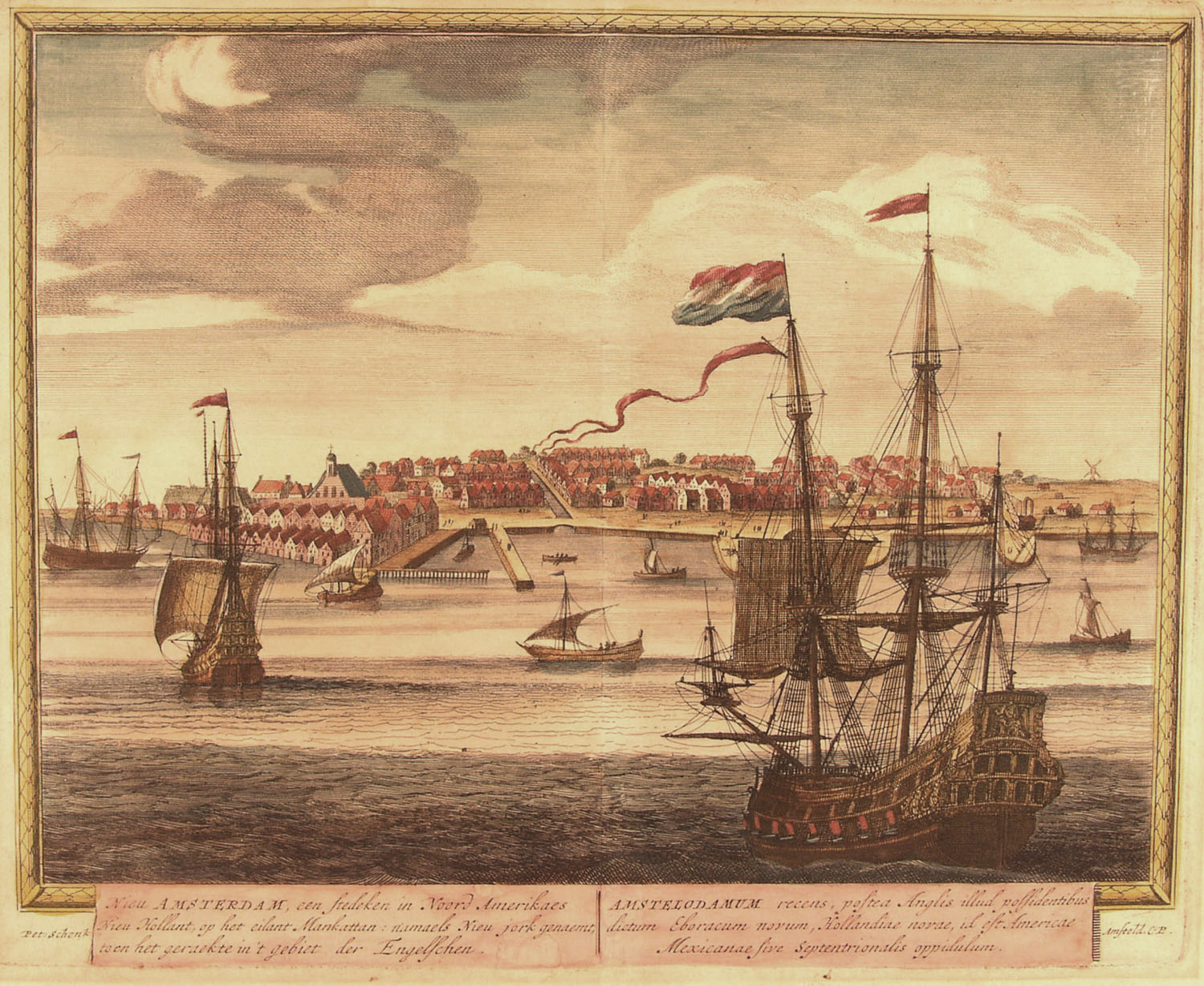
No one could know it at the time, of course, but this was the first step on the path towards the Indians’ loss of sovereignty over their territory. No matter how the natives regarded the arrangement, the Dutch had observed the legal requirements and had staked a claim to Manhattan. They intended to take over the land and make a city out of it. They would expand the settlement beyond the fort’s protection at the southern tip of the island, laying out streets and constructing houses, churches, docks, windmills, and a wall, and clearing land for farms, pasture, and orchards. They had the technology, and more ships were coming. But in any case, purchased, leased, borrowed, or stolen, the Dutch didn’t hold Manhattan for long; in less than forty years it would be in the hands of the English.