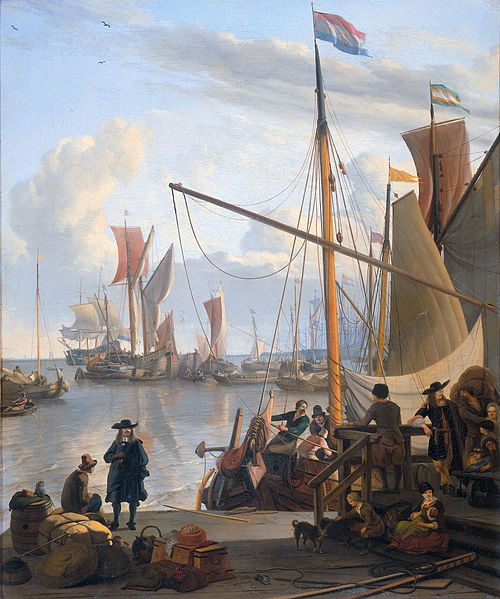

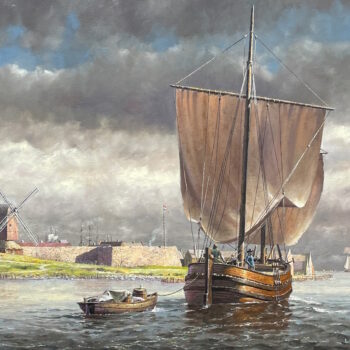
About the Project Between 1609 and 1664, more than 150 ships undertook roughly 250 voyages between the Dutch Republic and the colony of New Netherland....
New Netherland Institute 272 Broadway, Albany NY 12204 Mailing Address: New Netherland Institute, P.O. Box 2536, Empire State Plaza, Albany, NY 12220-0536 Phone: 518-708-8720 Email: nni@newnetherlandinstitute.org
In addition to talks and papers presented at scholarly seminars, NNRC scholars have lent their expertise to audiences through visual media. Uncovering America’s Forgotten Colony...
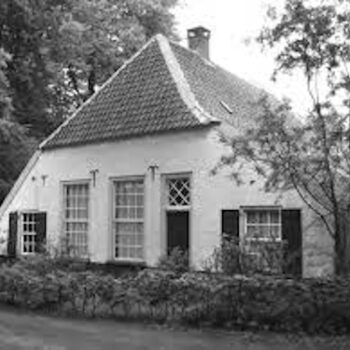
Jeroen van den Hurk uses historic documents to analyze the architecture of New Netherland.
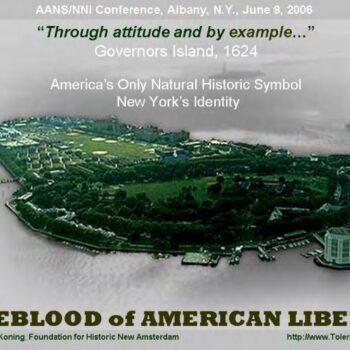
Governors Island, carries both historic and cultural importance for the descendants of three continents—Europeans, Africans, and American Indians.
Seventeenth-century Dutch jurist Hugo Grotius defined property as “ours,” including houses, land, and immovable things. Ownership passed by gift, inheritance, or sale, but only formal transfer, not mere agreement, secured legitimate title in New Netherland.
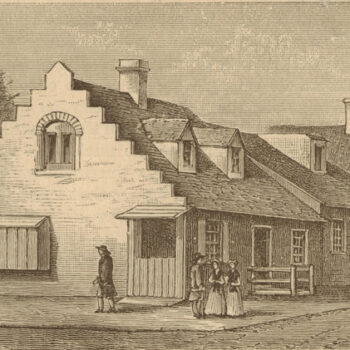
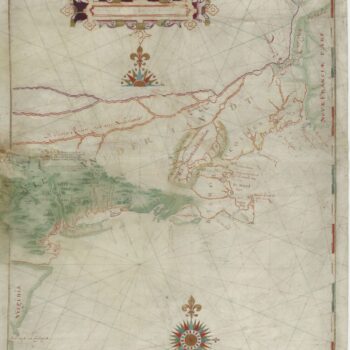
A series by NNRC Director Charles Gehring funded by the Consulate General of the Netherlands in New York that lays before the public instructive but...

A series by NNRC Director Charles Gehring funded by the Consulate General of the Netherlands in New York that lays before the public instructive but...
Published in 2009, this collection of essays pulls from diverse perspectives–social, cultural, intellectual, economic, and political–to weave together the dynamic and diverse history of the...
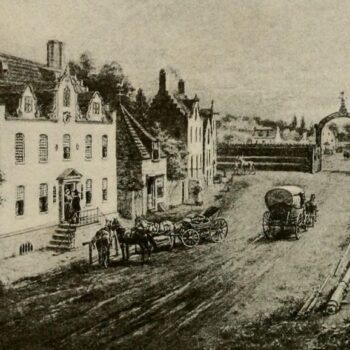
Govert Lookcermans’ house which, through marriage and inheritances, became the home of Sarah Oort Kidd, the wife of Captain Willilam Kidd. This is a translation of the...