

Papers Presented at Meetings of the New Netherland Institute
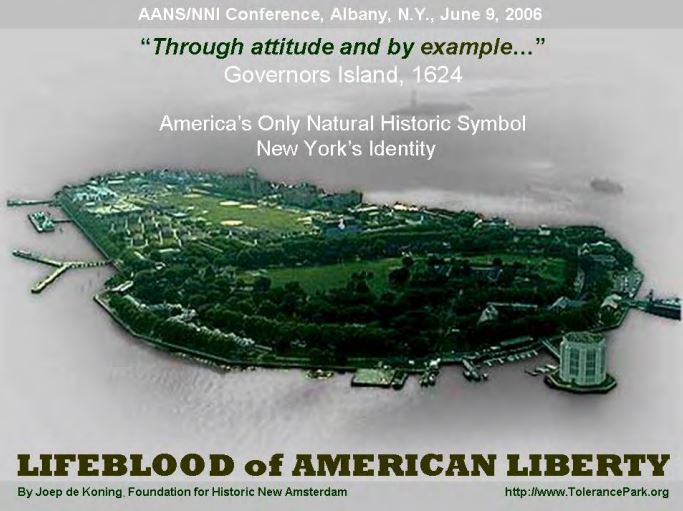
Lifeblood of American Liberty
by Joep de Koning
Governors Island, landing place of the first colonists from the Dutch Republic. This island carries both historic and cultural importance for the descendants of three continents—Europeans, Africans, and American Indians. Jan Rodrigues, a free man of African ancestry from Santo Domingo, was the first to summer on Governors Island in 1613.
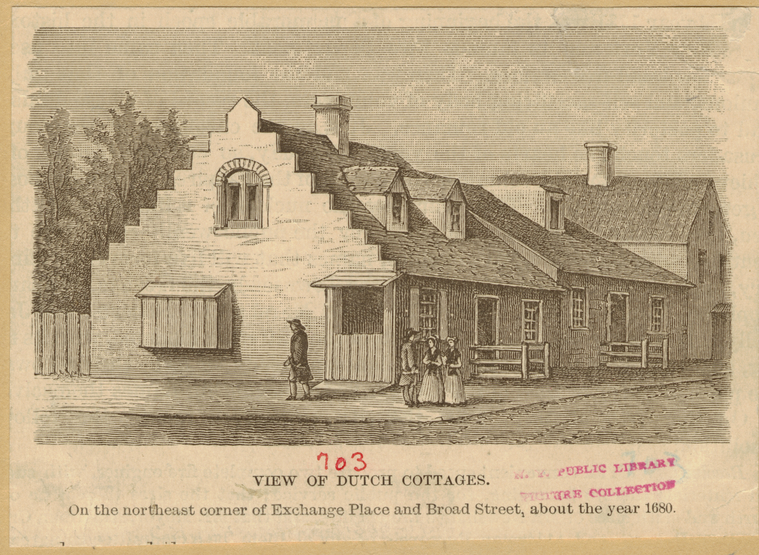
Conversing with Each Other, among Other Things of the Sale of Houses
by Adriana E. van Zwieten, Ph. D.
“Property,” Hugo Grotius wrote “means that something is called ours”. In this simple definition, the seventeenth-century Dutch jurist included immovable property, such as houses, lands, and all the “Things attached to the earth or fixed to houses”. Ownership was acquired by the consent of a former owner, who gave the property either as a gift or inheritance, or he conveyed it by direct contract of sale or exchange.3 It is the latter form, transfer by sale or exchange, that I will be discussing today.
A name dear to every American of Dutch descent
David William Voorhees is the Director of the Papers of Jacob Leisler Project at New York University and, since 1990, has served as Managing Editor of de Halve Maen, a quarterly scholarly journal dedicated to the study of New Netherland.
In October of 1922, a small, four-page, orange leaflet appeared in the mailboxes of the members of The Holland Society of New York. Over subsequent decades, what began in that year as a breezy newsletter intended to attract the Jazz Age scions of the more affluent descendants of New Netherland expanded and changed format to become a serious journal devoted to New Netherland scholarship.

From Gothic Window to Kloosterkozijn
by Jeroen van den Hurk
In 1621, the Dutch West India Company (WIC) received its charter from the States General for parts of West Africa, South America, the Caribbean, and a section of North America, to interfere with Spanish interests. Colonization remained a byproduct of this charter but in 1624, the WIC did make its first serious attempts to settle its North American territory, known as New Netherland, to establish the permanent fur trade with the American Indians of the region.