

Lifeblood of American Liberty
Governors Island: A Gateway to New Netherland
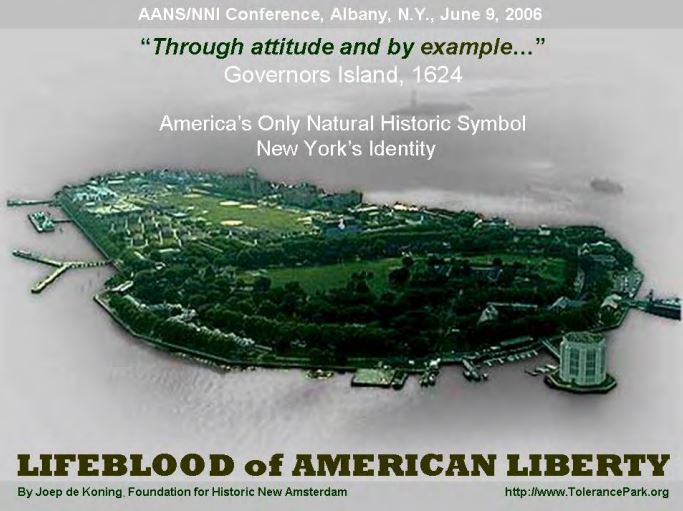 This island carries both historic and cultural importance for the descendants of three continents—Europeans, Africans, and American Indians.
Jan Rodrigues, a free man of African ancestry from Santo Domingo, was the first to summer on Governors Island in 1613.
Rodrigues served as interpreter and on-the-spot factor in trade negotiations with the Hudson River Indians on behalf of the Amsterdam fur trader and explorer Adriaen Block.
In 1624, Governors Island was also the landing place of the first colonists from the Dutch Republic.
Their arrival marked a turning point for North America, as they brought with them specific directives:
the laws and ordinances of the States of Holland.
This moment marked the end of the “law of the ship” in New Netherland and the beginning of the Dutch Republic’s only overseas province.
Adriaen Block and the Naming of New Netherland
Ten years earlier, in 1611, Amsterdam merchant-explorer Adriaen Block, together with Hendrick Christiaensz, began journeys of commercial exploration.
In October 1614, Block delivered a detailed map of the coastline and river inlets between 40 and 45 degrees latitude—territory never before surveyed or charted—to the States General of the Dutch Republic.
That map gave him and his fellow investors a trade monopoly on behalf of the New Netherland Company.
It was also Block who named the territory “New Netherland,” defining the area that would become central to Dutch exploration and settlement in North America.