

The year 1642 saw the death of Galileo and the birth of Sir Isaac Newton. In England, King Charles I raised his standard at Nottingham to begin that country’s Civil War,
The title is an acronym for the Australian Netherlands Committee on Old Dutch Shipwrecks. It was established in 1972 to maintain the sites and artifacts from the wrecks of 17th- and 18th-century Dutch ships off the coast of Western Australia.
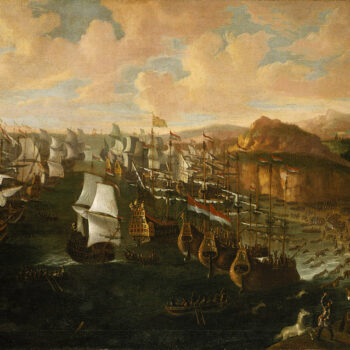
Over the centuries the seas surrounding Great Britain have helped to halt or deter many invading forces. The most significant of these were the Spanish Armada in 1588, Napoleon Bonaparte in 1803–05, and Nazi Germany’s Operation “Seelöwe” in 1940.
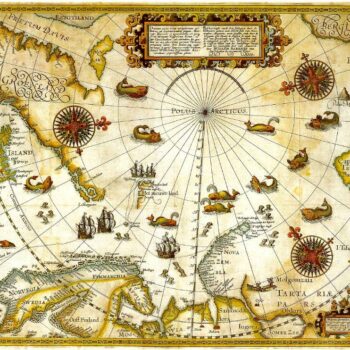
Starting in the 15th century the colonial and maritime nations of Europe were consumed by the need to find a faster navigable route to the trading nations of Asia. Voyages to the Far East
Most dictionaries will give you only one definition of the word “waggoner,” that is, the driver of a wagon. They will also let you know that the preferred spelling is now “wagoner,” the other spelling being chiefly British.
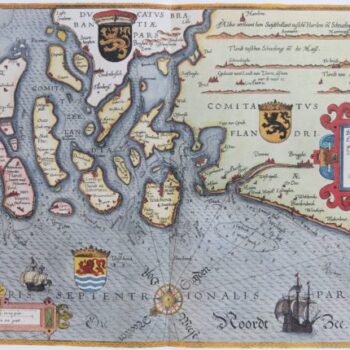
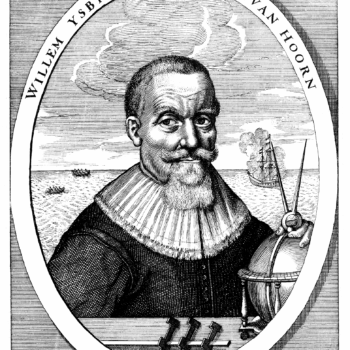
At some point in the last 350 years, the expression een reis van Bontekoe [a Bontekoe journey] entered the Dutch language. It signifies a journey or enterprise that meets with unusually bad luck or significant obstacles. However, there is no connotation of failure here—on the contrary, it implies that the difficulties were overcome. The “Bontekoe” of the phrase is a Dutch East India Company (VOC) skipper called Willem Ysbrandtzoon Bontekoe.
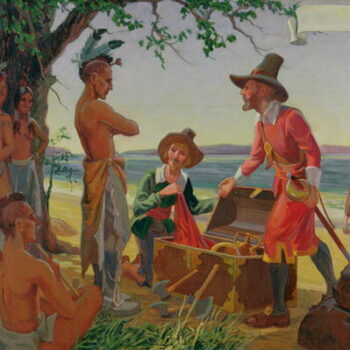
One of the immortal myths associated with the Dutch “purchase” of Manhattan is that they bought the island for $24. Let’s ignore for now the meaning of “purchase” in this context, for this is yet another myth that needs busting. Let’s forget too for now that Manhattan was not acquired by the Dutch parting with hard cash, though the constant reference to the $24 seems to imply this.
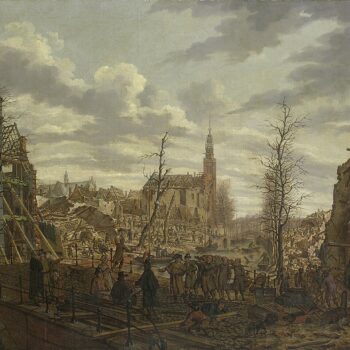
Set in the brick wall of the Steenschuur canal in Leiden is a plaque commemorating the catastrophic buskruitramp, or gunpowder disaster, of 1807. It says: Ligplaats van het Kruitschip Gesprongen 12 Januari 1807, or the mooring place of the gunpowder ship exploded 12 January 1807.
Those concerned with the study of New Netherland will be familiar with the Dutch East India Company, the Vereenigde Oostindische Compagnie (VOC), established in 1602 to trade with India and Southeast Asia, as well as the Dutch West India Company, the Geoctroyeerde Westindische Compagnie (GWC), chartered in 1621 for a trade monopoly in North America, the Caribbean, and Brazil.
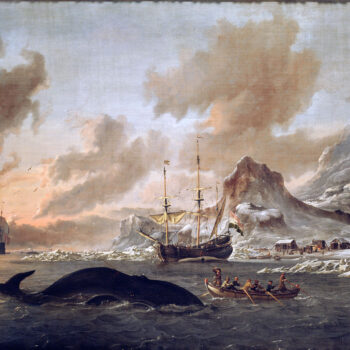
“They that go down to the sea in ships, that do business in great waters;
These see the works of the Lord, and his wonders in the deep.
For he commandeth, and raised the stormy wind, which lifteth up the waves thereof.
They mount up to the heaven, they go down again to the depths:
their soul is melted because of trouble.”
Psalm 107, 23-26