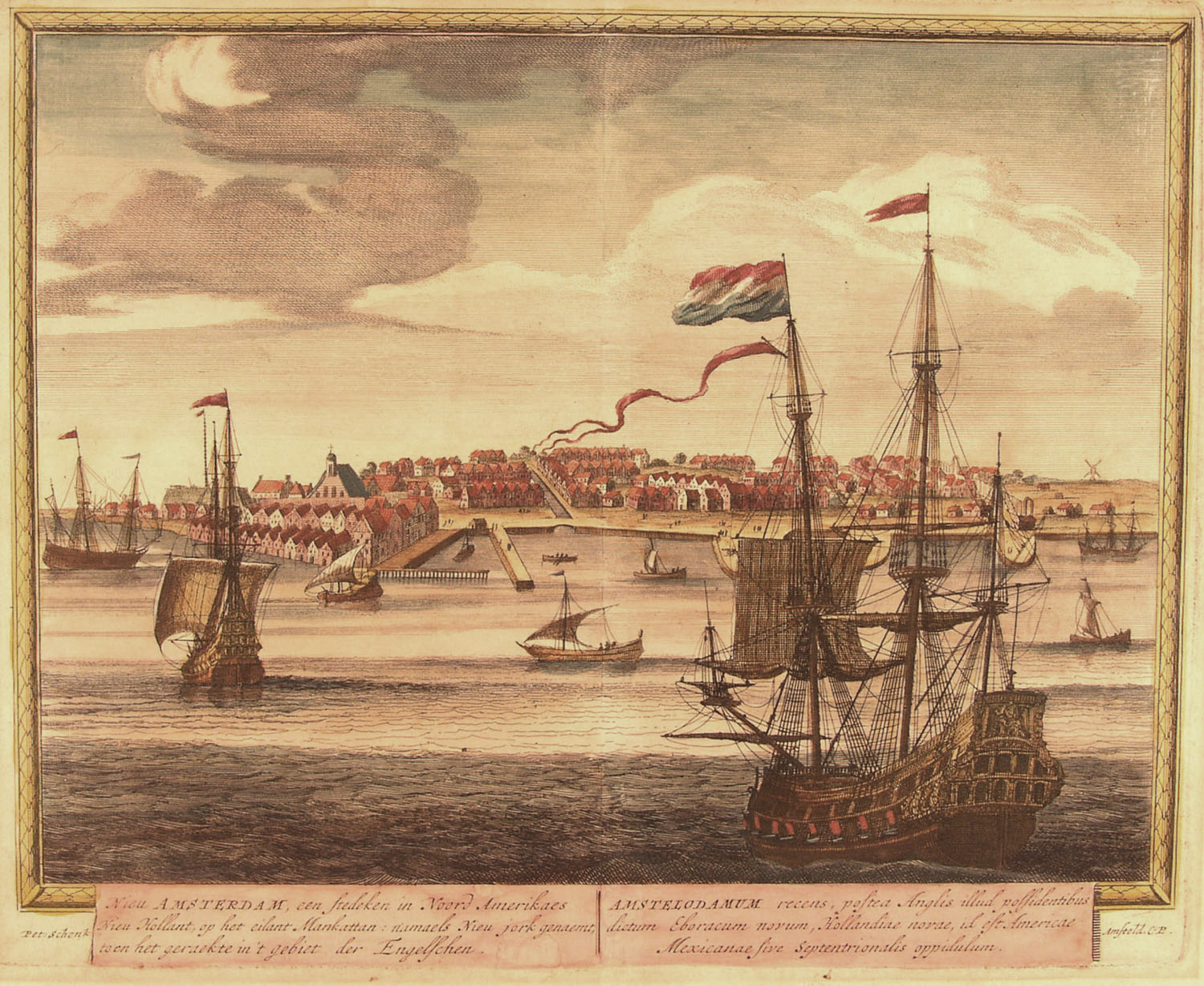
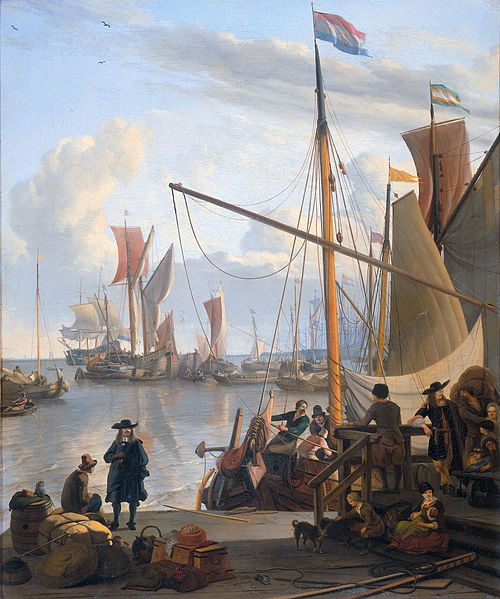

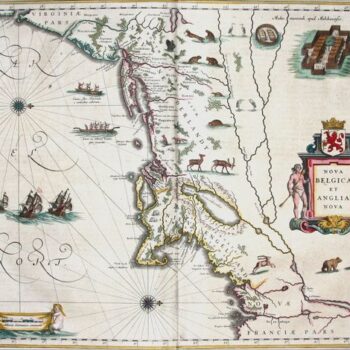
Mapmakers: Hessel Gerritsz and Ioannes de Laet This landmark work, the foundation map of New Netherland’s printed patrimony, places the Dutch claim in its geographic...
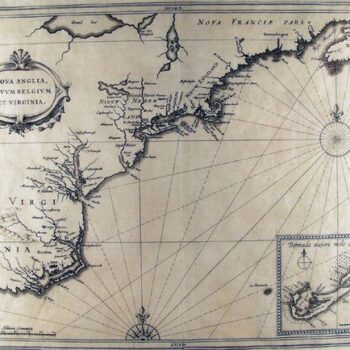
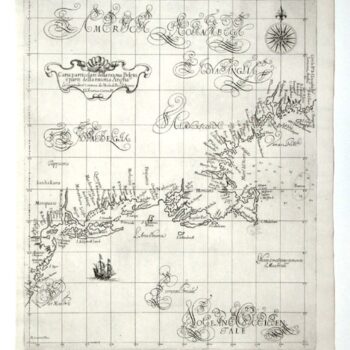
Mapmaker: Johannes van Keulen The part so far left out of this tale of European awareness of Northeast America are the maps which guided the...
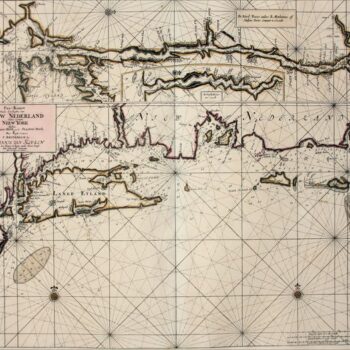
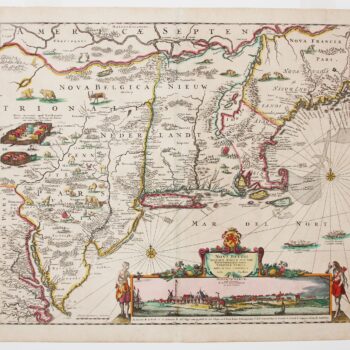
Mapmaker: Justin Dankerts This third-generation example of the Jansson-Visscher series is most lavishly decorated. It adds additional animals and place names and reflects with greater...
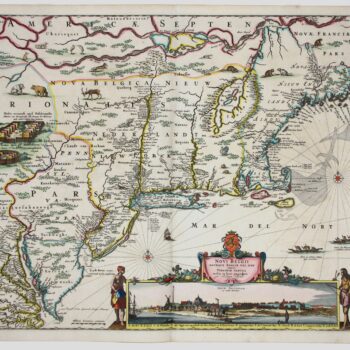
Mapmaker: Nicolaes Visscher The Jansson-Visscher series of maps of New Netherland and New England is an example of the practice of the replication, correction and addition...
Mapmaker: Robert Dudley Tinting (adding color) either contemporaneously or later has always been a part of map making. An exception are the 130 maps of...
This map of New Netherland and New England, based on Adrian Block’s 1614 chart, defined Manhattan and Long Island as islands and became the cornerstone of Dutch claims in the lower Northeast. Richly decorated with regional fauna, it also shows fortified Mohawk villages, canoes, and European ships reflecting growing knowledge and economic potential.
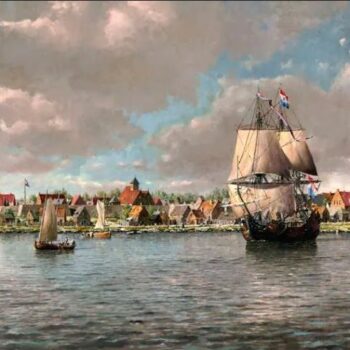
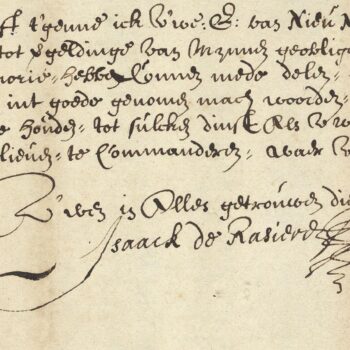
In 1664, Dutch rule ended as New Netherland passed to the English. Peace treaties promised continued trade and justice, but Native peoples now faced new colonial powers—and, eventually, war, displacement, and upheaval.
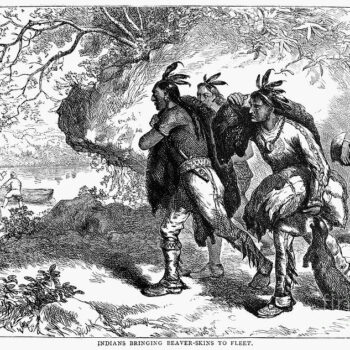
The St. Pieter, sailing out of Amsterdam in 1611, was the first ship whose mission was to engage in the fur trade, engendered by the fashion in Europe to wear hats made of felted beaver fur.
Conflict erupted in 1626 when Dutch troops joined the Mahicans against the Mohawks, sparking cycles of warfare driven by old rivalries, expanding settlements, and competition over fur-rich territory—culminating in the brutal Beaver Wars.
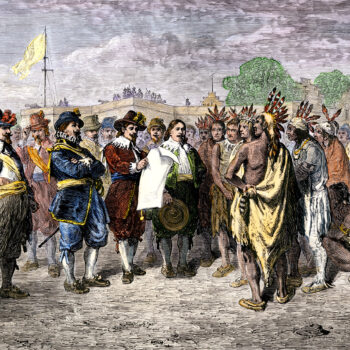
Wampum, from the Massachusett word wampumpeag, meaning white beads, was known to the Dutch as sewant, derived from Delaware and Munsee terms. It became central to trade, diplomacy, and cultural exchange in New Netherland.