Now Reading:

Carta particulare nuova Belgia, 1646
Font Selector
Sans Serif
Serif
Font Size
A
A
You can change the font size of the content.
Share Page

Exploring Dutch Heritage Through Research 

Exploring Dutch Heritage Through Research 

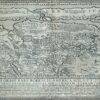
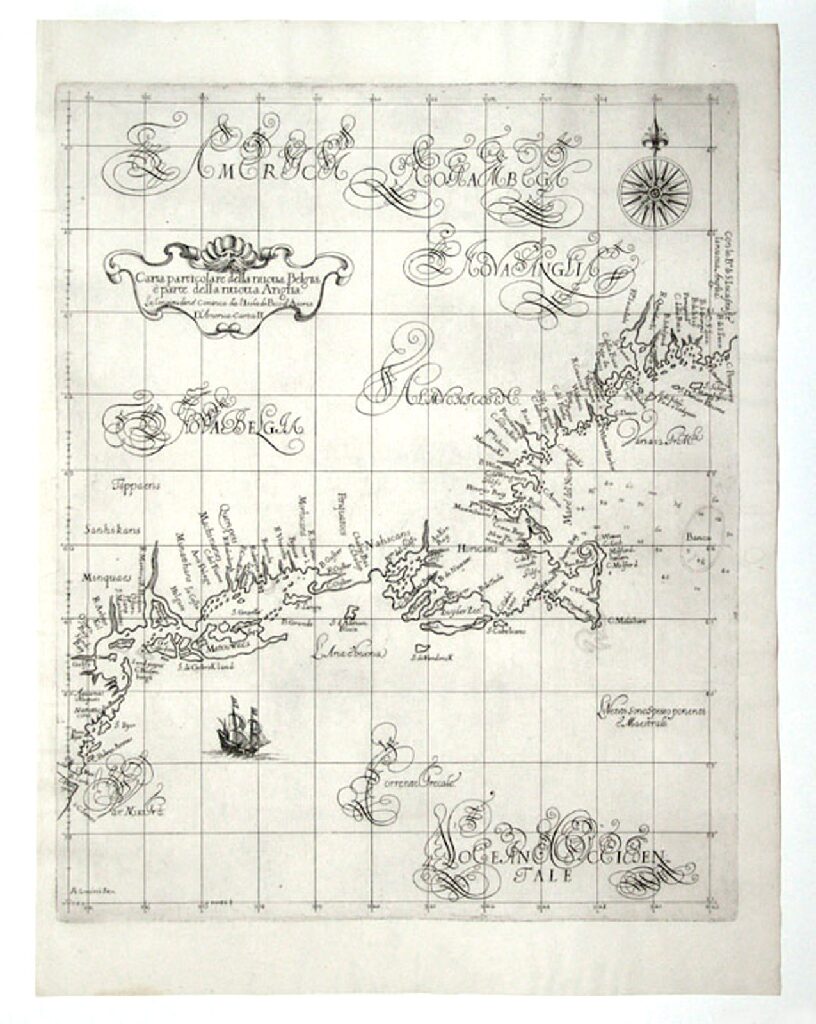
Carta particulare nuova Belgia, 1646
Mapmaker: Robert Dudley

Tinting (adding color) either contemporaneously or later has always been a part of map making. An exception are the 130 maps of the world which accompany Robert Dudley’s text of navigations and seamanship. The Baroque style of the maps’ engraver Antonio Francesco Lucini is so singular and elegant that the maps have never been tinted. Since, most cartographers haven’t chosen to follow the style. Dudley’s was also the first nautical atlas by an Englishman and also is the first to use the Mercator projection. Because the maps were designed from his own sources and not from others’, many details appear for the first time, i.e., prevailing winds and currents.

Maps often come with interesting biographies. Robert Dudley was the illegitimate son of the Earl of Leicester, a favorite of Elizabeth I and her court. After his father died, Robert’s mother re-married and worked diligently to have her own son recognized as rightful heir to Leicester titles and lands. Dudley lost that battle and in 1605 with his lover and cousin Elizabeth Southwell left his own family and England. He settled in Tuscany and became a leading courtier under the patronage of the Medici Grand Duke of Tuscany, Ferdinand I. 

As the duke’s naval advisor, Dudley designed and built warships of greater efficiency than previous ones in Mediterranean waters.  He redesigned the fortifications of the port of Livorno.  As his greatest legacy, he produced his atlas. (Lucini recorded that he used 5,000 pounds of copper for the plates.) 

The map of New Belgium is rich in Indian names, surviving place names and the mythical Norembega. Western Long Island remains an archipelago, but today’s New York City is Nuovo Amsterdam. Also, the Hudson River is usually named the “Noort Revier” which the Dutch preferred, to avoid stirring up English claims to the region.

Carta particulare nuova Belgia 1646,

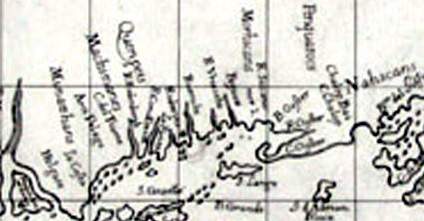
This map is rich in Indian names, surviving place names and the mythical Norembega. Western Long Island remains an archipelago, but today’s New York City is Nuovo Amsterdam. Also, the Hudson River is named (rather than “Noordt” or “Groodt”), which the Dutch preferred, to avoid stirring up English claims to the region. Because the maps were designed from Dudley's own sources and not from others’, many details appear for the first time, i.e., prevailing winds and currents.

Indian Tribe Names Detail

This detail shows the incorporation of a plethora of Indian tribe names.

The Maps of
Charting New Netherland

01

This map from Quad’s general atlas of the world, an expansion of his 1592...

02
This first atlas devoted entirely to the Western Hemisphere is aptly named after Ptolemy,...

03
This 1630 map by Johannes de Laet marks a cultural and cartographic shift from...

04
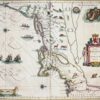
This map of New Netherland and New England, based on Adrian Block’s 1614 chart,...

05
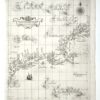
Mapmaker: Robert Dudley Tinting (adding color) either contemporaneously or later has always been a...

06
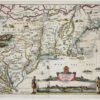
Mapmaker: Nicolaes Visscher The Jansson-Visscher series of maps of New Netherland and New England is...

07
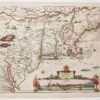
Mapmaker: Justin Dankerts This third-generation example of the Jansson-Visscher series is most lavishly decorated....

08
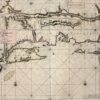
Mapmaker: Johannes van Keulen The part so far left out of this tale of...

Tags:
WHAT WAS NEW NETHERLAND?


About New Netherland Institute

For over three decades, NNI has helped cast light on America's Dutch roots. In 2010, it partnered with the New York State Office of Cultural Education to establish the New Netherland Research Center, with matching funds from the State of the Netherlands. NNI is registered as a 501(c)(3) non-profit organization. Contributions are tax-deductible to the extent permitted by law.