


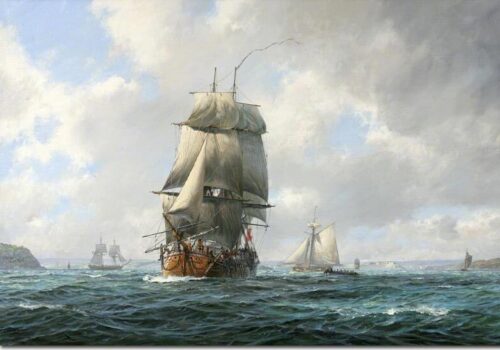
With the New Netherland Institute’s dedication to Dutch matters, you may wonder what the English Captain James Cook is doing here. In many of the other Totidem Verbis articles you can witness the courage of Dutch navigators whose place in global exploration and discovery deserves attention and fair consideration.

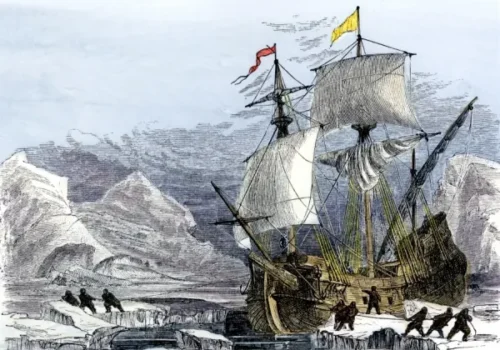
The famous Dutch navigator, cartographer, and explorer Willem Barentsz led three expeditions into the Arctic in the last years of the sixteenth century in search of a northeastern trade route to Asia. Accompanying Barentsz on the first two voyages was a Dutch navigator whose name has not survived to the present day with such prominence as his fellow explorer. Unlike Barentsz, no sea was named for Cornelis Corneliszoon Nay, who is known to history through his association with two of the Barentsz expeditions.
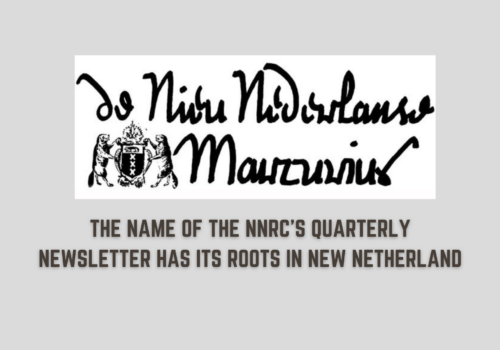
Have you ever wondered about the name of the New Netherland Institute’s newsletter, or its curious spelling? Read on…
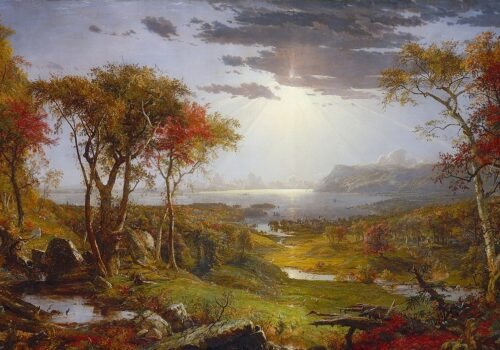
The opening of the new Tappan Zee Bridge (officially renamed the Governor Mario M. Cuomo Bridge) in September 2018 can be seen as yet another reminder of the Dutch history of the Hudson Valley. The “Zee” component of the name is clearly Dutch, meaning “sea,” as in the Zuider Zee, or southern sea, in the Netherlands. But what does Tappan mean, and why is part of a river called a sea?
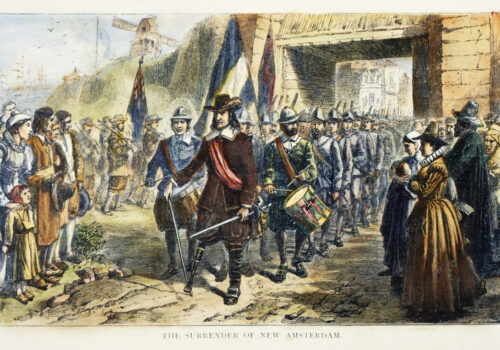
Perhaps for many people the most well known inhabitant of New Netherland is Director-General Peter Stuyvesant, and his most notable physical feature was, in his later years at least, a wooden leg. Let’s see how he became Peg Leg Pete.
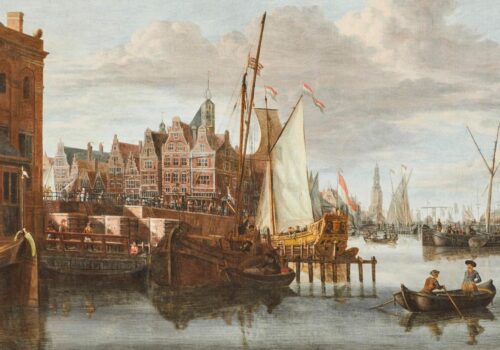
On May 2, 1839, at the urging of the New-York Historical Society and with the support of Governor William Seward (later Secretary of State for Presidents Lincoln and Johnson), the New York State Legislature passed an act “To appoint an agent to procure and transcribe documents in Europe relative to the colonial history of this state.”
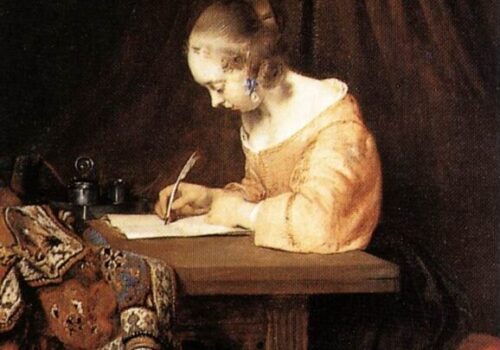
Have you ever wondered about the name of the New Netherland Institute's newsletter, or its curious spelling? Dr. Charles Gehring explained it in the first issue in February 1985. The New Netherland Project, as the Dutch translation mission was called back then, had received many "imaginative suggestions" for the name of its newly minted newsletter, but none was chosen.
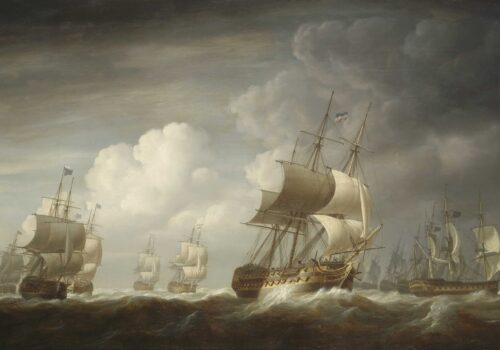
“They that go down to the sea in ships, that do business in great waters;
These see the works of the Lord, and his wonders in the deep.
For he commandeth, and raised the stormy wind, which lifteth up the waves thereof.
They mount up to the heaven, they go down again to the depths:
their soul is melted because of trouble.”
Psalm 107, 23-26
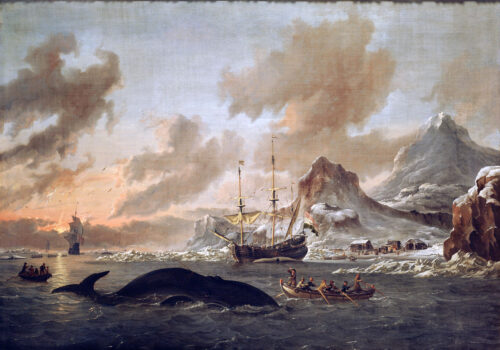
Those concerned with the study of New Netherland will be familiar with the Dutch East India Company, the Vereenigde Oostindische Compagnie (VOC), established in 1602 to trade with India and Southeast Asia, as well as the Dutch West India Company, the Geoctroyeerde Westindische Compagnie (GWC), chartered in 1621 for a trade monopoly in North America, the Caribbean, and Brazil.
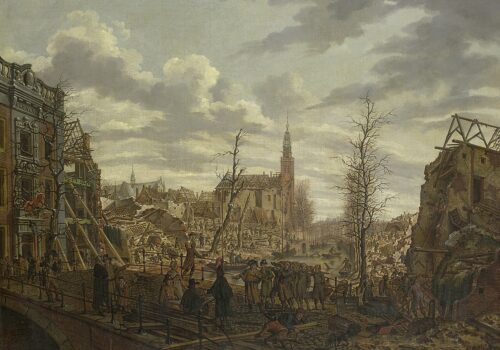
Set in the brick wall of the Steenschuur canal in Leiden is a plaque commemorating the catastrophic buskruitramp, or gunpowder disaster, of 1807. It says: Ligplaats van het Kruitschip Gesprongen 12 Januari 1807, or the mooring place of the gunpowder ship exploded 12 January 1807.
Peter “Pat” Zondervan (1909–1993) was an American publisher who co-founded Zondervan Corporation with his brother Bernard in 1931, helping build one of the largest Christian publishing houses and producing the influential New International Version Bible.
Bernard “Bernie” Zondervan (1910–1966) was an American religious book publisher who co-founded Zondervan Corporation with his brother Peter in 1931, building one of the largest Christian publishing houses in the United States.
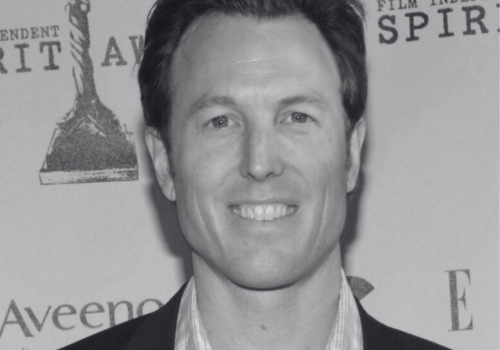
Dean Zanuck (born 1972) is an American film producer and studio executive who continued the Zanuck family’s Hollywood legacy, producing films including Road to Perdition, Get Low, and The Zero Theorem.
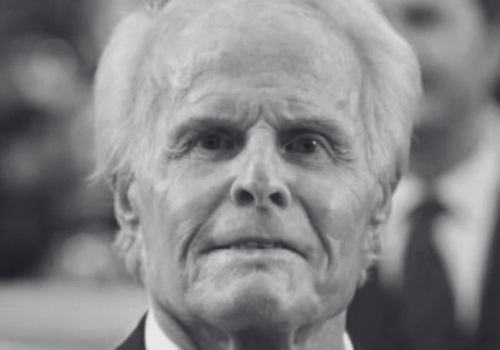
Richard D. Zanuck (1934–2012) was an American film producer and studio executive who led production at Twentieth Century Fox and later produced major films including Jaws, Driving Miss Daisy, Big Fish, and Road to Perdition.
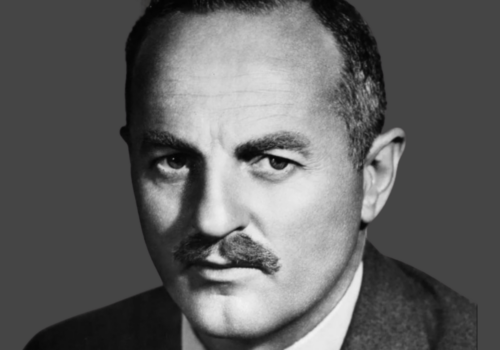
Darryl F. Zanuck (1902–1979) was a pioneering American film producer and studio executive who co-founded Twentieth Century Fox and produced influential films including The Grapes of Wrath, All About Eve, and The Sound of Music.
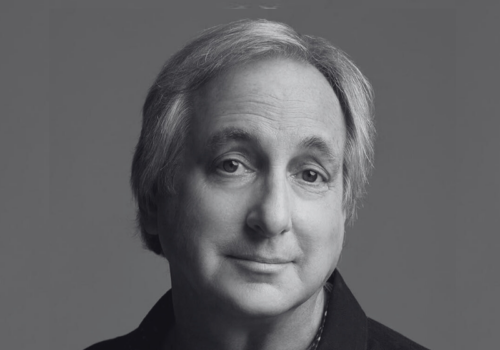
Billy Van Zandt (born 1957) is an American playwright, actor, and director known for numerous stage comedies including Love, Sex and the I.R.S. and for television writing and development, with frequent collaborator Jane Milmore.
With the New Netherland Institute’s dedication to Dutch matters, you may wonder what the English Captain James Cook is doing here. In many of the other Totidem Verbis articles you can witness the courage of Dutch navigators whose place in global exploration and discovery deserves attention and fair consideration.
The famous Dutch navigator, cartographer, and explorer Willem Barentsz led three expeditions into the Arctic in the last years of the sixteenth century in search of a northeastern trade route to Asia. Accompanying Barentsz on the first two voyages was a Dutch navigator whose name has not survived to the present day with such prominence as his fellow explorer. Unlike Barentsz, no sea was named for Cornelis Corneliszoon Nay, who is known to history through his association with two of the Barentsz expeditions.
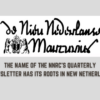
Have you ever wondered about the name of the New Netherland Institute’s newsletter, or its curious spelling? Read on…

The opening of the new Tappan Zee Bridge (officially renamed the Governor Mario M. Cuomo Bridge) in September 2018 can be seen as yet another reminder of the Dutch history of the Hudson Valley. The “Zee” component of the name is clearly Dutch, meaning “sea,” as in the Zuider Zee, or southern sea, in the Netherlands. But what does Tappan mean, and why is part of a river called a sea?
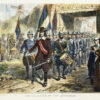
Perhaps for many people the most well known inhabitant of New Netherland is Director-General Peter Stuyvesant, and his most notable physical feature was, in his later years at least, a wooden leg. Let’s see how he became Peg Leg Pete.
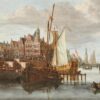
On May 2, 1839, at the urging of the New-York Historical Society and with the support of Governor William Seward (later Secretary of State for Presidents Lincoln and Johnson), the New York State Legislature passed an act “To appoint an agent to procure and transcribe documents in Europe relative to the colonial history of this state.”
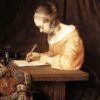
Have you ever wondered about the name of the New Netherland Institute's newsletter, or its curious spelling? Dr. Charles Gehring explained it in the first issue in February 1985. The New Netherland Project, as the Dutch translation mission was called back then, had received many "imaginative suggestions" for the name of its newly minted newsletter, but none was chosen.
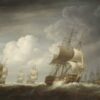
“They that go down to the sea in ships, that do business in great waters;
These see the works of the Lord, and his wonders in the deep.
For he commandeth, and raised the stormy wind, which lifteth up the waves thereof.
They mount up to the heaven, they go down again to the depths:
their soul is melted because of trouble.”
Psalm 107, 23-26
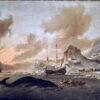
Those concerned with the study of New Netherland will be familiar with the Dutch East India Company, the Vereenigde Oostindische Compagnie (VOC), established in 1602 to trade with India and Southeast Asia, as well as the Dutch West India Company, the Geoctroyeerde Westindische Compagnie (GWC), chartered in 1621 for a trade monopoly in North America, the Caribbean, and Brazil.
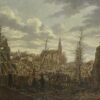
Set in the brick wall of the Steenschuur canal in Leiden is a plaque commemorating the catastrophic buskruitramp, or gunpowder disaster, of 1807. It says: Ligplaats van het Kruitschip Gesprongen 12 Januari 1807, or the mooring place of the gunpowder ship exploded 12 January 1807.

Peter “Pat” Zondervan (1909–1993) was an American publisher who co-founded Zondervan Corporation with his brother Bernard in 1931, helping build one of the largest Christian publishing houses and producing the influential New International Version Bible.
Bernard “Bernie” Zondervan (1910–1966) was an American religious book publisher who co-founded Zondervan Corporation with his brother Peter in 1931, building one of the largest Christian publishing houses in the United States.

Dean Zanuck (born 1972) is an American film producer and studio executive who continued the Zanuck family’s Hollywood legacy, producing films including Road to Perdition, Get Low, and The Zero Theorem.
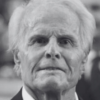
Richard D. Zanuck (1934–2012) was an American film producer and studio executive who led production at Twentieth Century Fox and later produced major films including Jaws, Driving Miss Daisy, Big Fish, and Road to Perdition.
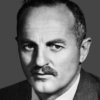
Darryl F. Zanuck (1902–1979) was a pioneering American film producer and studio executive who co-founded Twentieth Century Fox and produced influential films including The Grapes of Wrath, All About Eve, and The Sound of Music.

Billy Van Zandt (born 1957) is an American playwright, actor, and director known for numerous stage comedies including Love, Sex and the I.R.S. and for television writing and development, with frequent collaborator Jane Milmore.