Translations & Transitions Govert Loockermans, a Manhattan Merchant’s Correspondence & Papers More → |
Voyages Maritime routes that shaped the Dutch North Atlantic world More → |
Zotero Bibliography Research Source: 17th century scholarly, non-fiction publications More → |
Genealogical Research What’s in a Name? Discover your ancestors’ origins More → |
Translations & Transitions Govert Loockermans, a Manhattan Merchant’s Correspondence & Papers More → |
Voyages Maritime routes that shaped the Dutch North Atlantic world More → |
Zotero Bibliography Research Source: 17th century scholarly, non-fiction publications More → |
Genealogical Research What’s in a Name? Discover your ancestors’ origins More → |
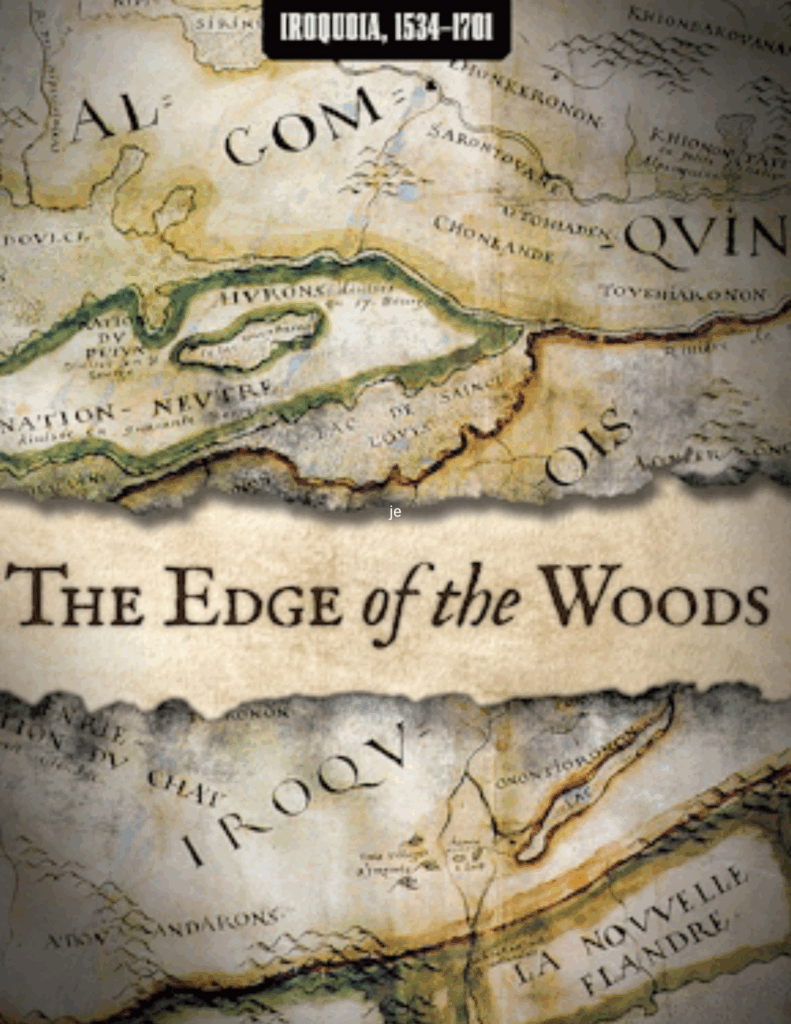
Drawing on archival and published documents in several languages, archeological data, and Iroquois oral traditions, The Edge of the Woods explores the ways in which spatial mobility represented the geographic expression of Iroquois social, political, and economic priorities. By reconstructing the late precolonial Iroquois settlement landscape and the paths of human mobility that constructed and sustained it, Jon Parmenter challenges the persistent association between Iroquois ‘locality’ and Iroquois ‘culture,’ and more fully maps the extended terrain of physical presence and social activity that Iroquois people inhabited. Studying patterns of movement through and between the multiple localities in Iroquois space, the book offers a new understanding of Iroquois peoplehood during this period. According to Parmenter, Iroquois identities adapted, and even strengthened, as the very shape of Iroquois homelands changed dramatically during the seventeenth century.
We use cookies to enhance your experience on our site. By continuing, you agree to our use of cookies. See our privacy policy page for the details.
Welcome! You can explore everything you're looking for in the NNI library. Simply type a keyword into the search bar and press Enter to begin your search.
Sign in to access exclusive features and keep track of your favorite content on NNI!
New membership are not allowed.
For over three decades, NNI has helped cast light on America's Dutch roots. In 2010, it partnered with the New York State Office of Cultural Education to establish the New Netherland Research Center, with matching funds from the State of the Netherlands. NNI is registered as a 501(c)(3) non-profit organization. Contributions are tax-deductible to the extent permitted by law.