Translations & Transitions Govert Loockermans, a Manhattan Merchant’s Correspondence & Papers More → |
Voyages Maritime routes that shaped the Dutch North Atlantic world More → |
Zotero Bibliography Research Source: 17th century scholarly, non-fiction publications More → |
Genealogical Research What’s in a Name? Discover your ancestors’ origins More → |
Translations & Transitions Govert Loockermans, a Manhattan Merchant’s Correspondence & Papers More → |
Voyages Maritime routes that shaped the Dutch North Atlantic world More → |
Zotero Bibliography Research Source: 17th century scholarly, non-fiction publications More → |
Genealogical Research What’s in a Name? Discover your ancestors’ origins More → |
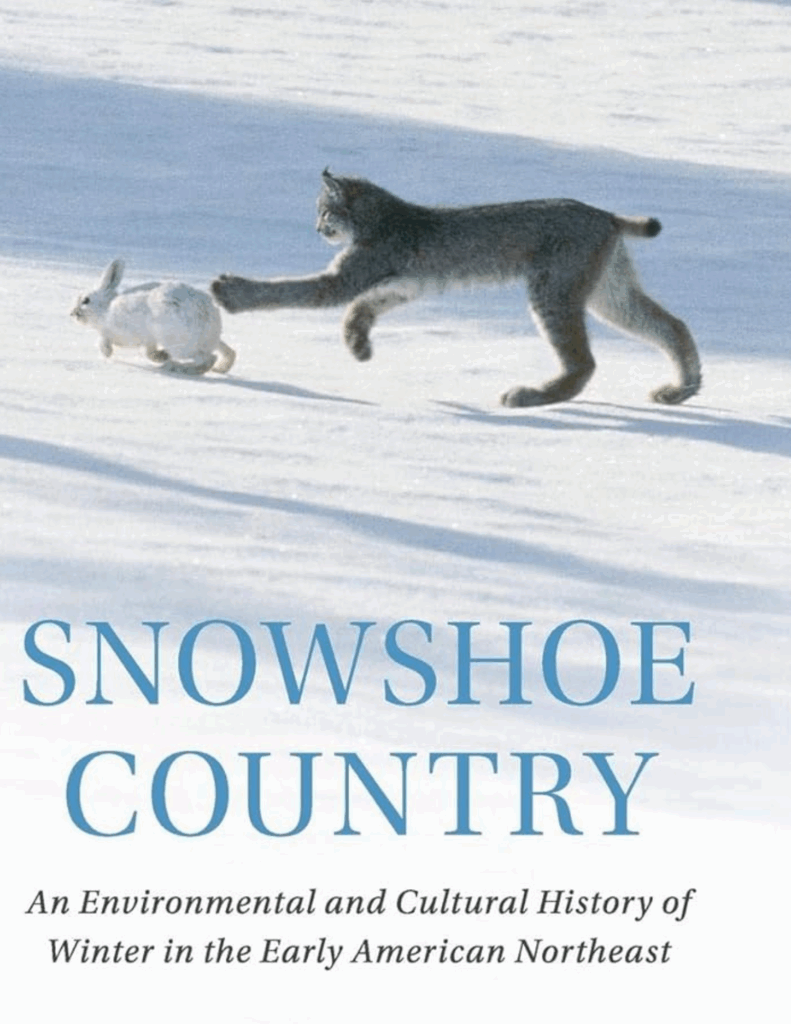
Snowshoe Country is an environmental and cultural history of winter in the colonial Northeast, closely examining indigenous and settler knowledge of snow, ice, and life in the cold. Indigenous communities in this region were more knowledgeable about the cold than European newcomers from temperate climates, and English settlers were especially slow to adapt. To keep surviving the winter year after year and decade after decade, English colonists relied on Native assistance, borrowed indigenous winter knowledge, and followed seasonal diplomatic protocols to ensure stable relations with tribal leaders. Thomas M. Wickman explores how fluctuations in winter weather and the halting exchange of winter knowledge both inhibited and facilitated English colonialism from the 1620s to the early 1700s. As their winter survival strategies improved, due to skills and technologies appropriated from Natives, colonial leaders were able to impose a new political ecology in the greater Northeast, projecting year-round authority over indigenous lands.
We use cookies to enhance your experience on our site. By continuing, you agree to our use of cookies. See our privacy policy page for the details.
Welcome! You can explore everything you're looking for in the NNI library. Simply type a keyword into the search bar and press Enter to begin your search.
Sign in to access exclusive features and keep track of your favorite content on NNI!
New membership are not allowed.
For over three decades, NNI has helped cast light on America's Dutch roots. In 2010, it partnered with the New York State Office of Cultural Education to establish the New Netherland Research Center, with matching funds from the State of the Netherlands. NNI is registered as a 501(c)(3) non-profit organization. Contributions are tax-deductible to the extent permitted by law.