Now Reading:

Adriaen Block – Skipper, Trader, Explorer
Font Selector
Sans Serif
Serif
Font Size
A
A
You can change the font size of the content.
Share Page

Exploring Dutch Heritage Through Research 
Exploring Dutch Heritage Through Research 
for

Adriaen Block – Skipper, Trader, Explorer

By Hendrick van Loon

Review by Melissa Thompson-Flynn

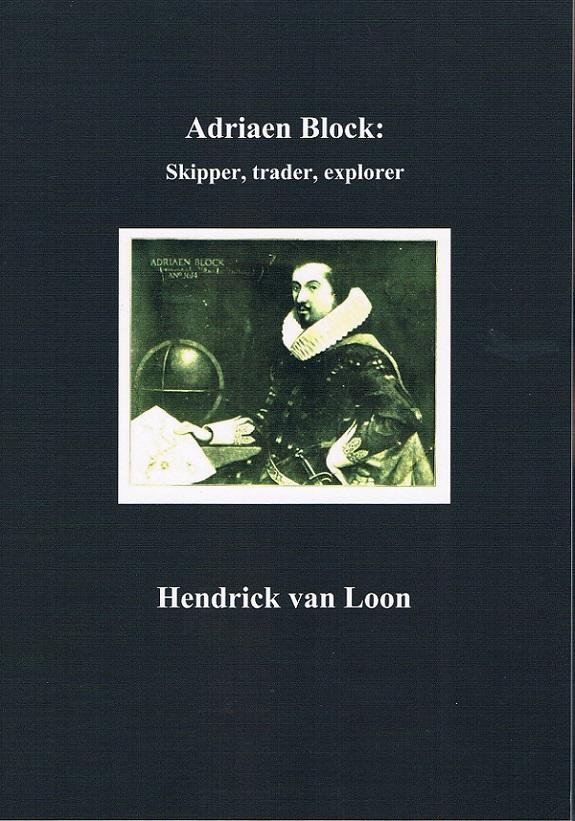
History belongs to those who go first. The third or fourth person to undertake a great voyage of discovery is little remembered and seldom receives more than a footnote in historical texts. Everyone knows that Neil Armstrong was the first man on the moon, and most people know that Henry Hudson was the first European to sail up the river in the American northeast that would later bear his name. Very few people though can name the third or fourth men to achieve these remarkable feats. In 1928 the Dutch-American and Harvard-trained historian Hendrick Van Loon undertook to rectify this oversight regarding the exploration of the Hudson River and Long Island Sound with his bright and breezy book, “Adriaen Block – Skipper, Trader, Explorer”.

Van Loon’s book, which can easily be read in a single sitting, opens with a historical overview of European efforts to find a passageway to China and the Indies that would bypass the Spanish and Portuguese blockade of what was believed to be the most direct route to the west. He describes Hudson’s famous 1609 voyage before turning to his main subject of interest, Adriaen Block. Following another expedition by Cornelis Rijser in 1611, Block and his fellow captain Hendrick Christiaensen returned to the area in 1612 skippering the vessels Tyger and Fortuyn, respectively. After a fire destroyed the Tyger, Block and his crew wintered on southern Manhattan and built a new ship from the wreckage and named it, with appropriate humor, Onrust (Restless). It was in this vessel that Block explored the East River, Long Island Sound to Rhode Island (he may have named Roode Eylandt), and theConnecticut River up to present-day Hartford. Crucially, he created a detailed map of the area on which appears for the first time the name “New Netherland”. Van Loon’s thesis is that this map and the prized geographic knowledge that it imparted gave the impetus leading to the establishment of the Dutch West India Company and the concerted effort to settle New Netherland.

The text is illustrated with Van Loon’s own charming drawings and is peppered with witticisms such as “Hudson was full of hope. The weather was glorious”. At almost any moment he might hope to reach the Pacific. But instead of getting to Pekin (Beijing) he finally found himself in Albany.” In his cheerful yet knowledgeable style, Van Loon makes a solid case that Adriaen Block – either the third or fourth European to explore what became New Netherland – played a vital role in its eventual settlement. As such he deserves to be more than a historical footnote, much like astronauts Pete Conrad and Alan Beanof the November 1969 Apollo 12 spaceflight, the third and fourth men on the moon.

Available from the New Netherland Institute for $24. To order email   nni@newnetherlandinstitute.org

About New Netherland Institute

For over three decades, NNI has helped cast light on America's Dutch roots. In 2010, it partnered with the New York State Office of Cultural Education to establish the New Netherland Research Center, with matching funds from the State of the Netherlands. NNI is registered as a 501(c)(3) non-profit organization. Contributions are tax-deductible to the extent permitted by law.