Now Reading:

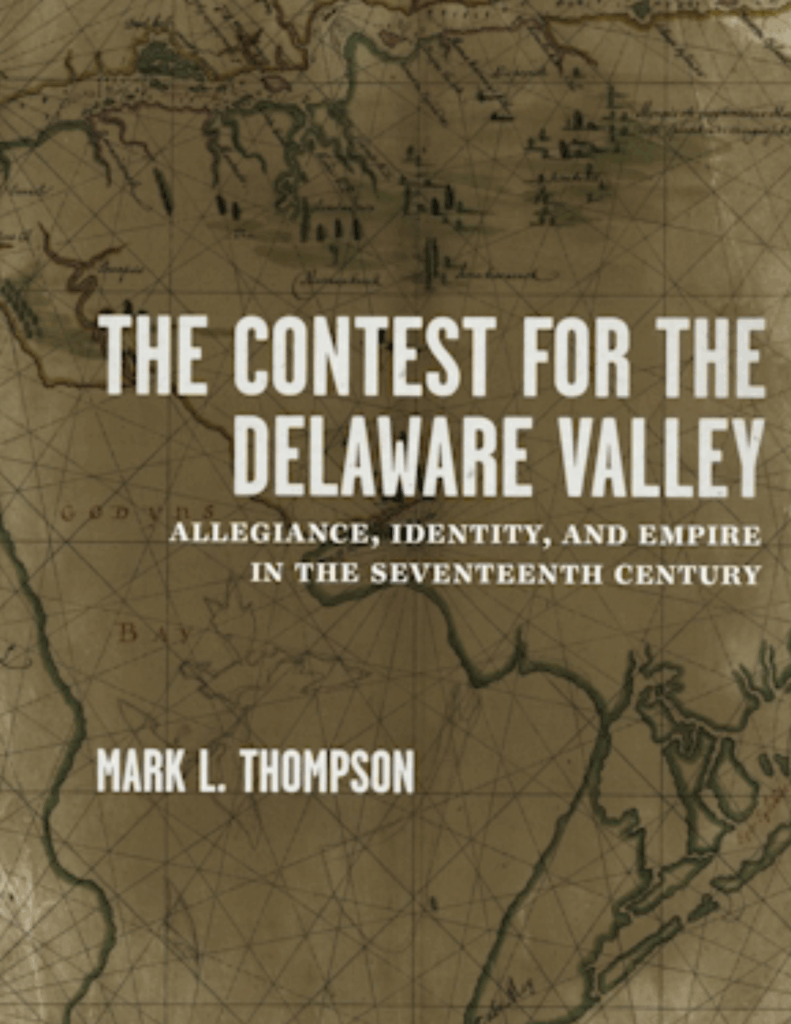
The Contest for the Delaware Valley
Font Selector
Sans Serif
Serif
Font Size
A
A
You can change the font size of the content.
Share Page

Exploring Dutch Heritage Through Research 
Exploring Dutch Heritage Through Research 
for

The Contest for the Delaware Valley

by Mark L. Thompson

In the first major examination of the diverse European efforts to colonize the Delaware Valley, Mark L. Thompson offers a bold new interpretation of ethnic and national identities in colonial America. For most of the seventeenth century, the lower Delaware Valley remained a marginal area under no state’s complete control. English, Dutch, and Swedish colonizers all staked claims to the territory, but none could exclude their rivals for long—in part because Native Americans in the region encouraged the competition. Officials and settlers alike struggled to determine which European nation would possess the territory and what liberties settlers would keep after their own colonies had surrendered.

The resulting struggle for power resonated on both sides of the Atlantic Ocean. While the rivalry promoted patriots who trumpeted loyalties to their sovereigns and nations, it also rewarded cosmopolitans who struck deals across imperial, colonial, and ethnic boundaries. Just as often it produced men—such as Henry Hudson, Willem Usselincx, Peter Minuit, and William Penn—who did both.

Ultimately, The Contest for the Delaware Valley shows how colonists, officials, and Native Americans acted and reacted in inventive, surprising ways. Thompson demonstrates that even as colonial spokesmen debated claims and asserted fixed national identities, their allegiances—along with the settlers’—often shifted and changed. Yet colonial competition imposed limits on this fluidity, forcing officials and settlers to choose a side. Offering their allegiances in return for security and freedom, colonial subjects turned loyalty into liberty.

BUY HERE

About New Netherland Institute

For over three decades, NNI has helped cast light on America's Dutch roots. In 2010, it partnered with the New York State Office of Cultural Education to establish the New Netherland Research Center, with matching funds from the State of the Netherlands. NNI is registered as a 501(c)(3) non-profit organization. Contributions are tax-deductible to the extent permitted by law.