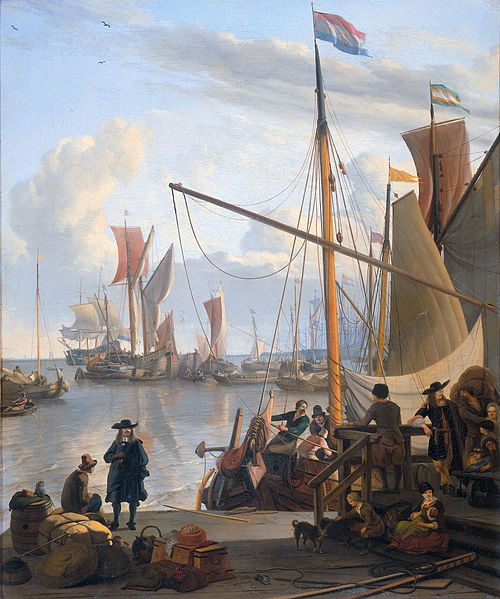

Translation from Van Laer, Register of the Provincial Secretary, Volume II, 1642-1647, doc. 111b, pgs. 223-224 This day, date underwritten, before me, Cornelis van Tienhoven, secretary of...
This collection comprises a great variety of papers, including journals of voyages, deeds, leases, contracts, accounts and inventories of cattle; but the most important item...
Translation from Van Laer, Van Rensselaer Bowier Manuscripts, pp. 137-153
Image: Title page of the “Freedoms and Exemptions,” published in 1630.
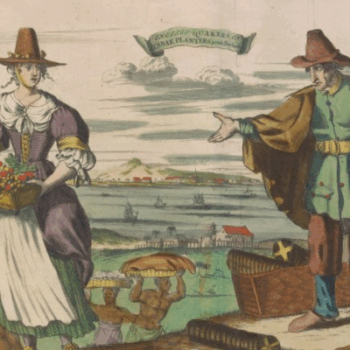
Unlike the plantation systems of the southern and Caribbean colonies, New Netherland's economy did not rely on a cash crop cultivated by unfree laborers. Nevertheless, the enslaved population proved very valuable to the colony's growth and development.
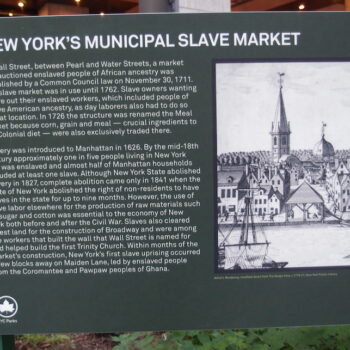
In June of 2015, Mayor Bill De Blasio unveiled a plaque in lower Manhattan to commemorate the eighteenth-century slave market that once operated at the foot of Wall Street.
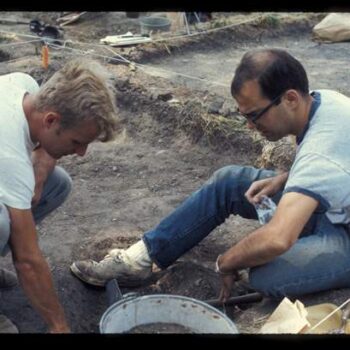
In the 1970s, planned development threatened the Flatts. Excavations, advocacy, and community support preserved the site. By 2002, it became Schuyler Flatts Cultural Park, a National Historic Landmark and public treasure.
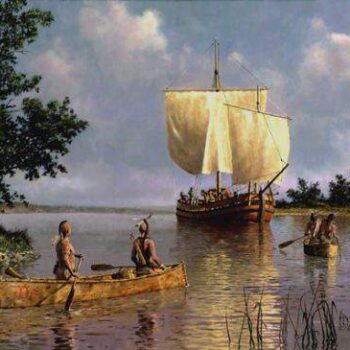
In 1650, Arent van Curler joined an embassy to the Mohawks, shaping its diplomacy. Len Tantillo’s painting imagines everyday trade—bark canoes, Flatts horses, and gifts of sewant exchanged along the river.
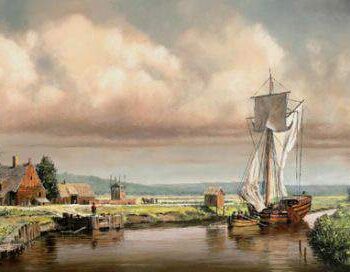
In 2004, archaeologists Paul Huey and Jim Bradley led Len Tantillo across a recently turned field along a creek on the east side of the Hudson...
From the estate of Rutger Jacobsen, Arent bought a painting for 85 guilders, a ring for 39, and a silver beaker for 68. These articles joined other staples and luxuries which a prosperous burgher expected to enjoy.
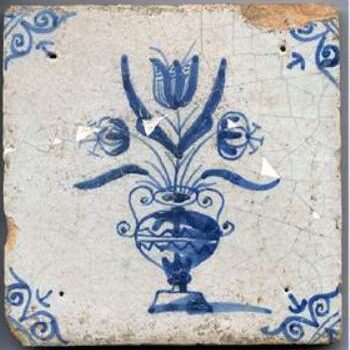
Arent grew up in a hallehuis, a Dutch farmhouse combining home and barn. Excavations at the Flatts reveal similar features—cellars, structural upgrades, and artifacts—matching his 1643 description and rising prosperity.