
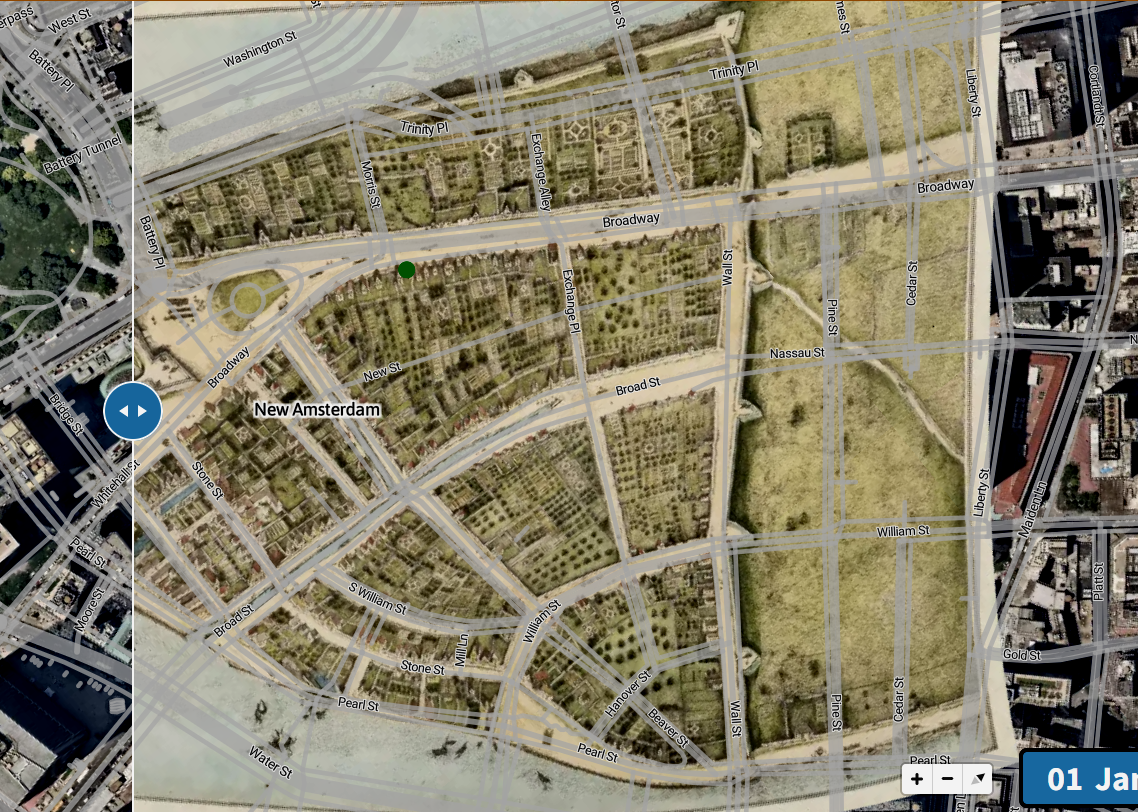
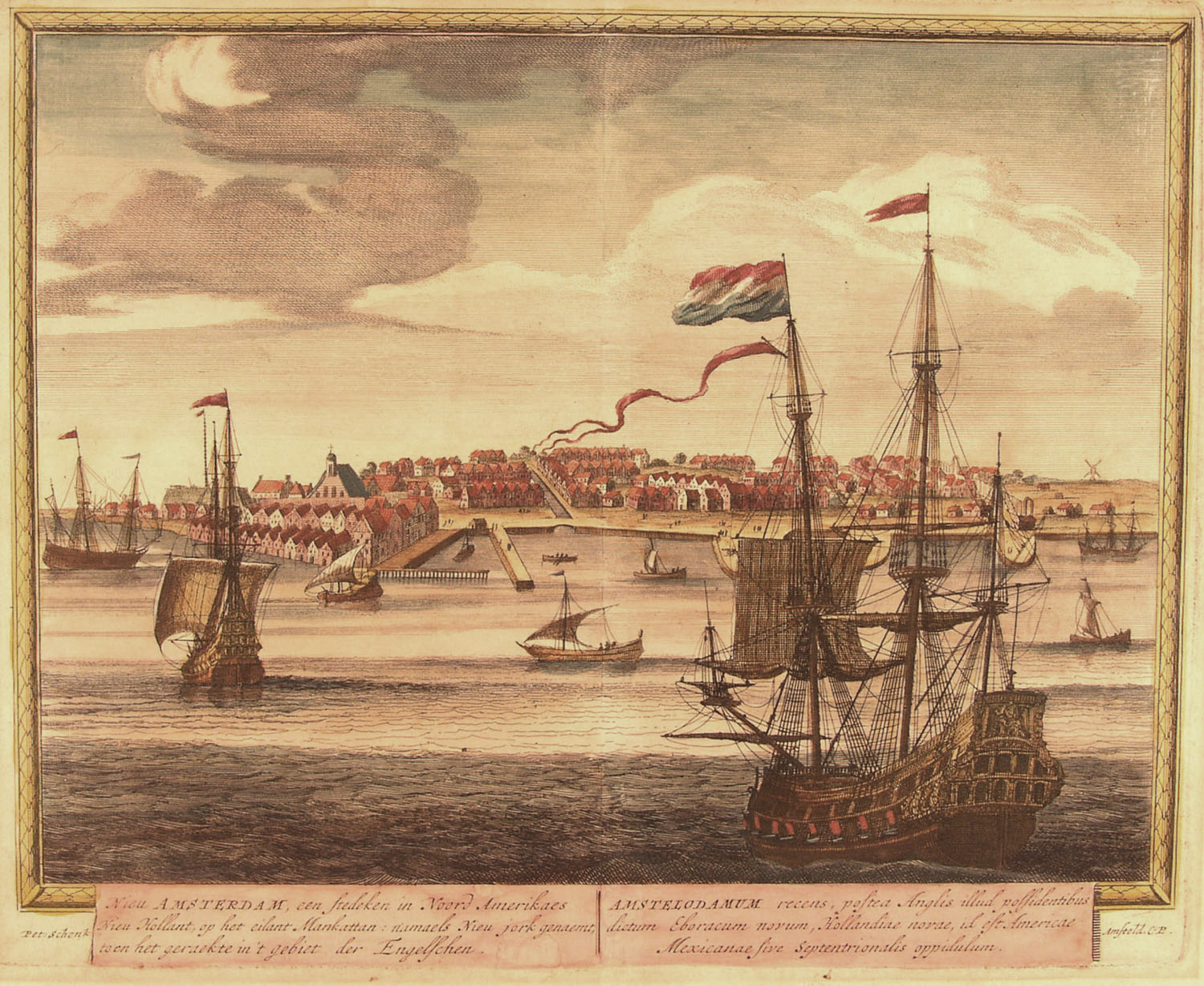
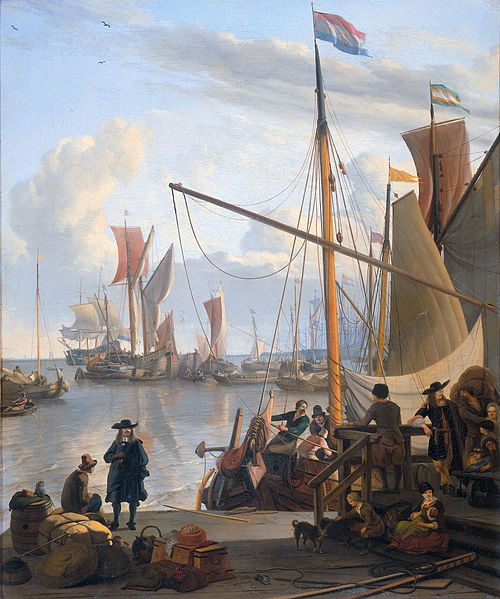

Settlers in New Netherland were a diverse group. Among them were Germans, Scandinavians, French, Scots, English, Irish, Jews, Italians, and Croats. Other residents of New Netherland were born in Africa and brought to the colony as slaves, some of whom were later freed.

The first colonists lived in square pits, like cellars, that were covered with wood and bark. These simple shelters protected them from the elements until they could build basic cottages. Once New Netherland became more established, colonists built better wooden and later stone and brick houses.
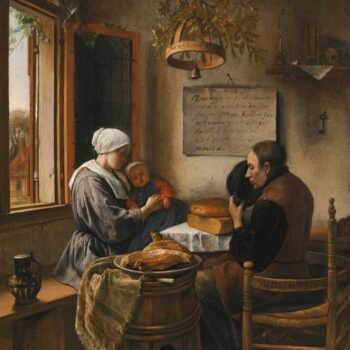
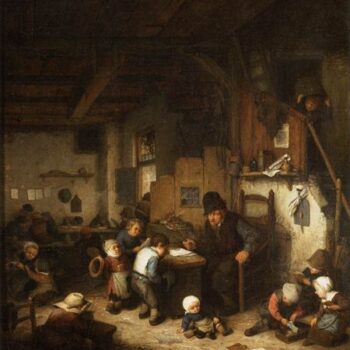
Most Dutch children--both rich and poor--attended school in New Netherland. Although most families paid a fee to the local schoolmaster, students whose parents could not afford this fee were admitted for free.
New Netherland was a Dutch colony from 1614 to 1664, about 50 years. In 1664, the English took the colony from the Dutch by force--even though the two countries were not at war and few if any shots were fired.
Map of New Netherland, 1652 The colony of New Netherland was located in what are now parts of New York, New Jersey, Connecticut, Pennsylvania, and...
The Old Dutch Church in Tarrytown The Old Dutch Church in Tarrytown was built in the late 17th century. It is the oldest church in...
GWC Flag This was the flag of the West India Company, in Dutch Geoctroyeerde Westindische Compagnie. This private corporation was chartered by the Dutch government...
Have you ever wondered what life was like for Dutch families who settled in New Netherland? Visit the home of Jan Mabee. His father came to North America from the Netherlands, and in 1706, Jan built this house on the banks of the Mohawk River near Schenectady.
Wampum+ Known as wampum or sewant, these shell beads were so highly valued by Indians that they took the place of currency. Rather than silver...
Many items in colonial households served multiple purposes. For example, a wooden chest could be used for storage, as a table, a bed, or as...
- 1
- 2