

In the inaugural Translator’s Corner in the March, 2025 e-Marcurius, Deborah Hamer translated Testimony Regarding Cornelis Pieters van Purmerent’s Labor from the City Archives in Amsterdam, Notarial...
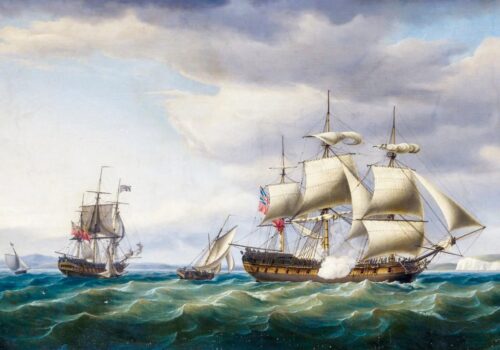
Discovery, commerce, and patriotism were the fundamental driving forces that committed the Netherlands, along with other European powers, to sending fleet after fleet of ships into the many hazards of the scarcely charted maritime world of the sixteenth and seventeenth centuries. These forces had to be undeniably powerful to convince so many men so many times to risk their fortunes and their very lives to sail the world for years on end, in extreme danger and discomfort, to bring back home the strange seeds, fruits, roots, and bark of exotic plants that grow only in hot climates. In a word: spices.
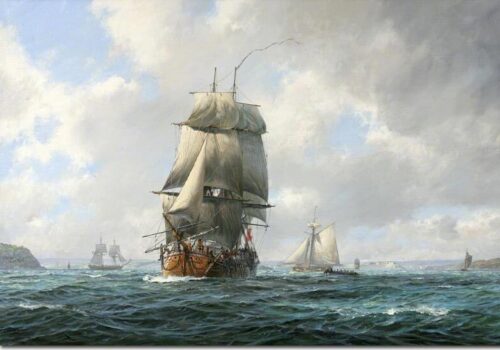
With the New Netherland Institute’s dedication to Dutch matters, you may wonder what the English Captain James Cook is doing here. In many of the other Totidem Verbis articles you can witness the courage of Dutch navigators whose place in global exploration and discovery deserves attention and fair consideration.
In August 1664, the WIC ship Gideon arrived in New Amsterdam with 290 enslaved Africans, doubling the colony’s enslaved population. Though the voyage was momentous, almost nothing is known about those forced aboard or the ordeal they endured to reach the city.

Peter “Pat” Zondervan (1909–1993) was an American publisher who co-founded Zondervan Corporation with his brother Bernard in 1931, helping build one of the largest Christian publishing houses and producing the influential New International Version Bible.
In 1684 Schenectady, constable and enslaver Jacob Sanders sued Frenchman Matthys Boffie for threatening to poison and kill Pey, an enslaved woman. Boffie claimed a relationship and children with her, offered to buy her, was refused, and allegedly threatened murder-suicide.
Bernard “Bernie” Zondervan (1910–1966) was an American religious book publisher who co-founded Zondervan Corporation with his brother Peter in 1931, building one of the largest Christian publishing houses in the United States.
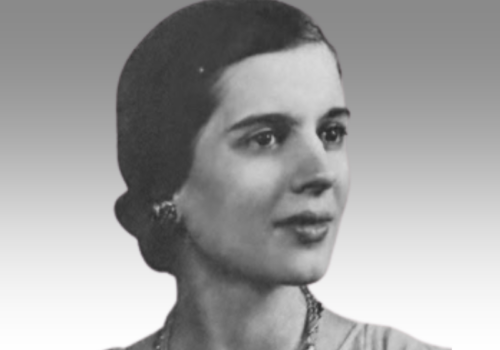
Alice P. Kenney, associate professor of history at Cedar Crest College, Allentown, Pennsylvania, was one of the early scholars keenly interested in the Dutch-American experience.
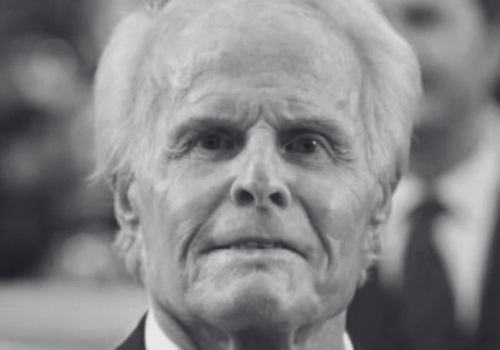
Richard D. Zanuck (1934–2012) was an American film producer and studio executive who led production at Twentieth Century Fox and later produced major films including Jaws, Driving Miss Daisy, Big Fish, and Road to Perdition.
In recent years, the enslavement of Indigenous people by Europeans across the Americas has received renewed attention from scholars. However, when it comes to the Dutch colonies, only in studies of the Guiana region does Dutch Indigenous slavery appear as a significant factor.