


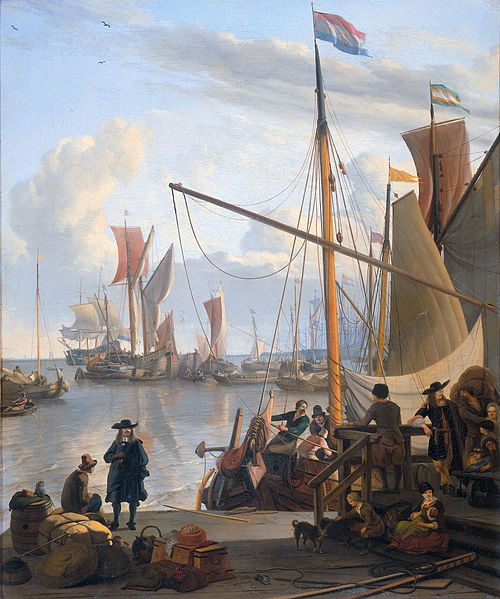

How did the colonists get to New Netherland?
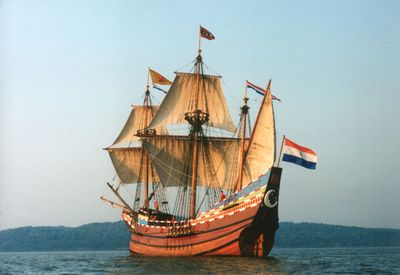
Replica of Henry Hudson’s Half Moon. Photo: New Netherland Museum/Jim Cleveland
Colonist sailed on ships from the Netherlands to North America. This journey across the Atlantic Ocean took between 50 to 120 days–sometimes longer–depending on the weather, winds, encounters with enemies, and the condition of the ship. Passengers slept below the ship’s deck, in narrow, closely packed bunks, where there was little light or fresh air. Many times water would drip through the cracks in the deck above their heads, soaking the passengers and their belongings. During storms at sea, it was even harder to sleep, and passengers would often slide off their bunks as the ship was jolted by strong waves.
Sanitary conditions were different from what we’re used to today. There were no bathrooms on board ship. Instead passengers and crew simply went to the front of the ship’s bow to void their bladders and bowels into the seawater below. Or they used chamber pots in their living quarters. When the pot was full, it had to be carried up to the deck to be emptied. Many passengers wore the same clothes for the entire voyage.
There was little variety in the food crew and passengers ate aboard ship. Their diet consisted mainly of butter, cheese, bread, and hard tack, a biscuit made from wheat and rye. These biscuits could last for months before turning bad. Dried fish, pickled goat meat, and apples were also part of the diet aboard these ships. Sometimes the menu included eggs and meat from chickens, pigs and sheep kept on the ship’s deck. Most ships also carried casks of lemon juice in order to prevent scurvy.
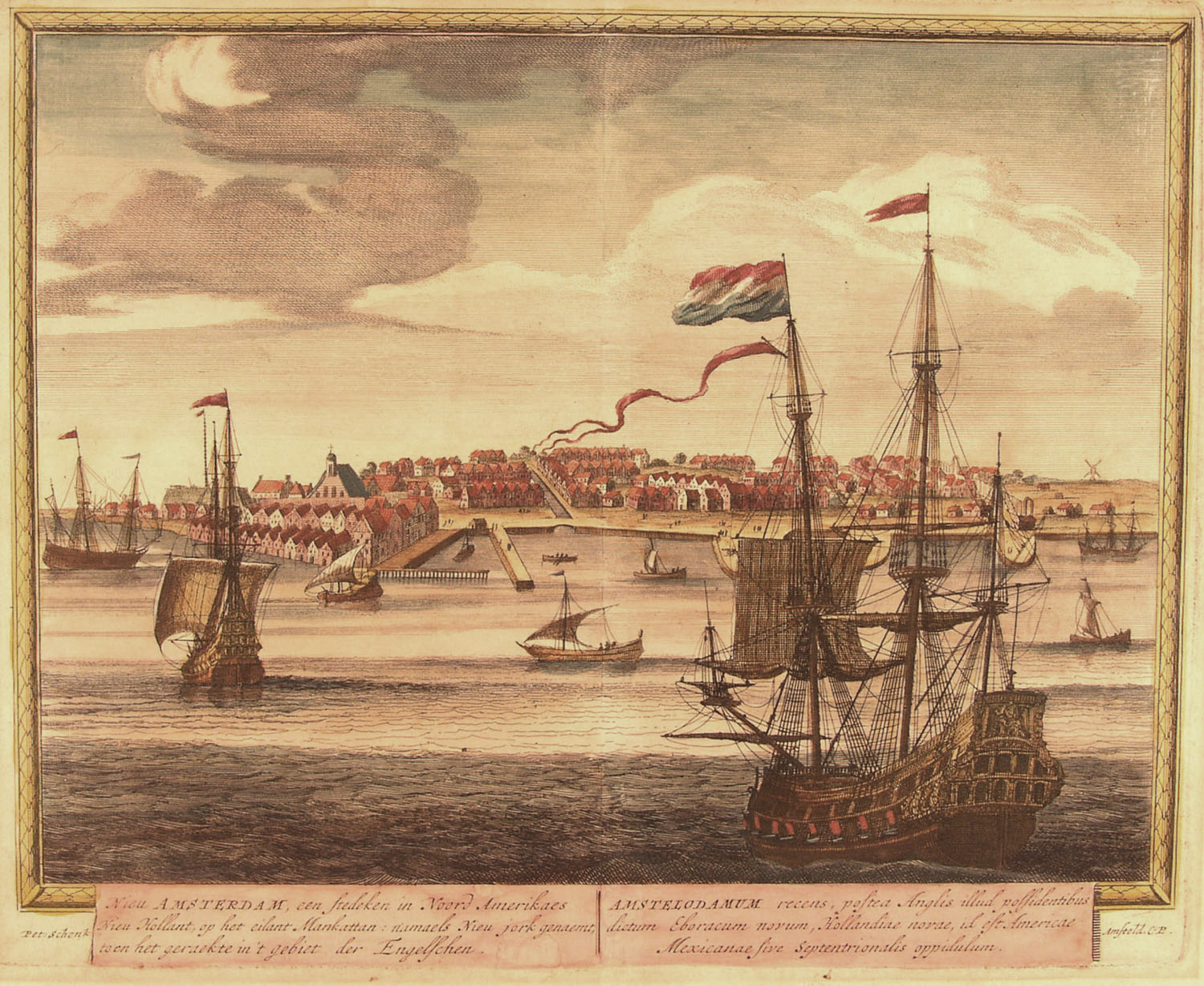
Arriving in New Amsterdam (now New York City), the ship’s crew would hoist up the flag and shoot gun salutes toward Fort Amsterdam. Before passengers were permitted to leave, a government official inspected the ship’s cargo.