

Heemstede (Hempstead)
Hempstead
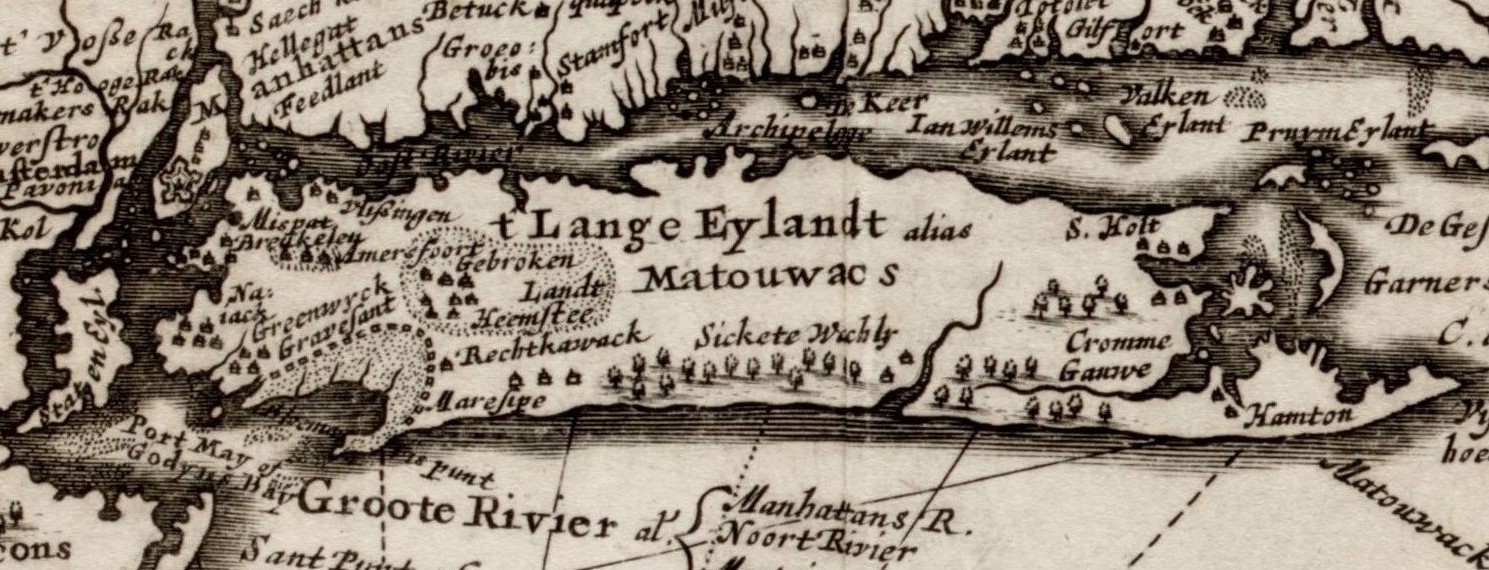
In 1643, a group of thirty to forty English families from Connecticut sailed across Long Island Sound then traveled overland until they reached a broad, flat, fertile plain that seemed to speak to them. This, they decided, was home. They obtained the land from the Indians, but, knowing that it was also within both the Dutch claim and the Dutch sphere of influence, they applied to New Amsterdam for the right to settle there. In 1644, Willem Kieft–after consulting with the West India Company and getting a favorable reply–granted them their wish. But there were conditions. The Dutch government of New Netherland desperately needed settlers on their territory, but they also wanted to ensure that they would be loyal to the Netherlands. The English swore an oath of allegiance to the Dutch government, and also signed a kind of contract stipulating that they would increase their number to 100 families by 1649. In exchange for these concessions, the English families were permitted to have their own church and minister, their own law enforcement, and their own court.
In March 1656, English petitioners from Heemstede requested permission to begin a new village, to be situated between what the Council of New Netherland called “Canaresse” and the village of Heemstede. The new village, called Rustdorp (restful village), was chartered in the same year and remained under Dutch rule. Rustdorp, which is not represented on the above map, is now known as Jamaica.
Shortly after its formation, Hempstead, as the town was known, fell under the gaze of the leaders of the Connecticut colony, who had long hoped to incorporate Long Island. In 1662, Connecticut sent representatives to ask the English towns on Long Island to change their allegience to the Connecticut colony, but Richard Gildersleeve, the Englishman whom Petrus Stuyvesant had appointed as magistrate, refused, and remained loyal to the colony to which he had sworn an oath. It was a shortlived victory for the Dutch, however. Within two years, Hempstead, like the other English towns on Long Island, would join with the English, and ultimately help to overthrow Dutch rule.