


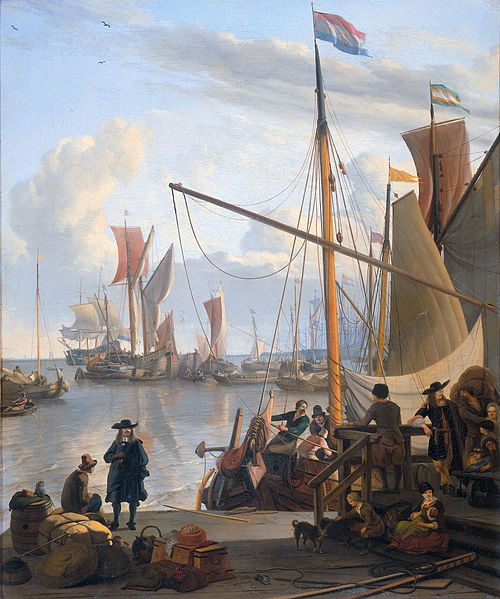

Half Moon at Delaware Bay
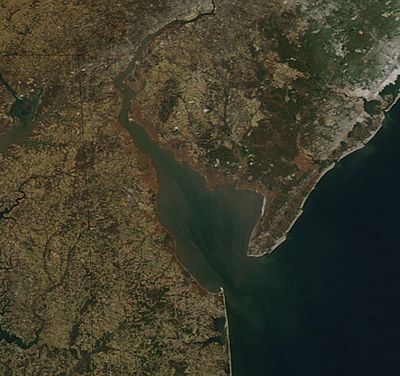 Delaware Bay
Creator: NASA Source: Aqua/MODISI
As Henry Hudson sailed up along the coast of North America in the summer of 1609, searching for a passage through the land mass that would lead to the riches of the Orient, his men sighted a great bay and river at latitude 30 degrees 54 minutes. Hudson ordered the men to sail into the bay. But the water grew shallow, and great sandy shoals stood out. As Hudson’s English mate, Robert Juet, recorded in the ship’s log: “In the morning at sixe of the clock wee weighed, and steered away North twelve leagues till noone, and came to the Point of the Land; and being hard by the Land in five fathomes, on a sudden wee came into three fathomes…” Juet concluded, “And hee that will thoroughly Discover this great Bay, must have a small Pinnasse, that must draw but four or five fotte water to sound before him.”
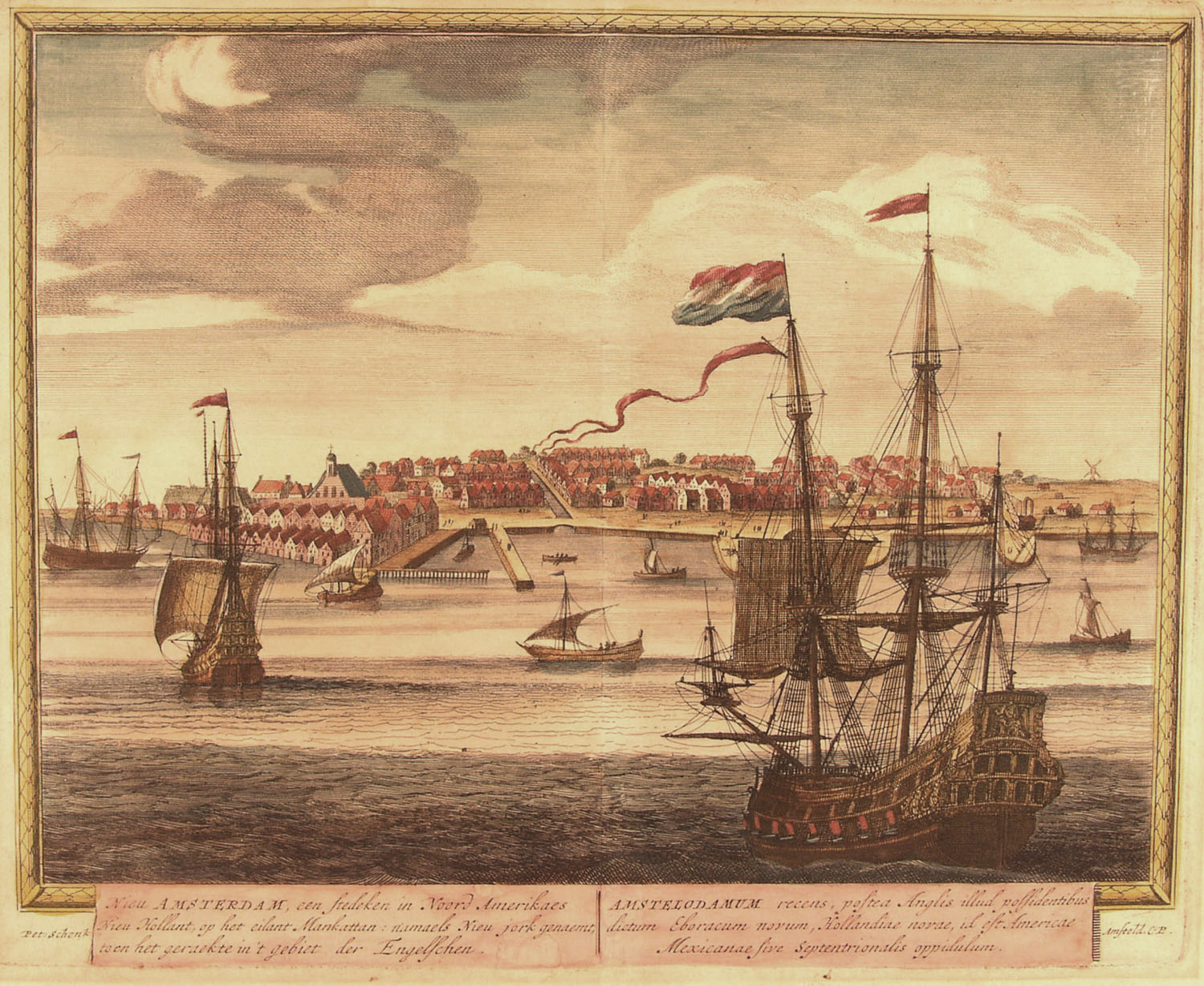
The men of the Half Moon had discovered what would later be called Delaware Bay and the Delaware River, both of which would become famous for their treacherous shallows. Because of these, Hudson concluded the river could not lead through to Asian waters, and so continued further north along the coast. His short excursion into the bay was enough, however, for the Dutch to lay claim to the region, and to inaugurate the series of forts and settlements over the next half a century on what, under the Dutch, would be called the South River.