

Theodore Roosevelt 1858-1919
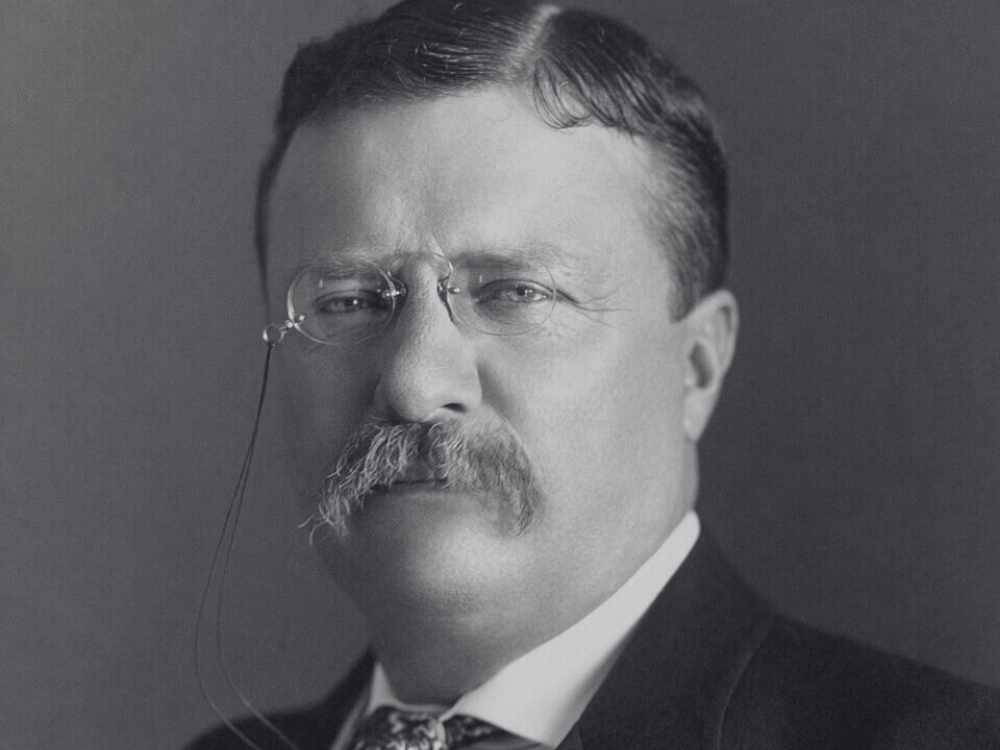
Theodore Roosevelt (1858–1919), the 26th President of the United States, became the youngest president in American history after the assassination of William McKinley in 1901. Known for his energy and reform agenda, he championed conservation, trust-busting, consumer protection, and international diplomacy, and won the Nobel Peace Prize for mediating the Russo-Japanese War.
- Theodore Roosevelt
Theodore Roosevelt – Wikipedia |
Britannica |
National Park Service – Theodore Roosevelt
President of the United States
The two youngest U.S. Presidents at the time they became president were Theodore Roosevelt and John F. Kennedy. Roosevelt was 42 and Kennedy was 43 years old upon becoming president. However, Kennedy was the youngest elected president. Roosevelt succeeded President McKinley following McKinley’s assassination in Buffalo, New York in 1901. Roosevelt was 46 years old when he was elected president for the first time in 1904.
Theodore Roosevelt was probably the most energetic U.S. president of all the presidents up to that time. He did not like to be depicted as fitting in a niche. To become a U.S. president you clearly must be a politician. But he was much more. He was a conversationalist, a historian, a naturalist, an art patron, a rancher, an advocate of social order and justice, an advocate of food and drug safety, a trust buster, an advocate of management-labor negotiation, an advocate of democratic politics including women’s suffrage and a world peacemaker for which he won the Nobel Peace Prize. In other words he was a leader without peers. And by being all of the above he set a model for future American presidents. Unfortunately not many followed his example.
Theodore Roosevelt became president on September 14, 1901 when President McKinley was assassinated in Buffalo, New York while visiting the Pan American Exhibition. Roosevelt was only 42 years old at the time of the assassination. He became the 26th US president, the youngest ever and since then. Interestingly, his inauguration took place in the State [New York] in which he was born on October 27, 1858, where he served as a New York State Assembly Man from 1881 to 1884, and where he served as a New York State Governor from 1897 to 1898. At the time of his inauguration he had only been a vice-president for six months, so as a result he would serve nearly a full first term. He was re-elected to another full term in 1904, and decided that it would be his final term, a decision he later clearly regretted.
The major areas where he left an impact during his presidency were conservation, the arts and history, order and social justice, foreign policy, including peace making, trust busting and food and safety legislation.
In the area of conservation he provided federal protection for nearly 230 million acres equivalent to almost 360,000 square miles, an area 600 miles long and 600 miles wide. This area came to include 150 national forests, 51 federal bird reservations, 5 national parks, 18 national monuments, 4 national game preserves and 21 reclamation projects.
Other areas where Roosevelt stood out were as a patron of the arts, as one of the founding members of the American Institute of Arts and Letters, as the founding member of the Long Island Bird Club, as president of the American Historical Association, and as a naturalist. He led two major international expeditions to Africa and South America to collect information, data and artifacts for American museums. As a result of the above activities he was recognized as a historian, a naturalist and a man of letters. He was also interested in collegiate sports and founded the National Collegiate Athletic Association.
His platform in the 1912 presidential election, on the Bull Moose Party ticket, consisted of the democratization of American politics, reversal of judicial decisions by popular vote, direct election of U.S. Senators, women suffrage, and direct popular vote on legislation. Earlier as U.S. President he supported labor-management negotiations through his donation of $40,000 to a foundation which supported labor-management relations. Many of his platform proposals were subsequently adopted by the Wilson and Franklin Roosevelt Administrations.
In the foreign policy area he was exemplary. He was able to defuse the Russian-Japanese war in the Far East, for which he was subsequently awarded the Nobel Peace Prize. During his nearly eight years as president not a single member of the U.S. forces died in combat. He expanded the U.S. Navy and had the Navy conduct a world tour from 1907 to 1909 to show case and demonstrate U.S. sea power. He was the driving force behind the building of the Panama Canal and the establishment of the Canal Zone in Panama which allowed the building of the Canal. Unfortunately he used strong arm tactics to accomplish the Canal Treaty for which he received a considerable amount of criticism.
Roosevelt was a major trustbuster. Although he was not anti-business at all, he felt that the large railroad, bank and oil trusts had too much power which enabled them to fix prices and control markets. He instituted more than 30 court cases, mostly successful, against corporations. He also forced the coal mine operators to negotiate with the mine workers. The Hepburn Railroad Act and the Elkins Act also strengthened the enforcement power of the Interstate Commerce Commission in its control over the railroads.
The Pure Food and Drug Act and the Meat Inspection Act were established in 1906. Both acts established new standards and provided protection and safety in the consumption of food and the use of drugs. Consumer Protection was needed and overdue.
Unlike his fellow Dutch-American President, Martin Van Buren who was born in an apartment above a tavern and was the son of a tavern keeper, Roosevelt was born in an affluent family in New York City on October 2, 1858. The Roosevelt family lived in a house on East Twentieth Street built by Theodore’s grandfather. His parents were Theodore Roosevelt [1831-1878] and Martha Bulloch [1834-1884]. Both of his parents died at relatively young ages. His paternal grandparents were Cornelius Van Schaick Roosevelt [1794-1871] and Margaret Barnhill [1759-1861]. The family’s wealth came apparently largely from land ownership.
Roosevelt was able to attend Harvard University and earned his A.B. degree in 1880. He then went to Columbia University’s School of Law, but only stayed for one year. The reason of why he left is unclear, but he probably had a taste for politics even then. The same year he left Law School he became a New York State Assembly Man and served from 1881 to 1884. From 1889 to 1895 he was the U.S. Civil Service Commissioner. In 1895 he became the president of the New York City Board of Police Commissioners. Two years later, in 1897, he became an Assistant Secretary of the Navy and served in that position until 1898. He served as Governor of New York State from 1899 to 1901, whereupon he became a Vice President of the United States in the McKinley Administration.
Roosevelt married his first wife, Alice Hatheway Lee, on his birthday, October 27, 1880, in Brookline, Massachusetts. Alice died in childbirth in 1884, on the same day Roosevelt learned of his mother’s death. Fortunately, the baby survived and Alice Lee Roosevelt [1884-1980] became Theodore’s first child. As a devoted family man the two deaths were a major shock, and he retreated to a ranch in Wyoming where he stayed for two years. In 1886 he returned to run for mayor of New York City, but he lost. That same year he also traveled to London, England to marry his second wife, a childhood friend, Edith Kermit Carow on December 2, 1886. Edith would bear him five children consisting of Theodore Roosevelt Jr. [1887-1944], Kermit Roosevelt [1889-1943], Ethel Carow Roosevelt [1891-1977], Archibald Bulloch Roosevelt [1894-1979], and Quentin Roosevelt [1897-1918].
Theodore Roosevelt had two sisters and a brother. They were Anne Roosevelt [1855-1931], Corinne Roosevelt [1861-1933] and Elliott Roosevelt [1860-1894]. Elliott was the father of Eleanor Roosevelt, the wife of President Franklin Delano Roosevelt.
Theodore Roosevelt passed away on January 6, 1919 at his Sagamore Hill Estate in Oyster Bay, New York. There are many sites across the country that commemorate the most unusual and most energetic president this country has ever had. The sites consist of the Theodore Roosevelt Birthplace National Historic site in New York City, the Sagamore Hill National Historic Site in Oyster Bay, New York, The Roosevelt Inaugural National Historic Site in Buffalo, New York, and the Theodore Roosevelt Island in McLean, Virginia.
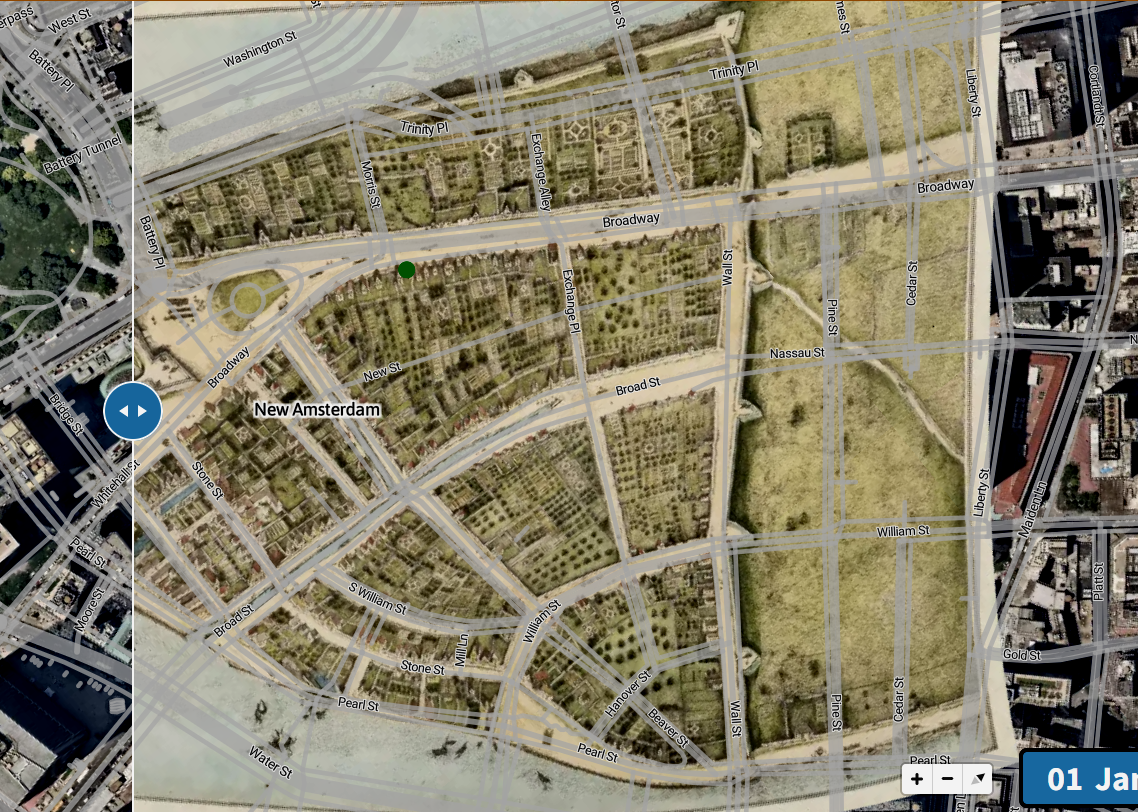
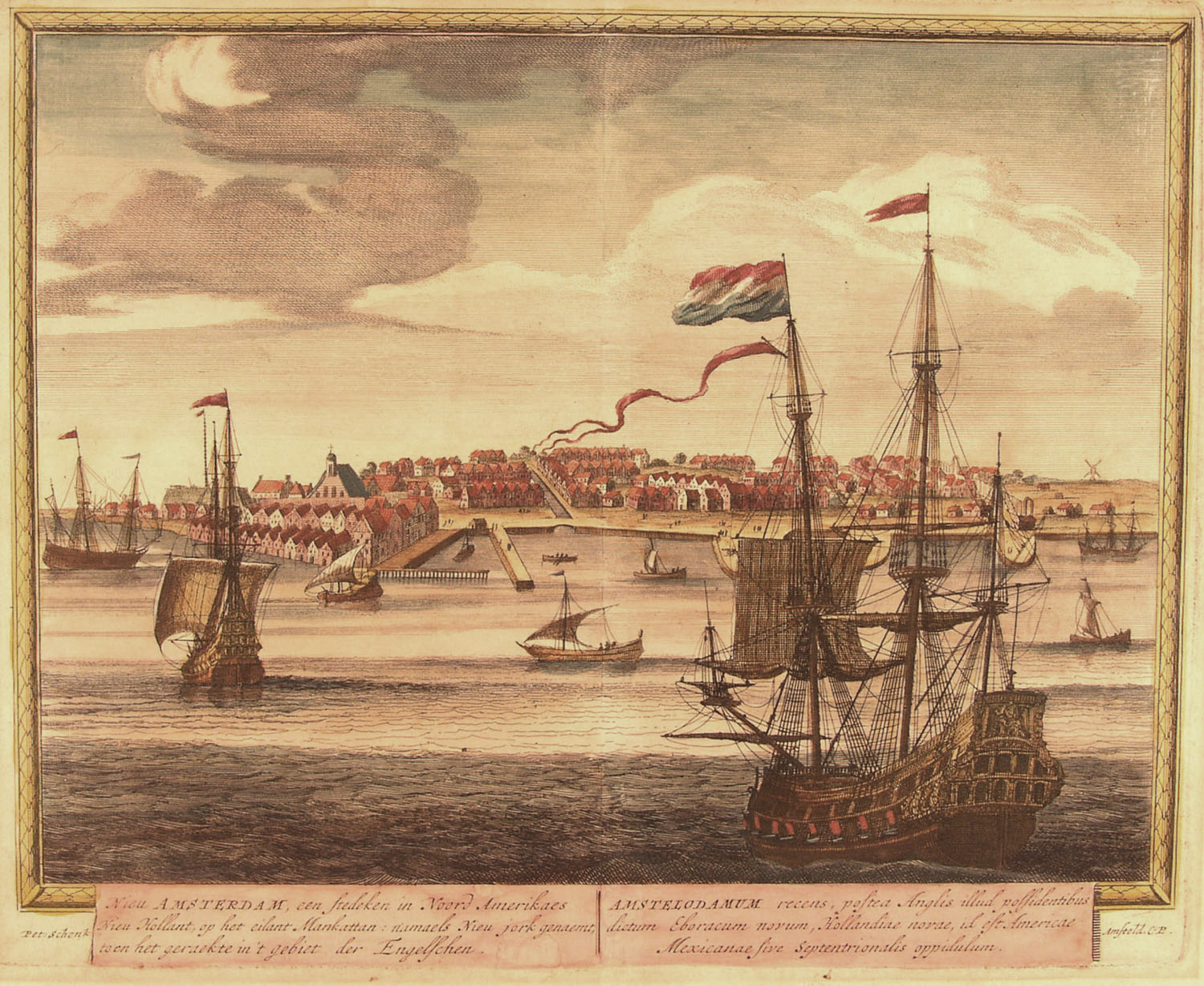
The Roosevelts, Theodore, Franklin Delano and Eleanor, were all descendants of Claes Martenszen Van Rosevelt [?-1658] and Jannetje Toms [?-1660], who were both part of the original contingent of Dutch immigrants who settled in New Amsterdam in the 1640’s. Their grandsons, Jacobus Roosevelt [1692-1776] and Johannes Roosevelt [1689-1750], became the forefathers of the two Roosevelt clans that produced our Roosevelt presidents. The Jacobus branch was called the Hyde Park branch, and the Johannes branch represented the Oyster Bay branch.
Theodore Roosevelt was the great great great grandson of Johannes Roosevelt and Franklin D. Roosevelt was the great great great grandson of Jacobus Roosevelt. Eleanor Roosevelt was the niece of Theodore Roosevelt. She was thus the fifth cousin of Franklin Roosevelt once removed.
Explore More Dutch Americans