


The Lessons of the Catastophe: A.J.F. van Laer’s Report on the 1911 Capitol Fire
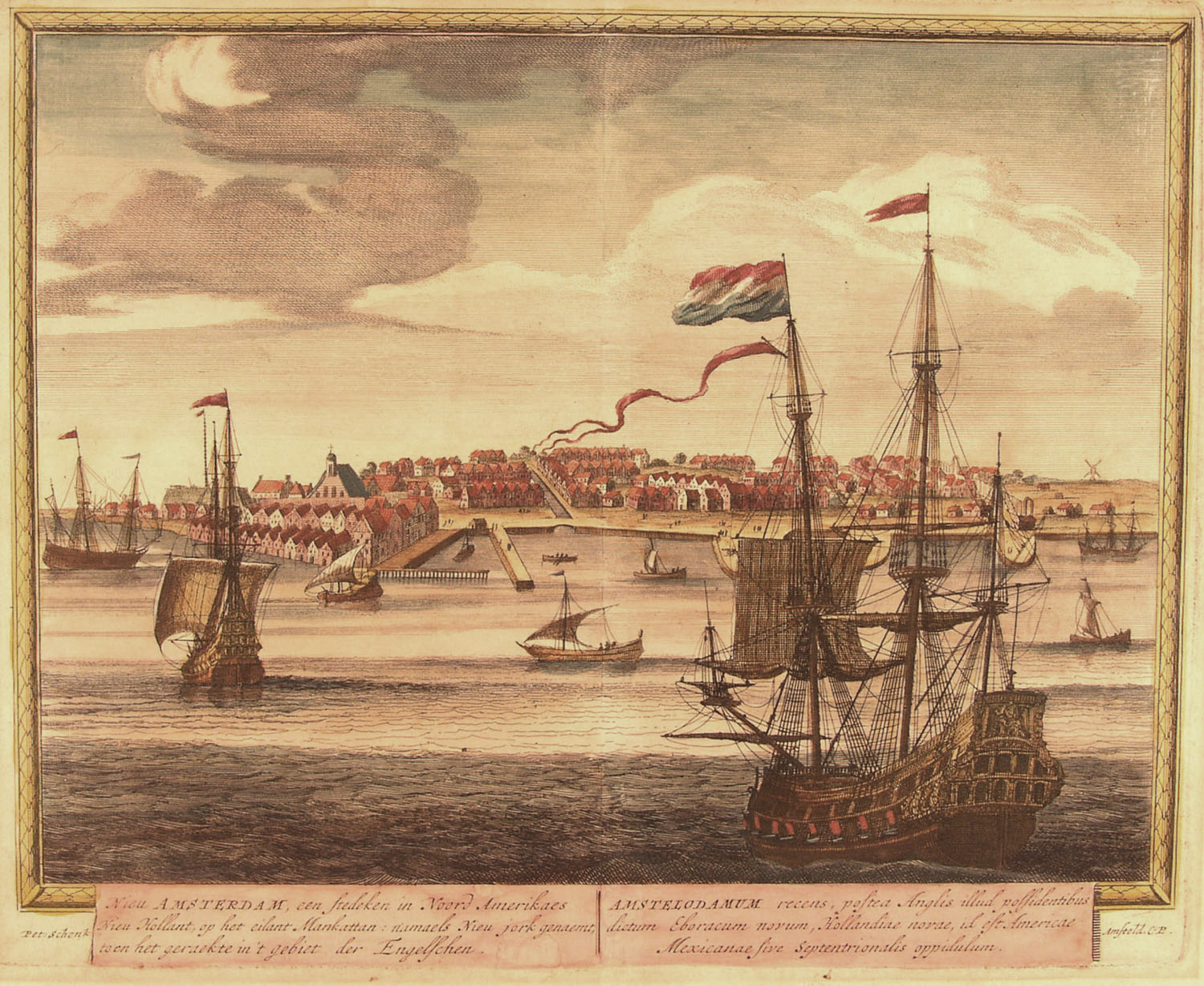
When, in the early hours of March 29, 1911, fire gutted much of the New York State Capitol and State Library, few people, if any, could have been more devastated than State Archivist Arnold J.F. van Laer. Hundreds of thousands of books and documents were either burned up or severely damaged, including the 17th century Dutch colonial records that Van Laer had begun to translate.
By Peter Douglas
Of the many fires that have claimed public archives in the United States, few have been more destructive than the Albany Capitol fire of 1911. “The fire,” Van Laer wrote, “demonstrates more clearly than anything else that has happened to American archives within recent years the folly of our practice of trusting to administrative buildings for the safe keeping of public records.” This appeared in the Annual Report for 1911 of the American Historical Association. His report is entitled The Lessons of the Catastrophe in the New York State Capitol at Albany on March 29, 1911. It details the dangerous situation that existed before the fire, and gives his recommendations for changes in the way archives should be stored. He is refreshingly direct in his criticism of those whose actions and inaction allowed this tragedy to take place. He writes:
“The conditions which made such wholesale destruction possible were such as are likely to prevail today in almost every capitol in the United States, and may be traced directly to the three main sources of danger to the contents of nearly all our administrative buildings, namely, (a) carelessness and neglect, due to partisan control, which puts the buildings in charge of inefficient persons who have no regard for the priceless treasures entrusted to their care; (b) overcrowding, due to the demands on space made by the ever increasing public business; and (c) the difficulty of making an absolutely fireproof structure out of a building which from the nature of its destination must have many connecting rooms of large dimension and which must be provided with elevator shafts, heating and ventilating ducts, and all other modern conveniences which render it impossible to segregate a fire the moment it gets started.”
One can detect a barely controlled undercurrent of acrimony in Van Laer’s words, for he knows that the fire could have been prevented. While Van Laer makes no accusation concerning the specific cause of the fire, he has no doubt about the bureaucratic mindset that allowed it to happen. He is understandably angry, writing of “folly” and “partisan control,” and pointing his finger at the unnamed “ineffective persons” responsible who showed unforgivable “carelessness and neglect.” His justification is simple: because of this, his library now lies in ruins.
The problems that underlay the fire’s cause and intensified its effect were notoriously well known but never tackled. As Van Laer says: “That the State library was exposed to all these evils has long been known to those who were familiar with the building.” He is very specific. The State Library was “assigned to quarters which were never intended for its use and which from the first were wholly inadequate to its needs.” The library was “soon compelled to resort to various schemes to provide additional room for its fast growing collections.” These included corridors being converted into rooms by means of partitions, additional storage in the basement and the attic, and finally, when no more space was available, “recourse was had to the dangerous expedient of crowding the aisles and every nook and corner with temporary shelving made of cheap and inflammable pine.” In 1897, less than eight years after the library moved into the new Capitol, conditions had become so intolerable that the librarian recommended a separate and fireproof building. In vain, year after year, the request was repeated and the dangers of false economy were underscored.
Of all the dangers, the most serious was that from fire. Such destruction always threatened this unique body of archives which, for supposed greater security and convenience of consultation, had, at different times, been shifted from one state office to another, and which, for lack of better facilities, were now crowded into a narrow room on a mezzanine floor in what was originally the end of a corridor. This location was immediately over and next to rooms that, during legislative sessions, were occupied by Senate committees and in which smoking was allowed.
Regarding the possibility of fire, Van Laer quotes from the State Library’s 1899 Annual Report: “Hundreds of thousands of feet of oak have been used in shelving and interior finish, and in spite of careful installation of electric wires, we cannot avoid the fear that some day this woodwork in some room will be accidentally set on fire and priceless material destroyed.” He quotes further that rats or mice are known to have gnawed insulation from electrical wiring and that workmen accidentally broke it with their saws (“as has happened a score of times in the past dozen years”). The 1899 report stresses that the library has “treasures so costly that their destruction would cause serious criticism of the Regents as trustees for not insisting on better protection than is now available.” How much clearer could the risks have been?
Despite what must have been his great sorrow and bitterness, Van Laer proposes numerous perceptive lessons to be drawn from the disaster. He is well aware that libraries are unsatisfactory places for storing public records; they need a lot of space for their own growing collections and can’t provide enough room for the huge amount of material that would come to them if they were to accept all the necessary archives. Furthermore, the needs of library users and of the library’s administration call for an arrangement of rooms and forms of construction that are incompatible with absolute safety. He makes the point that this has long been recognized in Europe, and libraries there have built special archive depositories on the plan of the familiar safety-deposit building “composed of small stack compartments with solid decks and iron doors.” And, of course, equipped with everything required for fire protection. “It is in such buildings alone,” he states, “and not in large, monumental structures, whether libraries or administrative buildings, that the future safety of our records lies.”
Another lesson discussed is the “absolute fallacy” of fireproof construction in buildings that are filled with combustible material. While he agrees that the exterior of such buildings may be fireproof, the contents will burn “like fuel in a furnace” and nothing can prevent the flames from sweeping throughout the building once the fire starts. Helping to spread the flames are the elevator shafts, book lifts, heating and ventilating ducts, and all other passages leading from one floor or room to another. The effect of such “flues” was particularly noticeable, he states, in the Manuscripts Room where everything in their immediate vicinity was totally consumed. This is where, more than two days after the outbreak, the draft from a hot-air register fanned into flames a smoldering pile of debris to the extent that it was repeatedly necessary for firemen to train their hoses on it.
The only safeguard, he affirms, lies in “constant supervision.” In 1911 the State Library relied one elderly night watchman, Samuel Abbott, who died in the fire. It must have hurt Van Laer to write: “Were it not for the fact that fire swept into the library from an adjoining room when it was beyond the control of a single man, it is not likely that any serious damage could have been done.” He identifies the weak point as lying in “the incomplete isolation of the library from administrative offices over which it had no control.” After the fire, it seemed incomprehensible that no one ever had “sufficient wisdom” to understand that the glass partitions between the State Library and Legislature’s rooms were “the most dangerous feature of the whole arrangement.”
Van Laer makes numerous other observations and suggestions for improving fire safety, ranging from the need for fire drills to how manuscripts are bound, from the perils of filing boxes to why books should be packed closely on the shelves. Perhaps surprisingly he prefers wooden shelves to steel. The former burn away and let the books to fall in a heap, allowing the debris on top to protect those beneath; with steel, everything burns on the shelves. The survival of so many of the Dutch records is usually in part attributed to the fact that they were shelved below other documents—English, it is said—whose charred and sopping remains offered some protection.
He emphasizes that the most important thing is to begin the rescue as soon as possible: “Paper burns slowly,” he says, “and much may be saved in the first hours after the fire that, if left to smolder and to be exposed to the action of water, is liable to be damaged beyond repair.” Improved communications are vital too, so that the night watchman or other person in charge “may immediately put himself in touch with the persons who are most familiar with the location of valuable material and responsible for its keeping, with a view of obviating the necessity of an improvised organization which may entail fatal delay.”
This last must have been a particularly sore point with Van Laer, for in the case of the Albany catastrophe neither the Director of the State library nor the State Archivist (himself) was notified of the fire until several hours after its discovery. Even though the fire department would not have allowed them into the building, “it is probable that by timely action and proper direction much valuable material could have been saved.” Van Laer followed his own advice well, spending long days in the wet, cold, smoldering, and distinctly dangerous ruin of the Capitol to rescue what remained of the priceless documents in his charge. His courageous role in the State Library’s tragedy is a celebrated and immortal story.