


Oorlogsbuit: Dutch War Booty Back in England
After 345 years, in March 2012, a magnificent relic of the Anglo-Dutch wars returned to England—at least temporarily. As part of the celebrations for the Diamond Jubilee of Queen Elizabeth II, the Rijksmuseum loaned to the National Maritime Museum in Greenwich the ornate stern carving from the warship Royal Charles, captured by the Dutch in 1667.
By Peter Douglas
HRH Willem-Alexander, Prince of Orange, was present when the carving was taken aboard the Royal Netherlands Navy ship Holland. Both the Prince of Orange and HRH Prince Michael of Kent witnessed the official loan ceremony in London.
Built in 1655 for the Commonwealth Navy, the Royal Charles was originally named Naseby after Cromwell’s victory at the Battle of Naseby in 1645. The ship was renamed in 1660—Naseby being too painful a reminder of Cromwell’s rule—in honor of the new king, Charles II. Charles not only gave his name to the ship but also his royal coat of arms, supported by the lion and unicorn, which formed the ship’s impressive stern piece.
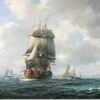
The career of the 80-gun, three-decker warship was brief—only twelve years. She fought in the Second Anglo-Dutch War, including at the Battle of Lowestoft (1665), the Four Days’ Battle, and the St. James’s Day Battle (both in 1666). But the pride of the English fleet met a less than heroic end. During the Dutch raid on the Medway in June 1667, she was captured and taken in triumph to the Netherlands by Admiral Michiel de Ruyter, along with the ship Unity.
For six years, the Royal Charles remained on public view at the dock in Hellevoetsluis. The Dutch never put her into service—she drew too much water for their shallow coastal waters. In 1673, the ship was scrapped, but her stern carving was preserved. At the end of the 19th century, the Dutch Navy presented the carving to the Rijksmuseum, where it has remained on public display ever since.
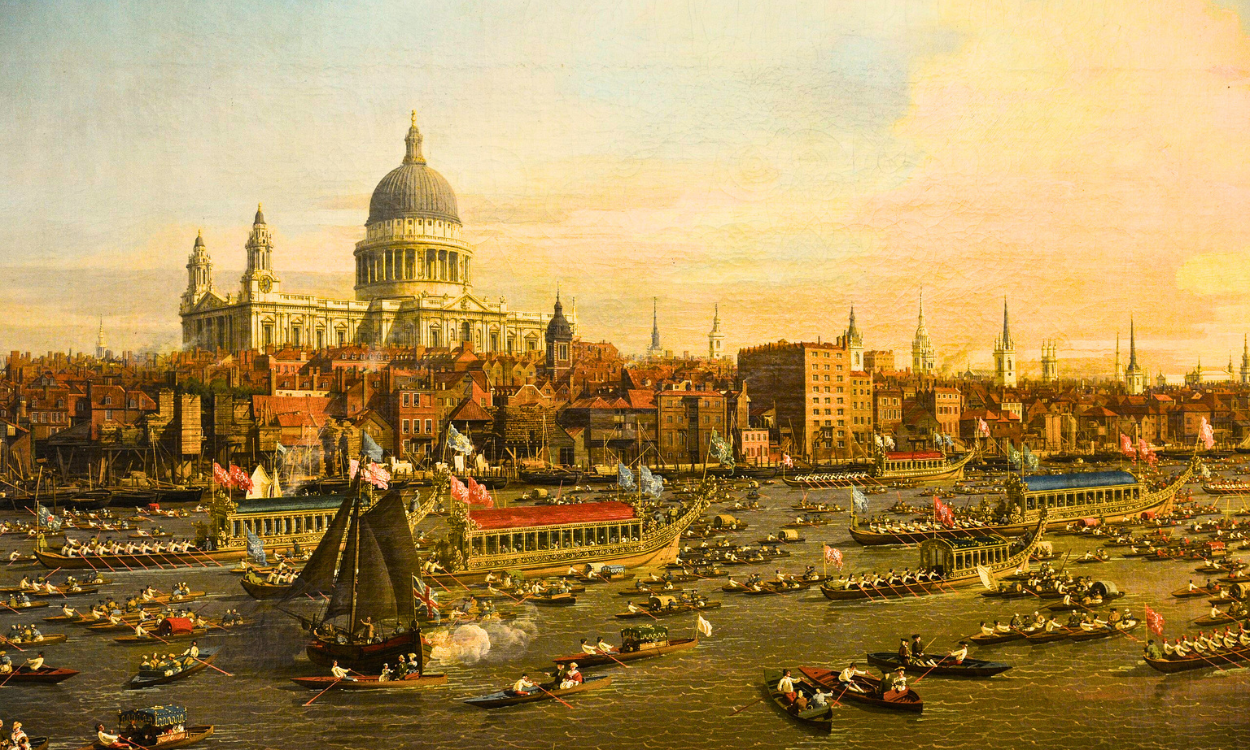
The carving itself is just over twelve feet wide, nine feet tall, and weighs around 1,650 pounds. It was featured as a highlight of the 2012 exhibition Royal River: Power, Pageantry, and the Thames at the National Maritime Museum. Today, with the passage of nearly three and a half centuries, what was once a humiliating reminder of naval defeat has been transformed into a splendid and unique artifact of the Second Anglo-Dutch War.
Purchase the book: Royal River, Power, Pageantry & the Thames by David Starkey