

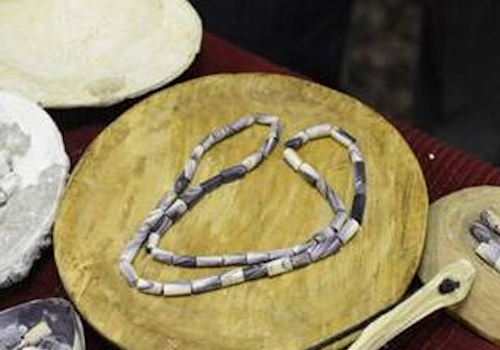
In a talk from NNI's 2012 summer institute for elementary and middle school teachers, artist, writer, and re-enactor Arthur Kirmss explains the history of wampum and demonstrates how the shell beads were made, using reproduction tools and 17th-century techniques.
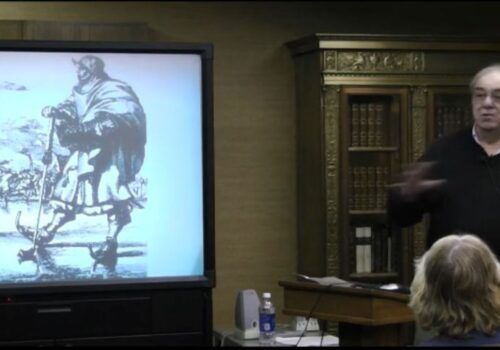
A talk in which New Netherland Research Center director Dr. Charles Gehring discussed the Center's promotion of scholarship and dissemination of knowledge of the seventeenth-century Dutch colony of New Netherland, presented by the Friends of the New York State Library on November 28, 2012.
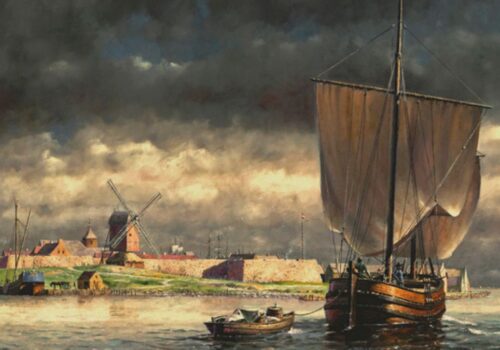
A documentary DVD about the New Netherland Project, where more than 18 volumes of the official archives of New Netherland have been transcribed, translated, and published to date, and its connection with modern times.
This volume of land papers from the “Colonial Manuscripts” in the New York State Archives comprises translations of three Dutch record books lettered GG, HH...
Piece of Eight – The Spanish dollar or “piece of eight” became an international currency in the 16th century as the volume of international trade...
Hans Bontemantel was a director of the Dutch West India Company’s Amsterdam Chamber, which supervised the governance of New Netherland. In addition to official correspondence,...
Collected on this page are the manuscript images, transcription, and translation of the Govert Loockermans Correspondence and Papers, N.D., 1647-1700 (Series XXII of the Stuyvesant-Rutherfurd...
Antony de Hooges served as business manager of Rensselaerswijck, beginning somewhere between March 1645 and February 1646 and running through March 1648. De Hooges recorded...
Manuscript Images
Manuscript Images
Manuscript Images
Important General Considerations Spelling Standards – ij is expressed as y – Name endings ss, sz., or sen have been standardized to sz – When...