


Old Bridge’s Name Recalls Tribal History
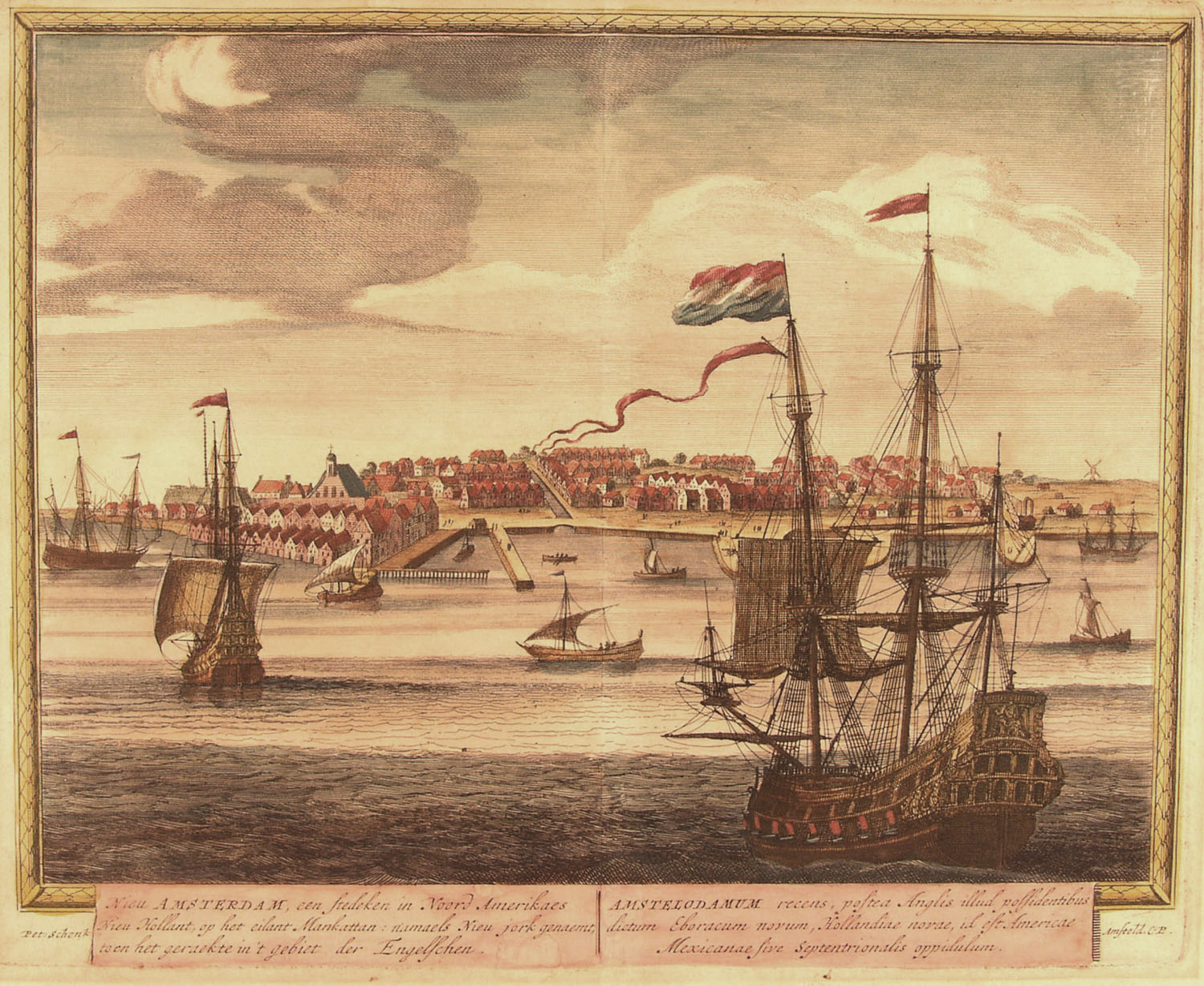
The opening of the new Tappan Zee Bridge (officially renamed the Governor Mario M. Cuomo Bridge) in September 2018 can be seen as yet another reminder of the Dutch history of the Hudson Valley. The “Zee” component of the name is clearly Dutch, meaning “sea,” as in the Zuider Zee, or southern sea, in the Netherlands. But what does Tappan mean, and why is part of a river called a sea?
by Peter A. Douglas
To the Dutch in the seventeenth century, this stretch of the Hudson (the Noort Rivier, or North River, to them) did indeed seem something like a sea because at this point, around ten miles north of Manhattan, there is a widening of the river. This broad “sea” is about three and a half miles across at its widest point near Haverstraw Bay, and runs for a dozen miles between Rockland and Westchester counties, extending from Irvington in the south to Croton-on-Hudson in the north.
The original Tappan Zee Bridge, built from 1952-55, joined the communities of Nyack in the west and Tarrytown in the east. There were concerns about the structural integrity of the sixty-year-old bridge, and construction began on the new bridge in 2013, running a few yards to the north of the existing bridge and parallel to it.
The word Tappan in the bridge’s name, and that of the river’s natural widening, comes from the name of a sub-tribe of the Munsee-speaking Algonquin tribe, an indigenous people of the northeastern woodlands, whose historical territory included present-day New Jersey, eastern Pennsylvania along the Delaware River, New York City, western Long Island, and the Lower Hudson Valley. The name is thought to derive from the Algonquin language as used by New Netherland settlers, who spelled it Tappaen. A possible origin is the word tuphanne, meaning “cold water.”
The tribe’s first contact with the Dutch settlers was as trading partners. It is from them, for instance, that David Pieterszoon de Vries (c.1593-1655), a navigator from Hoorn who was earlier involved in the Swanendael colony in Delaware, purchased 500 acres of land in 1640 and built Vriessendael in what is now Edgewater NJ, the first known homestead in Bergen County, where he raised cattle and grew corn and tobacco.
The name Tappan occurs throughout the tribe’s former territory. Vriessendael, the patroonship on the west bank of the Hudson, was also known as Tappan. We see it in Lake Tappan, a reservoir created by the Tappan Dam on the Hackensack River. We find it again in Old Tappan in Bergen County, and in Tappan in the town of Orangetown, Rockland County.
In 1994, the name of New York Governor Malcolm Wilson (1914-2000) was added to the Tappan Zee Bridge’s name on the twentieth anniversary of his leaving the governor’s office in December 1974, though his name is almost never used when the bridge is spoken about colloquially. It’s just the Tappan Zee Bridge.
In June 2017, Governor Andrew Cuomo was successful in passing legislation to name the bridge after his father, former Governor Mario Cuomo (1932-2015). This controversial decision has been met with stiff criticism. A poll of Rockland and Westchester county residents found that only fifteen percent of respondents were in favor of the change, the majority preferring to keep the old name and thereby its local historical associations. This surge of disapproval is reflected in a huge petition against the renaming, and in an Assemblyman’s promise to introduce legislation to revert to the bridge’s old name. The petition’s creator, Dr. Monroe Mann of Port Chester, New York, said “The name Tappan Zee has no politics associated with it.” He goes on to say that the old name “properly recognizes the true founders of this land: the Tappan Indians and the Dutch. Most importantly, we should not recognize the contributions of one in history by destroying a memorial to another.”
If somehow returned to life, the ancient tribe could only marvel at the sight of the new bridge. And in their wonder they would surely be gratified to know that, in a resilient and democratic fashion, and despite an unpopular bureaucratic fiat from Albany, the many millions of travelers on I-87 and I-287 will still know and call it by its old name, their name: Tappan Zee.