



Chasing Whales and Wealth: The Story of the Noordsche Compagnie
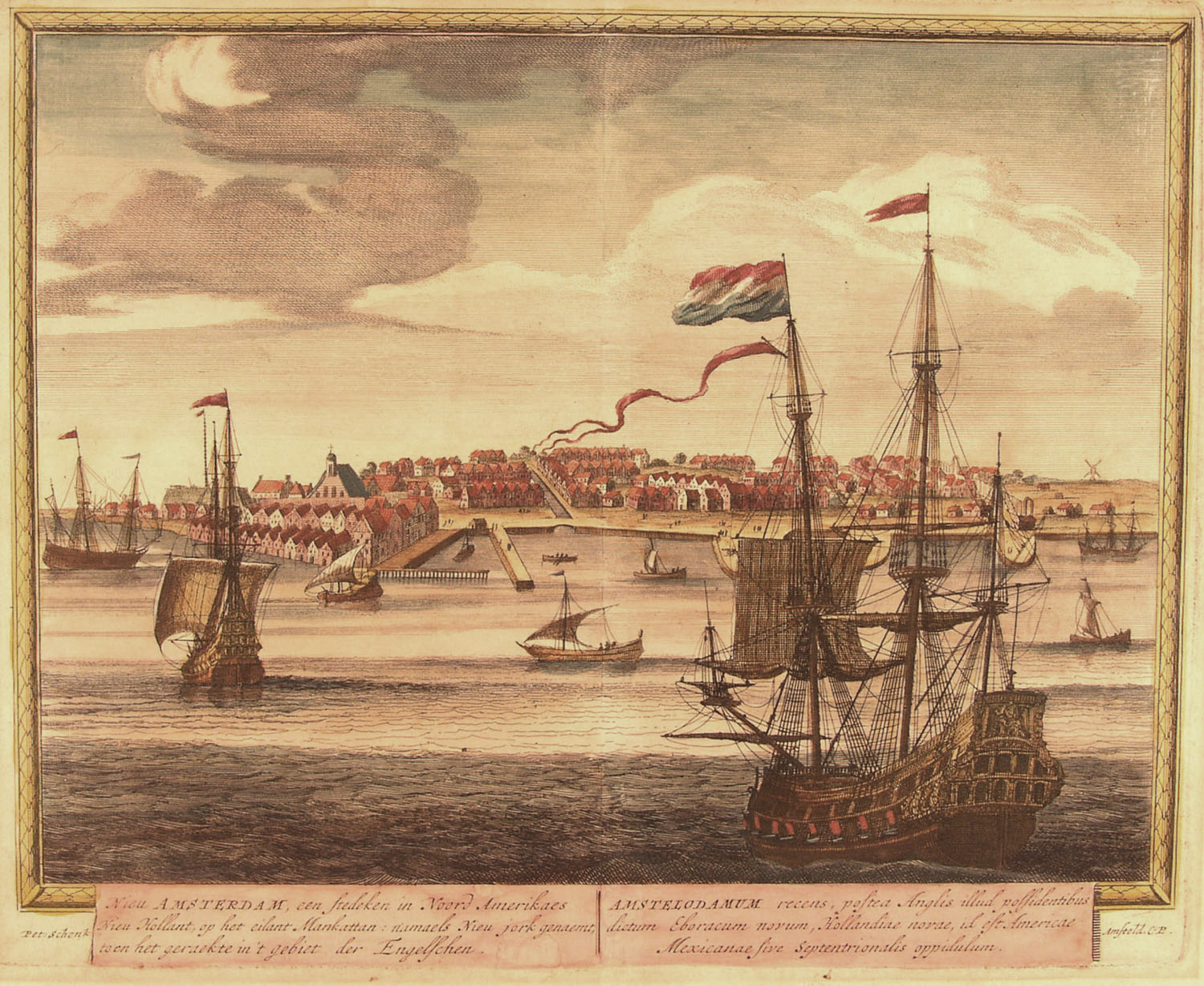
Those concerned with the study of New Netherland will be familiar with the Dutch East India Company, the Vereenigde Oostindische Compagnie (VOC), established in 1602 to trade with India and Southeast Asia, as well as the Dutch West India Company, the Geoctroyeerde Westindische Compagnie (GWC), chartered in 1621 for a trade monopoly in North America, the Caribbean, and Brazil.
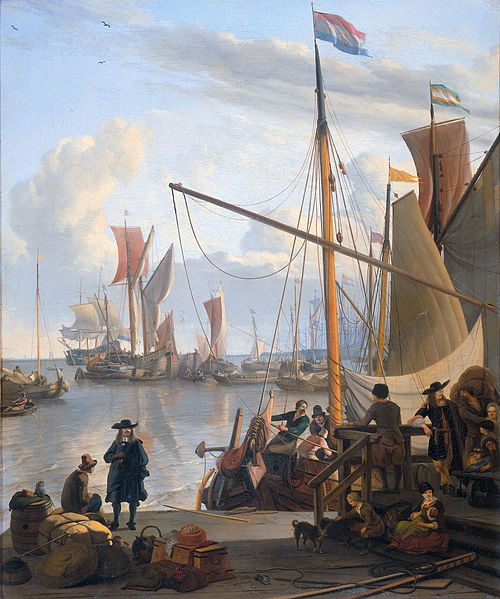
However, making a more modest appearance on the bustling stage of seventeenth century European commercialism, compared with the other two giants, is the Geoctroyeerde Noordsche Compagnie, the Chartered Nordic Company, a Dutch cartel in the whaling trade. This company is less well known than either the VOC or the GWC, probably because it didn’t last as long as the other companies—only twenty-eight years—and it raised less money.
The Noordsche Compagnie was established in early 1614 by a patent from the States General. It was not a single firm in the manner of the VOC but rather an alliance of autonomous entities. The company’s administration was initially divided among five independent kamers, or chambers, from the communities of Amsterdam, Hoorn, Enkhuisen, Rotterdam, and Delft. Two years later branches were created in Vlissingen, Middelburg, and Veere, and in 1636 Harlingen and Stavoren joined up. The Noordsche Compagnie was also known as the Groenlandse Compagnie (Greenland Company), a very misleading name because the “Greenland” here is Spitsbergen (Svalbard), once thought to be identical with, or connected to, what is called Greenland today, many hundreds of miles to the west.
One of the original investors in the Noordsche Compagnie was a prominent Dutch merchant called Thijmen Jacobsz Hinlopen (1572-1637). Cape Henlopen (originally Hinlopen) in Delaware, the southernmost edge of New Netherland, is named for him, as is Hinlopen Strait between Spitsbergen and Nordaustlandet, the two largest islands in the Svalbard archipelago.
The company received the monopoly for whaling in the coastal waters between Novaya Zemlya, in the Arctic Ocean north of Russia, and Davis Strait, which lies to the north of the Labrador Sea, west of Greenland and east of Baffin Island. There were no territorial claims involved; the company was only interested in their trading monopoly. In the early seventeenth century the Dutch were heavily engaged in whaling. The potential for riches deriving from whaling products encouraged the Dutch, along with many countries, to commit significant resources to whaler shipbuilding. Their trade grew rapidly and the Dutch became preeminent whalers.
Credit for the beginnings of the Dutch whaling industry is given to Willem Barentsz (c.1550-97). Barentsz was on his last voyage in search of the Northern Sea Route to Asia, and in midsummer 1596 he discovered the Arctic archipelago that is now the Norwegian territory of Svalbard. Barentsz sighted the largest island and named it Spitsbergen, meaning, “pointed mountains.” This was a spawning and feeding ground for whales, and, when word eventually reached the homeland, the Dutch saw a lucrative business opportunity. They laid claim to the whaling grounds around these islands, skerries, inlets, and fjords, considering that their “discovery” gave them a better right than other countries to hunt in these waters.
The English Muscovy Company, for one, was also scouting the area, along with Denmark, France, Norway, and the Basques from northern Spain, the last having been whalers for centuries and recognized as expert whalers, their skills often sought by other whaling nations. The Dutch monopoly provoked many countries, and their persistent assertion of their rights to hunt whales in these Arctic waters, led to international political conflict as well as local friction and squabbles.
In the heyday of the Noordsche Compagnie, around 1633-35, the later famous Admiral Michiel Adriaensz de Ruyter was pilot of the company’s ship Groene Leeuw (Green Lion), hunting whales around the island of Jan Mayen, some four hundred miles northeast of Iceland. The Dutch used Jan Mayen as a whaling base from 1615 to 1638. Up to two hundred men were living and working there in the summer months, at six temporary whaling stations. In the first decade of operation around ten ships a year visited. In 1624, two permanent stations were established, with wooden houses and storehouses, and large brick furnaces for boiling the blubber for oil. Forts were also constructed for protection.
Another and better known whaling station was set up on Amsterdam Island in the northwest corner of Spitsbergen. The Dutch and the Danish founded it in 1619 and aptly named it Smeerenburg (“grease town” or “blubber town”). The English and the French built small bases in this area too. The site was first occupied in 1614 when ships from the Noordsche Compagnie’s Amsterdam chamber set up a temporary whaling station. Five years later their canvas tents were replaced with wooden structures, a brick fireplace, and copper kettles for boiling the blubber. In 1625 the Dutch expelled the Danes and the Hoorn, Enkhuisen, and Vlissingen chambers took their place. By the next year there were five buildings at Smeerenburg, and by 1633 all of the Noordsche Compagnie’s chambers were represented at the settlement.
At its busiest in the 1630s, Smeerenburg probably processed 350-450 whales a year, and the fires burned day and night. It contained seventeen structures, including a fort and gun battery to defend against the Danes and other interlopers. The walkways between the buildings had cobbled drainage ditches. Up to two hundred men worked here during the hectic summer months, flensing whales, boiling blubber, and making barrels for the oil.
Smeerenburg’s decline began in the 1640s. The hunting of whales spread far across the oceans, and the processing of blubber into oil more and more took place on the ships’ return to port at the end of the whaling season, the blubber being carried back in barrels. Around 1660 the settlement was abandoned.
In addition to hunting whales the Noordsche Compagnie also went for walrus and seals, and polar bears for their pelts. But it was the whale that provided the largest number of products for human use. At its zenith the whaling business prospered despite being an exceptionally dangerous occupation, both physically and economically. Injuries and death for a dozen reasons were common on almost every voyage. Many vessels were lost, and few individuals got rich whaling, and most of those were owners and agents. The answers to why so many people went whaling are many and varied but the underlying principle is that whale products had a strong commercial value if one knew how to exploit it, and a 100-ton whale provided a great deal of raw material. We now condemn the hunting of whales, and the International Whaling Commission established a moratorium on the practice in 1986, yet the debate continues.
To get a better idea of the historical importance of the whalers of history, let us take a quick look at the kind of products that this perilous industry ultimately made available. It must be stressed that many of the uses to which whale products were put did not exist in the seventeenth century, but were the result of later scientific research, earnest commercial enterprise, and lively imaginations. Fortunately nowadays we have alternative and better materials for erstwhile whale products.
Several valuable products came initially from whale hunting, and many more uses were found for all of them as time passed and industry developed. Of great importance was sperm oil, made from sperm whale blubber. It has a light straw color and has particular qualities that separate it from almost every other type of oil, particularly in that it retains its lubricating qualities under extreme temperatures, and it was found to be ideal for light, rapid machinery such as watches, sewing machines, and looms. It burns brightly and cleanly in oil lamps, and has no foul odor. Also from the sperm whale there is spermaceti, a waxy substance found in their heads. This made the highest quality candles, burning with an odorless bright flame. It was also an ingredient in the development of ointments, cosmetic creams, and pomades.
Whale oil comes from blubber too, and was the first oil—animal or mineral—to achieve commercial importance. Whale oil, or oil from any marine animal, is also known as “train oil.” This has nothing to do with railroad trains, but comes from Middle English trane, which in turn derived from Middle Dutch traen, meaning a tear or a drop. Modern Dutch is traan, and cognate with the German Träne. The sense here is that it’s an “exuded oil,” extracted drop by drop by pressing whale blubber. The oil obtained from whales, walruses, and seals was originally, from the sixteenth century, just called “trane” or “train,” so “train oil” is a tautological expression.
It was burned in medieval times as a light source and used a lubricant. Whale oil was a popular lamp fuel until the introduction in the nineteenth century of cheaper and more efficient illuminant materials such as camphine (purified turpentine) and kerosene (from petroleum). Oil from whales was also used to manufacture soap, margarine, lubricants, cosmetics, medicinal ointments, varnish, paint, candles, and in various industrial processes such as textiles, tanning, and rope making. Occasionally whalers would discover ambergris, a waxy substance found in the digestive systems of sperm whales and used in perfume manufacture.
Likewise multiple uses were found for baleen, the filter system of bristly plates inside the mouth of the Mysticeti or “baleen whale” (such as the humpback, gray, blue, bowhead, and right whales), and used to sieve their krill prey from seawater. Unlike sperm whales, one of the Odontoceti suborder, these whales do not have teeth. The bowhead whale would have been a familiar quarry of Noordsche Compagnie whalers as they live entirely in Arctic and sub-Arctic waters, unlike other whales that migrate to lower latitude waters to feed or reproduce.
Baleen is often referred to as “whalebone,” though this is misnomer as it is not any kind of bone. It should not be confused—but often is—with the actual bones of whales, which were used for carving and for things like cutlery handles, and was often a substitute for ivory. In Herman Melville’s Moby-Dick, Captain Ahab’s prosthetic leg is fashioned out of what’s referred to as “jaw-ivory”— a sperm whale’s jawbone.
Baleen is made of keratin, the same material that hooves, claws, horn, and human nails are made of. It’s strong, light, flexible, and hardwearing, and has been called “the plastic of its day.” These sought-after qualities meant that it was used for a vast array of applications—an impressive tribute to sheer human inventiveness. Its versatility is clear from the list that a nineteenth century Boston merchant named James Sevey produced. His list contains fifty-three articles made from baleen, including: collar stiffeners, buggy whips, pen holders, umbrella and parasol ribs, hoops for skirts, brushes, ferrules, paper knives, letter openers, back scratchers, canes, carriage springs, shoe horns, fishing rod tips, divining rods, tongue scrapers, policemen’s truncheons, busks, and probangs.
If you’re wondering what a “probang” is, it’s a strip of flexible material with a sponge or tuft at the end, used to remove an object from or apply medication to the throat. And a “busk” is a stay or stiffening strip for a corset. Sure, nothing here is truly essential to life, but there’s plenty to make it more comfortable and attractive, and many people in the past must have given quiet thanks to the poor whale and to its bold hunters for their tongue scrapers and back scratchers.
Now we need to return briefly to the seventeenth century to witness the demise of the short-lived Noordsche Compagnie. From the mid-1630s on, the activities and position of the company deteriorated. It had become increasingly fragmented, and quarrels erupted as some of the chambers cooperated to oppose the dominant position of Amsterdam. Whaling ships began hunting more and more individually, and the formation of bay ice forced them to hunt in open water. Competition from other Dutch cities’ free traders and entrepreneurs, and from other countries too, was so compelling that in 1642 the States General chose not to extend the company’s monopoly right. It revoked its charter and the Noordsche Compagnie was liquidated. The industry was taken over by non-regulated independent whalers in the private sector. Nevertheless, some former shareholders and directors continued the Spitsbergen hunt for several years thereafter. The last blubber boil at Smeerenburg was around 1669.