
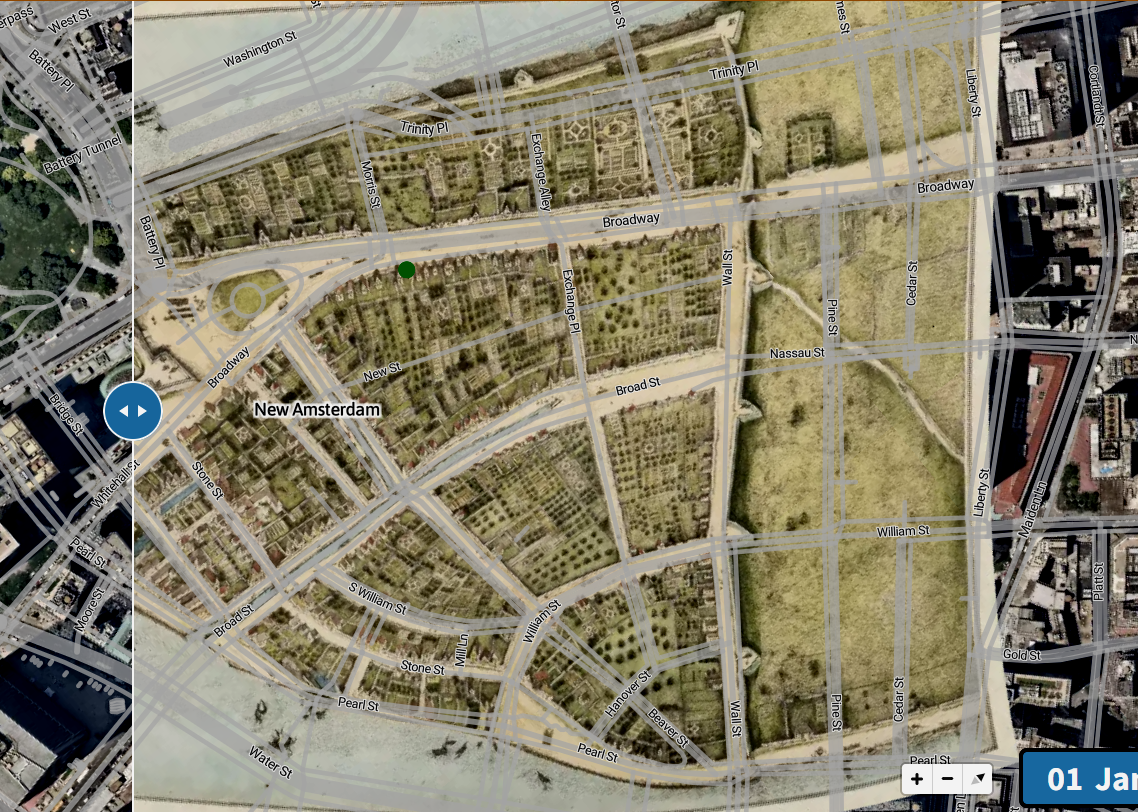
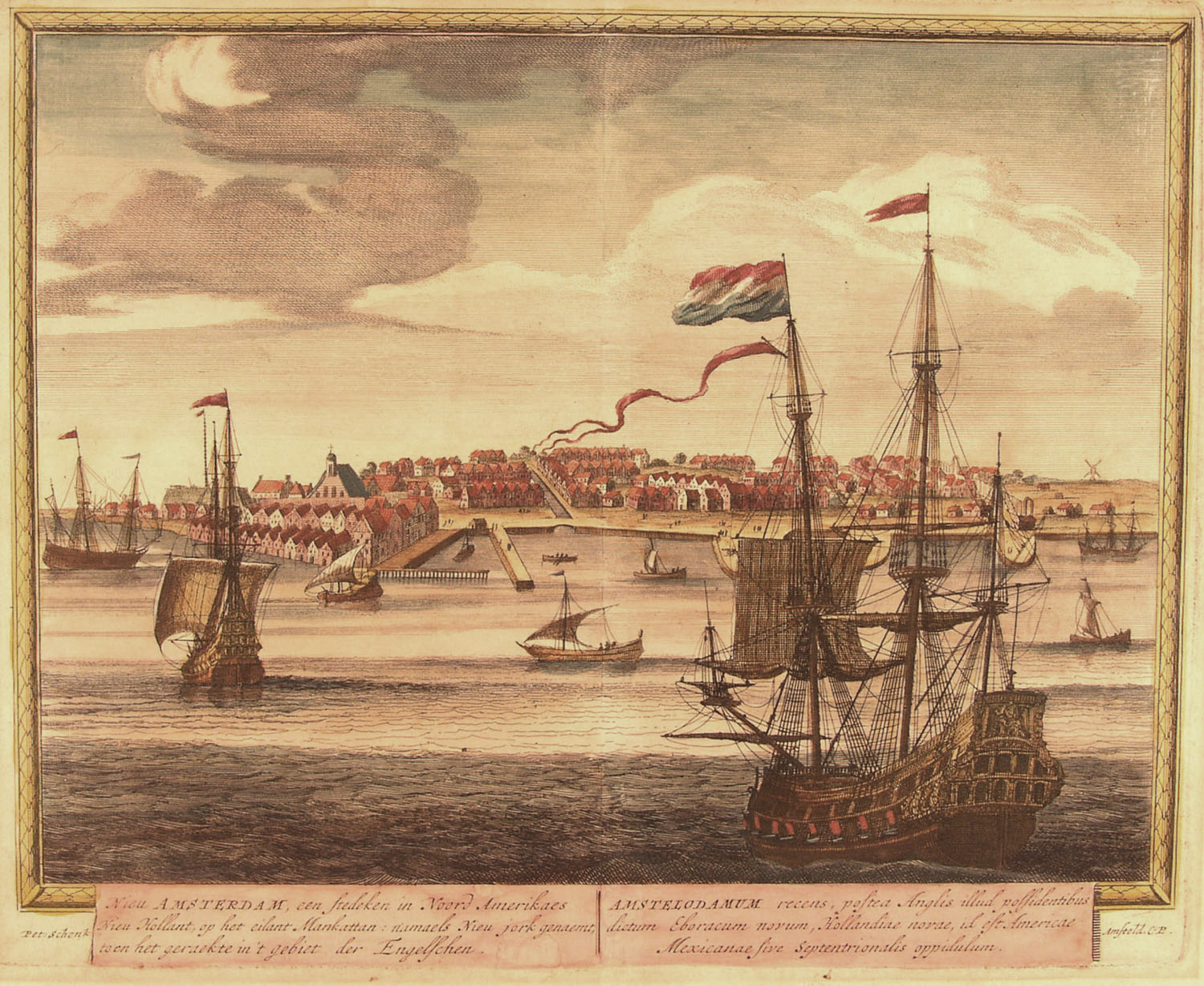

What were Their Homes Like?
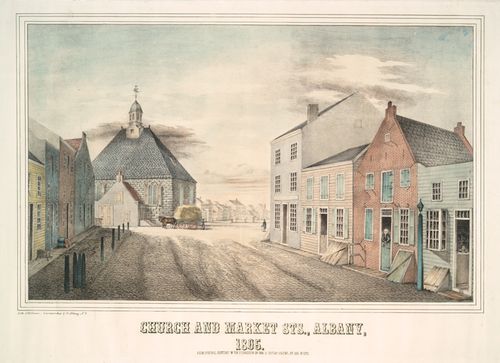
Church and Market Streets in Albany. James Eights’s drawing of Albany, NY in 1805 shows that—more than a century after the end of Dutch rule—the city still retained its Dutch character. Notice the split doors. You can see 17th century gables atop some of the houses. The Dutch Reformed Church sits at the end of the street.
The first colonists lived in square pits, like cellars, that were covered with wood and bark. These simple shelters protected them from the elements until they could build basic cottages. Once New Netherland became more established, colonists built better wooden and later stone and brick houses.
Dutch homes were different from the English homes of the same era. Dutch homes had one or two rooms on the first floor, a smaller upper garret for storage, and many times a clock loft overhead. The outside doors of their houses were split horizontally. These split doors allowed the Dutch colonists to open the upper section to let fresh air in, while keeping the lower section closed. The style of door kept unwanted animals out of the house and prevented little children from running outside without their mothers knowing.
In Dutch homes, people slept in bedstede or bed boxes, which could be closed up from the inside to protect sleepers from the cold night air. Many Dutch homes had a piece of furniture called a kast in them. This was a large chest for storing linens.
By the 1660s, the streets of New Amsterdam and Beverwijck were increasingly filled with rows of stone and brick houses with tiled roofs.
What did they do?
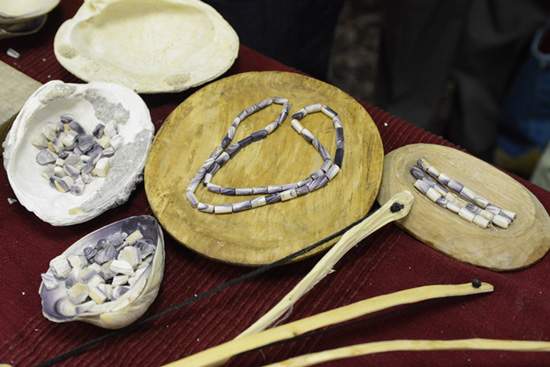
Wampum
Known as wampum or sewant, these shell beads were so highly valued by Indians that they took the place of currency. Rather than silver coins, the Dutch purchased goods and land with these beads or with beaver pelts. To learn more, watch this video of Arthur Kirmss, who makes wampum using 17th century techniques and tools.
Many of the people who lived in New Netherland were involved in the fur trade with the Indians, particularly the Mohawks. Beaver pelts and other skins were shipped across the Atlantic Ocean to make felt hats and fur coats for Europeans. But not all colonists were traders, and many traders did other work. Most were farmers; others were bakers, shipbuilders, millers, shopkeepers, tailors, brewers, butchers, carpenters, wheelwrights, blacksmiths, coopers, and school teachers. But almost everyone traded in furs.
The colonists of New Netherland rarely used coins to buy goods and services. Instead they paid with furs or with shell beads, called wampum or sewant. These beads also served a ceremonial and decorative function among Indians.
What did they eat?
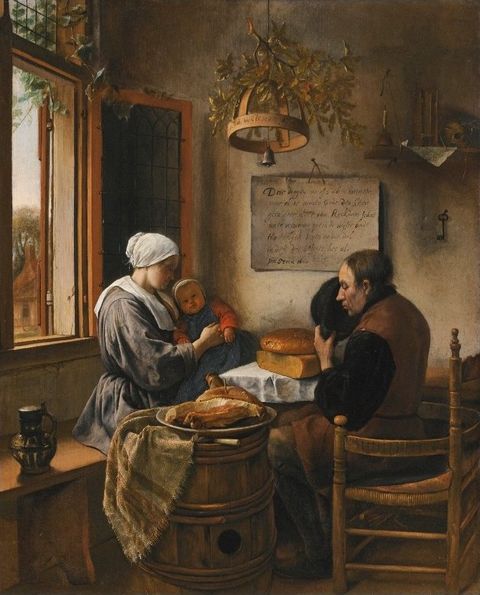
The Prayer before the Meal, by Dutch painter Jan Steen, 1660. A well-fed Dutch family sits down for a meal of bread with ham and cheese. The pitcher on the bench probably holds beer.
Most Dutch settlers brought seeds–for grains, greens, vegetables, and fruit trees and bushes–with them. They also owned European livestock–such as cows, horses, sheep, goats, and pigs. Much of what the settlers ate was what they had eaten back in Europe. But living in North America, they learned from the Indians to add new foods to their diet–particularly corn and squash.
Bread was always the settlers’ main food stuff. Breakfast might consist of bread with butter or cheese. In the middle of the day, as part of their main meal, settlers might enjoy smoked or salted meat, or perhaps a bowl of stew, with their bread. The evening meal was likely porridge–with bread, of course.
The type of bread colonists ate reflected their wealth and status. For example, a worker’s family typically consumed coarse wheat or rye bread. A wealthier family might eat only the more refined white bread.
In addition to bread, Dutch settlers ate sapaen, a cornmeal mush (much like polenta) that they often mixed with milk. Indians taught them how to make this dish.
Indians also ate bread. Before the Dutch, wheat was unknown to the Indians, but they quickly learned to enjoy bread, pretzels, and cookies. In fact, these goods were so popular among Indians that the colony’s government passed laws to limit trade between Indians and bakers during times when grains were scarce.
With their bread, Dutch settlers–even children–most often drank weak beer. Beer was safer to drink than water, because the brewing process killed contaminants.