

The Essays of A.J.F. van Laer
Annals of New Netherland
The Essays of A. J. F. van Laer
Edited and annotated by Dr.Charles T. Gehring
Director, New Netherland Project
This publication is made possible by the Consulate General of the Netherlands in New York
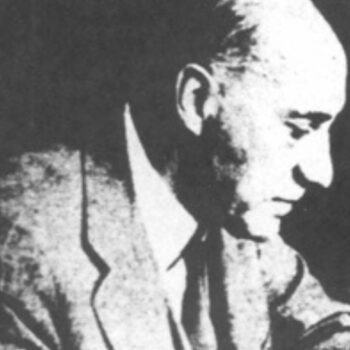
A. J. F. van Laer is now best known for his translations of the Colonial Manuscripts—work completed before the disastrous State Library fire of 1911. The first four volumes of the New York Historical Manuscript series, now called the New Netherland Documents, still stand as exemplary translations of seventeenth-century Dutch. Van Laer accomplished this work during his tenure as Keeper of Manuscripts at the New York State Library.
Following the fire, however, Van Laer suspended his work on the archival records of the Dutch colony of New Netherland. The trauma of witnessing the destruction of more than two million books, along with damage to the Colonial Manuscripts, seemed to diminish his drive to provide historians with reliable translations. Nearly a decade would pass before he would take up the translator’s pen again.
Plans to celebrate the 350th anniversary of the construction of Fort Orange in 1924 did not generate the same level of excitement as the 1909 Fulton-Hudson celebration. That earlier event had even inspired the Dutch to construct a replica of the Halve Maen to participate in the festivities. Although no replica of the fort was built, the anniversary nonetheless inspired Van Laer to resume his work on New Netherland. It prompted his translation and publication of the Court Minutes of Fort Orange in two volumes, as well as the Court Minutes of Albany, Rensselaerswyck, and Schenectady in three volumes. In addition to these scholarly publications, Van Laer was also moved to write a series of essays about New Netherland’s history for distribution to secondary schools throughout New York.
The ten essays were originally published in The University of the State of New York, Bulletin to the Schools, Volume 10, 1923–24. The Bulletin, issued monthly during the school year by the State Education Department, was sent without charge to all schools and educational institutions across the state. Unfortunately, such publications are ephemeral. Even the New York State Library does not possess a complete run of the Bulletin, which began in 1914. It was purely by chance that the present translator stumbled across these concise and well-written pieces.
The republication of these essays marks the beginning of a new series intended to present the public with instructive yet engaging content about our Dutch heritage. Van Laer’s essays are especially fitting for this role, as they concisely introduce readers to the background of the West India Company and its colony, which launched the Dutch experience in America.
This publication owes its existence to the Consulate General of the Netherlands in New York City. Under the direction of Consul General Bob Hiensch, the consulate developed the concept for the series and allocated funding to support its publication.
The text of the essays appears here as it did in the original Bulletin. I have used endnotes sparingly, offering clarification only where necessary to assist present-day readers.
Charles T. Gehring
New Netherland Project
Albany, New York
October 1999