


Fort Elfsborg
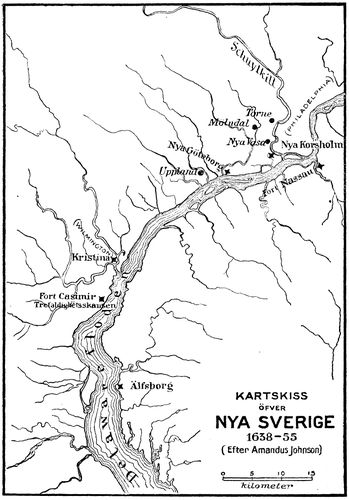
Fort Elfsorg
With the Dutch focusing their attention on the central part of their North American territory-the Hudson River-the Swedes made a surprise incursion into New Netherland in 1638, when they established their shortlived colony of New Sweden along the banks of the South (Delaware) River. This set off a military chess match between the two nations over control of the region, with each side attempting to outflank the other. The prize was the fur trade with the Indians of the Delaware region. The Dutch erected Fort Nassau on the Delaware River, near the confluence of the Schuylkill, at the site of present-day Gloucester, New Jersey, as a trading and military base. The Swedes, under the wily commander Johan Printz, countered this by building their post, Fort Elfsborg, further downriver, so that Dutch ships coming up from the bay would have to get by them first. The Dutch were enraged by this act of Printz’s, reporting that “He closes the entrance of the River so that all vessels…are compelled to cast anchor…to obtain his consent…”
But Fort Elfsborg-near the present city of Salem, New Jersey, was no nirvana. That area of the river was mostly swamp, and the soldiers garrisoned there were inundated by mosquitos, so much so, wrote a commander, that “From the continued stinging and sucking of the mosquitos the people were so swollen, that they appeared as if they had been affected with some horrible disease.” “Fort Myggenborgh” (Fort Mosquito), as it was not-so-affectionately nicknamed, was eventually abandoned, the soldiers succumbing not to enemy cannonfire but bites.
- The Swedish Colonial Society Website
- In 1643, Governor Johan Printz moved the capital of New Sweden from Fort Christina to New Gothenburg, on Tinicum Island. Today, Governor Printz Park is located there. There is a small archaelogical site, picnic areas, and great views of the Delaware.