

Broadway
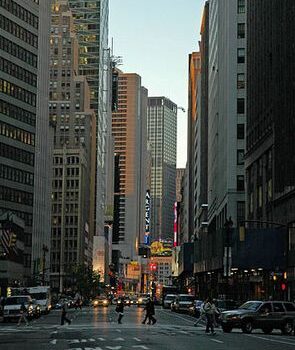
Broadway at 38th Street
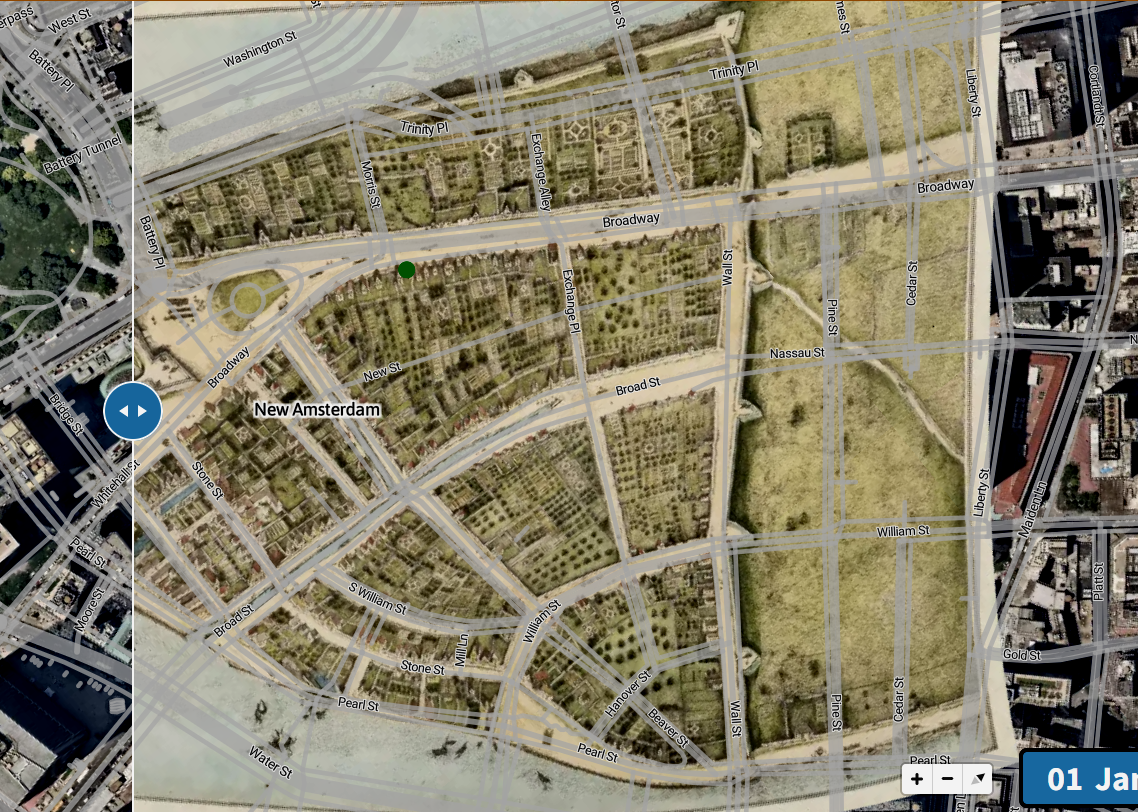
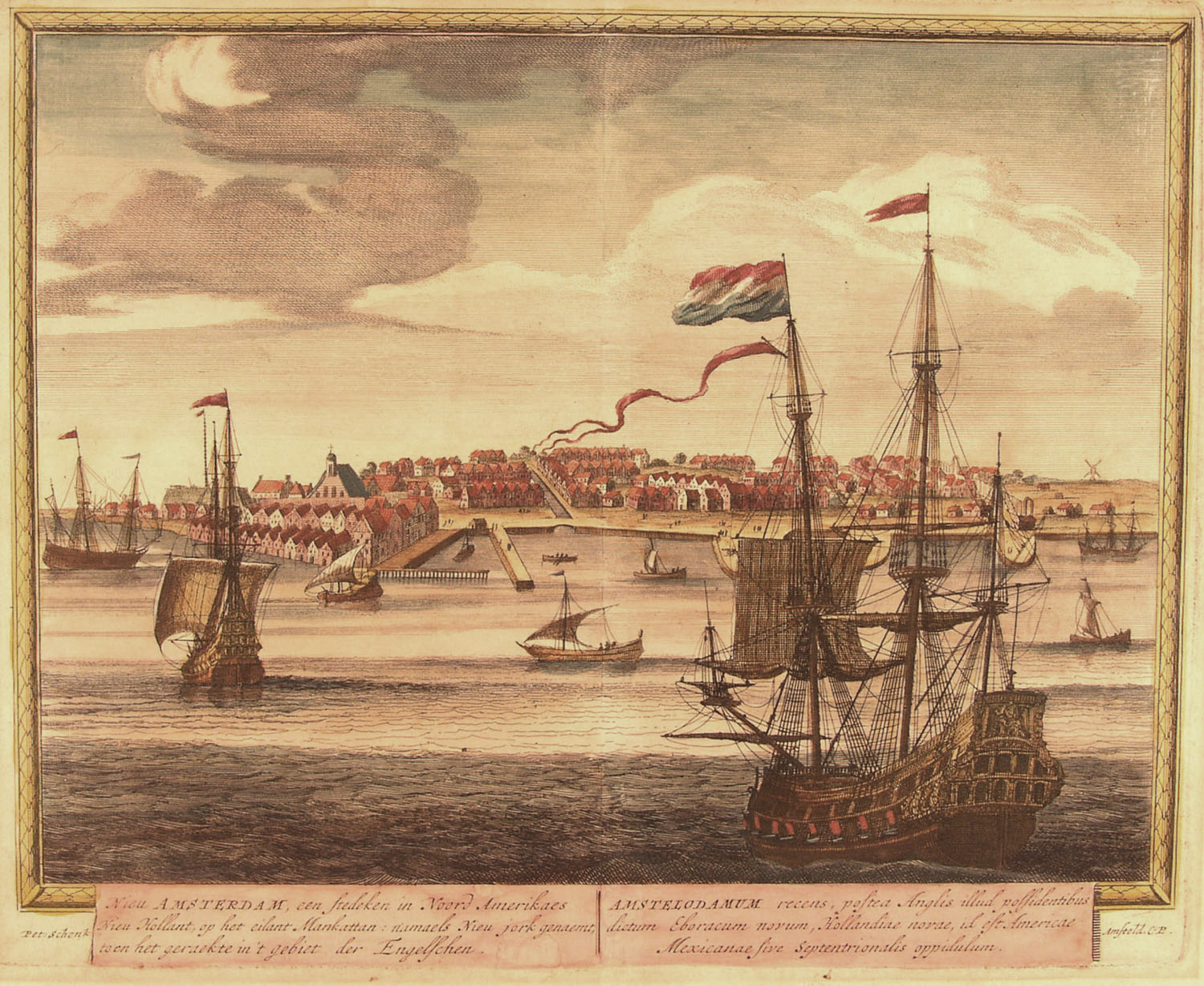
As they extended their empire around the world, the Dutch had a way of adapting local customs to their own purposes. English settlers in New England tended to follow English principles of town design in laying out their settlements. On Manhattan, as elsewhere, the Dutch made use of what had previously worked. The Indians of the region had long before carved trails through the wilderness of Manhattan Island. The principal one of these was called the Wickquasgeck Trail, after one of the Delaware-speaking tribes of the Lower Hudson region. It traversed the island from north to south, undulating as it went to skirt swamps and rocky outcrops. It was only natural that the Dutch would take this same road as their main way of getting from New Amsterdam at the southern tip to other points on the island. The Dutch explorer and entrepreneur David de Vries, in his journal for the year 1642, gives the first mention of it–“the Wickquasgeck Road over which the Indians passed daily”
The Dutch widened the southern reaches of the trail, making it into a proper road where it led straight into Fort Amsterdam. They called it de Heere Straat–the Gentlemen’s Street. Under the English it became Broadway.
But the street Broadway is not exactly synonymous with original trail, or the Dutch road. The trail more or less took the course that Broadway takes today up to about 23rd Street, but there, where Broadway cuts a steady course westward and then travels up the western side of the island, the trail that the Indians and the Dutch followed looped eastward and wound its way up the east side of Manhattan. It then cut westward across what is today the northeast corner of Central Park, and followed the line of what became St. Nicholas Avenue. Its course once again jibed with that of Broadway in the Washington Heights area of Manhattan.
Of course, today Broadway is synonymous with New York City.
- You can find everything from tickets to Broadway shows to Barbra Streisand refrigerator magnets.
- Broadway became “The Great White Way” beginning in about 1900, when vaudeville theaters opened. Read about the history of Broadway as the showplace of the world.
- The Gotham Center is the premier organization promoting the history of Broadway and the rest of New York City.