
Vlissingen (Flushing)
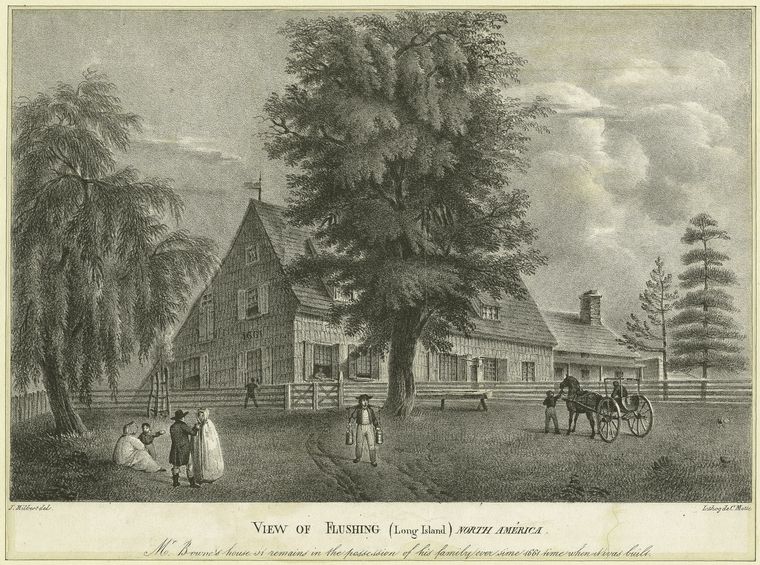
John Bowne House
Bowne House was built c. 1661 by John Bowne, who emigrated from England to Boston in 1649 and settled in Flushing, Queens, when New York was under Dutch rule.
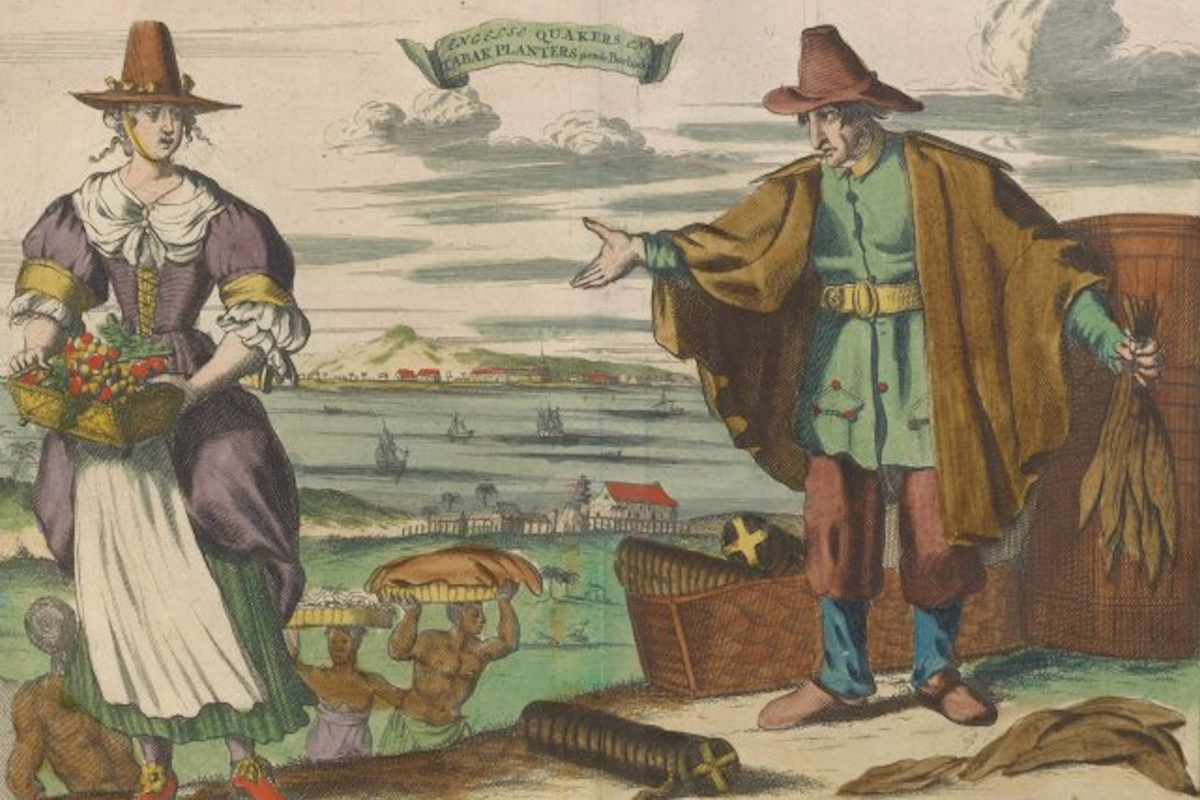
The town of Vlissingen on Long Island was named after a town in the Netherlands. It would become much better known, however, by the corrupted English form of the name: Flushing. Today it may summon images of serves and volleys-the National Tennis Center is at Flushing Meadow. But Flushing’s true contribution to history came over a confrontation in the late 1650s and early 1660s. The Dutch had allowed a group of English religious dissidents from New England to settle the town, and among its early residents was a population of Quakers. Under the West India Company rules for New Netherland, there was an official state religion–the Dutch Reformed faith–and while “freedom of conscience” was allowed to residents under the Dutch constitutional document, only Dutch Reformed congregations were permitted. The Quakers of Vlissingen, however, insisted on proclaiming their faith publicly, and Petrus Stuyvesant responded with a crackdown.
In reaction, members of the town drafted what would become one of the foundational documents in American history, the Flushing Remonstrance. The Remonstrance argued against the legitimacy of the persecution of Quakers, and it based its argument on Dutch law and the Dutch constitutional document, called the Union of Utrecht, of which the Dutch were justly proud and which stated that “each person shall remain free, especially in his religion, and that no one shall be persecuted or investigated because of their religion.”
Stuyvesant won the first round, imprisoning Vlissingen activist John Bowne for allowing Quakers to meet in his house. Ultimately, however, Bowne, and religious freedom, would prevail. Bowne took the cause to the Netherlands, where the West India Company agreed that, under Dutch law, religious freedom was guaranteed to all.
- Text of the Flushing Remonstrance.
- The John Bowne House.
- The National Tennis Center.
- 1964 World’s Fair
- Articles and photos of the 1964 World’s Fair, held at Flushing.