Translations & Transitions Govert Loockermans, a Manhattan Merchant’s Correspondence & Papers More → |
Voyages Maritime routes that shaped the Dutch North Atlantic world More → |
Zotero Bibliography Research Source: 17th century scholarly, non-fiction publications More → |
Genealogical Research What’s in a Name? Discover your ancestors’ origins More → |
Translations & Transitions Govert Loockermans, a Manhattan Merchant’s Correspondence & Papers More → |
Voyages Maritime routes that shaped the Dutch North Atlantic world More → |
Zotero Bibliography Research Source: 17th century scholarly, non-fiction publications More → |
Genealogical Research What’s in a Name? Discover your ancestors’ origins More → |
Henry Hudson sails into New York Harbor and up the Hudson River, claiming the land for the Dutch.
The Dutch establish Fort Nassau, their first fur trading post, in the present-day Port of Albany. It is flooded out 3 years later.
The Dutch build Fort Orange near where Fort Nassau used to stand.
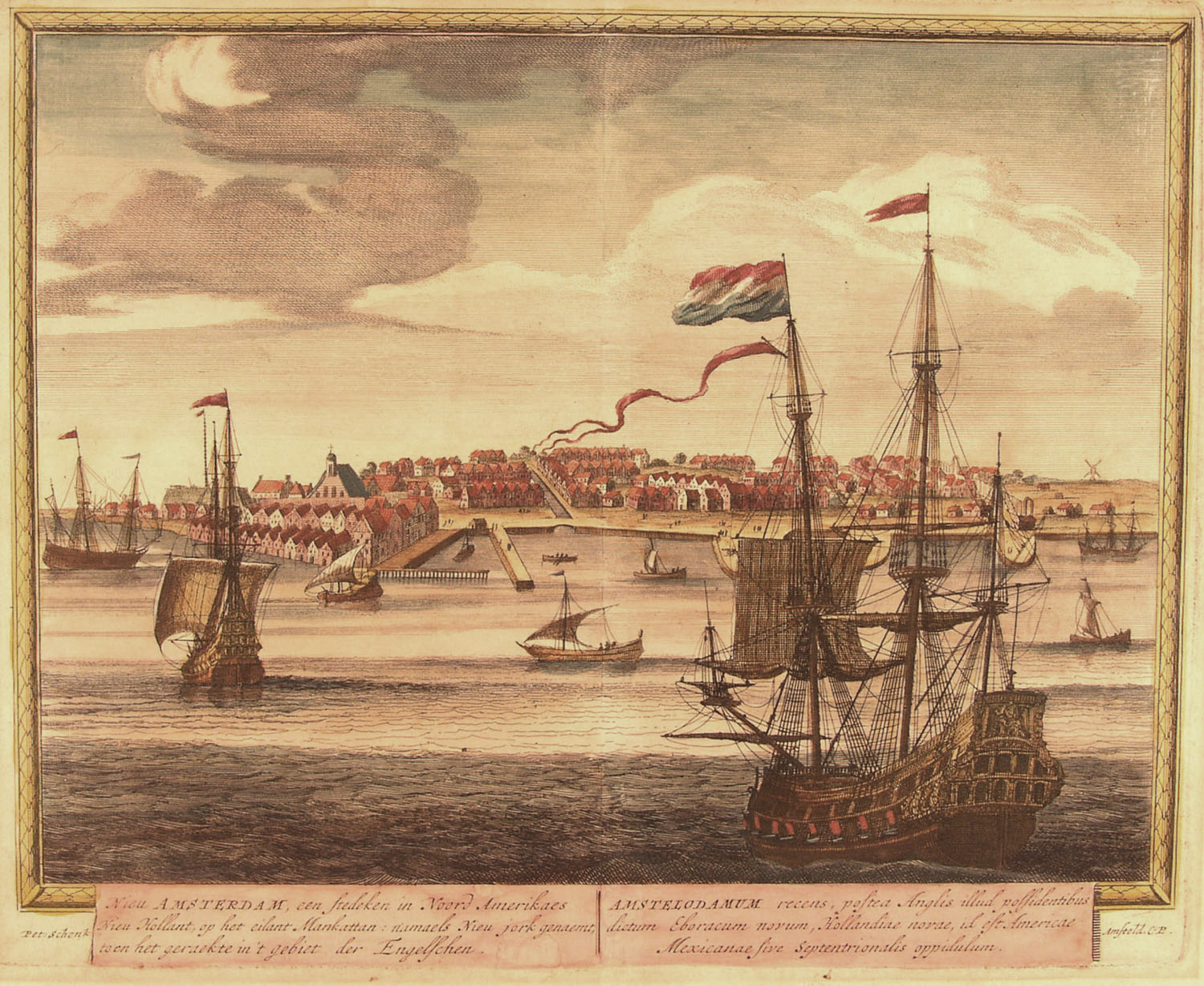
The Dutch purchase Manhattan Island from local American Indians and establish New Amsterdam. More forts follow in Connecticut, New Jersey, Pennsylvania, and Delaware.
Various patroons bring settlers to New Netherland. Kiliaen van Rensselaer settles people near Fort Orange.
Arent van Curler builds "the best farm."
The town of Beverwijck is established north of Fort Orange.
The English take New Netherland from the Dutch. New names are assigned. Beverwijck becomes Albany, New Amsterdam becomes New York.
GOING DUTCH
We use cookies to enhance your experience on our site. By continuing, you agree to our use of cookies. See our privacy policy page for the details.
Welcome! You can explore everything you're looking for in the NNI library. Simply type a keyword into the search bar and press Enter to begin your search.
Sign in to access exclusive features and keep track of your favorite content on NNI!
New membership are not allowed.
For over three decades, NNI has helped cast light on America's Dutch roots. In 2010, it partnered with the New York State Office of Cultural Education to establish the New Netherland Research Center, with matching funds from the State of the Netherlands. NNI is registered as a 501(c)(3) non-profit organization. Contributions are tax-deductible to the extent permitted by law.