
Further Reading – Women and the Law
Maria Jansz’s cases appear in the Fort Orange Court Minutes. See Charles T. Gehring, trans., Fort Orange Court Minutes, 1652-1660, New Netherland Document Series Vol. XVI, Pt. 2 (Syracuse, NY: Syracuse University Press, 1990), 154, 161, 166, 176-177, 192, and 194.
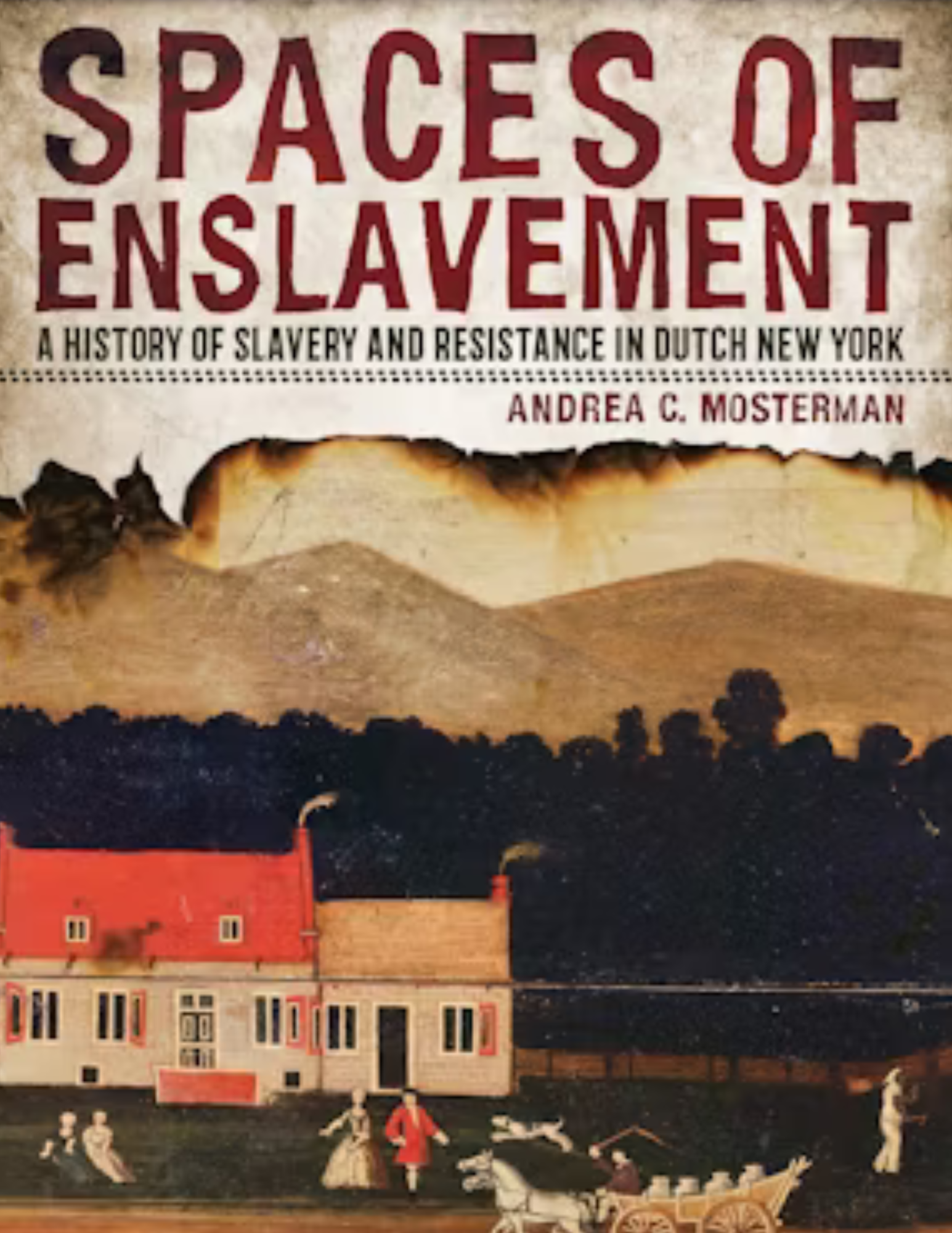
For Further Reading
Aileen Button Agnew. “Silent Partners: The Economic Life of Women on the Frontier of Colonial New York.” Ph.D. diss., University of New Hampshire, 1998.
Linda Biemer. Women and Property in Colonial New York: The Transition from Dutch to English Law, 1643-1727. Ann Arbor: University of Michigan Press, 1983.
Cornelia Hughes Dayton. Women Before the Bar: Gender, Law, and Society in Connecticut, 1639-1789. Chapel Hill: University of North Carolina Press for the Omohundro Institute of Early American History and Culture, 1995.
Susanah Shaw Romney. New Netherland Connections: Intimate Networks and Atlantic Ties in Seventeenth-Century America. Chapel Hill: University of North Carolina Press for the Omohundro Institute of Early American History and Culture, 2014.
Janny Venema. Beverwijck: A Dutch Village on the American Frontier. Hilversum, The Netherlands and Albany, NY: Uitgeverij Verloren and SUNY Press, 2003.
Serena Zabin. “Women’s Trading Networks and Dangerous Economies in Eighteenth-Century New York City.” Early American Studies 4, no. 2 (Fall 2006): 291-321.