Now Reading:

Guide to Seventeenth Century Dutch Coins, Weights and Measures
Font Selector
Sans Serif
Serif
Font Size
A
A
You can change the font size of the content.
Share Page

Exploring Dutch Heritage Through Research 

Exploring Dutch Heritage Through Research 

Guide to Seventeenth Century Dutch Coins, Weights and Measures

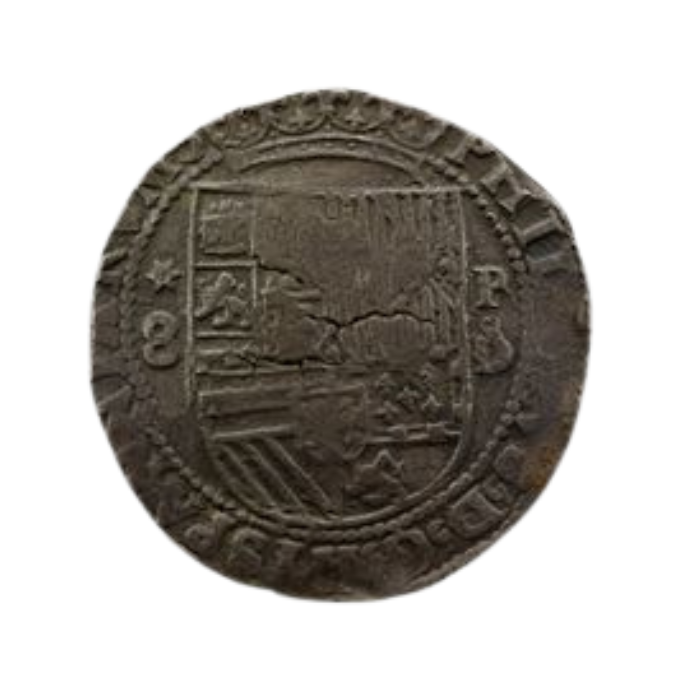
Piece of Eight – The Spanish dollar or “piece of eight” became an international currency in the 16th century as the volume of international trade exploded.
more
Image courtesy of The British Museum.
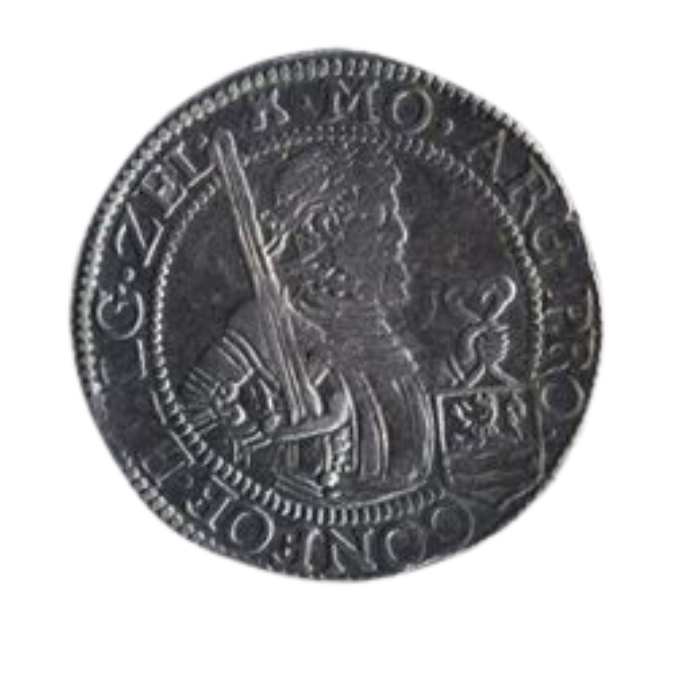
The Rijksdaalder (Dutch, “national dollar”), known in the colonies as the “rix dollar,” was first issued by the Republic of the Seven United Netherlands in the late 16th century
more
during the Dutch Revolt. The side shown features an armored half-bust of William the Silent, hero of the revolution. Image courtesy of the Australian Numismatist Society Library.
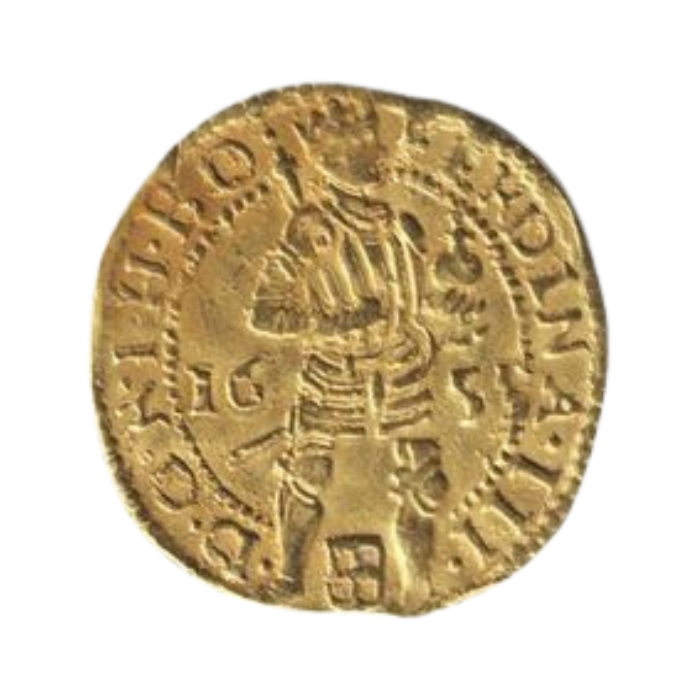
17th century Dutch schelling independence from Philip II. of Spain. Image courtesy of Australian Numismatist Society Library.
The Spanish dollar or “piece of eight” became an international currency in the 16th century as the volume of international trade exploded. Image courtesy of
The British Museum.
17th century Dutch schelling.

Numerous coins, weights, and measures are mentioned in the Dutch records, many of them undoubtedly unfamiliar to either the general reader or the historian. A list of such terms and their values was prepared by A. J. F. van Laer and included as an appendix to The Van Rensselaer Manor Bowier Manuscripts published 1909. However, in the thirty years following publication of that work, Mr. van Laer uncovered much additional information which he noted in his copy of the book. The following charts incorporate material selected both from the original list and from the annotations. It should be noted that there were no universal standards in the seventeenth century, as is evident from several of the following terms for which Mr. van Laer cites numerous variations in value.

Coins

Coin Value Equivalent
Penning 1/16 stuiver
Denier 1/12 stuiver
Oortje / Oortie 2 duiten, 1/4 stuiver
Duit 1/8 stuiver
Groot 1/2 stuiver
Stuiver / Stuyver / Stiver 1/20 guilder
Brabantse stuiver 24 pennings
Stooter 5 groots
Real 1/8 piece‑of‑eight; 6 stuivers; 1 schelling
Schelling 6 stuivers or 12 groots or 1 real
Pond Hollands 15 stuivers
Guilder / Florin 20 stuivers or 40 groots
Carolus Guilder 1½ guilders
Daelder 1½ guilders
Rijksdaelder / Rixdollar 2½ guilders
Piece‑of‑Eight 2.4 guilders or 48 stuivers or 8 reals or 8 schellings
Pond Vlaamsch, pond groot, "Flemish pound" 6 guilders or 20 schellings; 1 York pound
Ducaton 3 guilders plus 3 stuivers

Unit Equivalent
Amsterdam ons - (Pond (Pound) 1.085 ounces avoirdupois - (1 pond = 494.09 grams)
Amsterdam pond - (Ons (Ounce) 1 pound, 1.36 ounces avoirdupois - (1 ons = 1/16 pond = 30.88 grams)
Last 4000 pounds

Original Term (English translation) Equivalent
Rhinelandse duim - (Rhineland inch) 1.03 inches or 0.026 meters
Amsterdamse duim - (Amsterdam inch) 1.013 inches
Rhinelandse voet - (Rhineland foot) 12 duimen, 12.36 inches, or 0.3139 meters
Amsterdamse voet - (Amsterdam foot) 11 duimen or 11.143 inches
ell - (ell) 27 inches
vadem - (fathom) 6 feet
Rhinelandse roede - (Rhineland rod) 12 voeten, 12.36 feet, or 3.7674 meters
Amsterdamse roede - (Amsterdam rod) 13 voeten, 12.071 feet, or 3.6807 meters
uurgaans, zeemijl - (hour's walk, nautical mile) 1/20 degree; 3 nautical miles; 18,261 feet; 1,500 Rhineland rods; 5555 meters
Van Laer quotes one source which gives the Holland mile as 5.556 kilometers and the uurgaans as 5.651 kilometers. He also mentions an old Dutch mile of 5358 meters.
geographische mijl - (geographic mile) 1/15 degree; 4 nautical miles; 4.611 Statute miles; 24,348 feet
Van Laer cites from various sources figures in meters of 7420, 7407.41, and "about 7407."

Original Term (English translation) Equivalent
Rhinelandse morgen - (Rhineland morgen) 600 square roeden; 2.103 acres
Amsterdamse morgen - (Amsterdam morgen) 600 square roeden; 2.069 acres
schepel - (schepel) The land that can be sown with a schepel of rye.
mudde - (mudde) In the western part of Drenthe the word mudde is used as a square measure of land, equaling 212 and 1/4 square roeden; elsewhere, 160 square roeden.

Original Term (English translation) Equivalent
kan - (quart) quart
pot - (quart) quart
mengel, - mingel 1.266 quarts oil or wine; 1.304 quarts brandy; 1.28 quarts beer; 1.915 quarts milk
stoop 2 mengelen or 2.532 quarts wine; 1 and 13/19 mengelen or 2.15 quarts beer
viertel 6 mengelen or 1.956 gallons brandy
steekkan 16 mengelen or 5.064 gallons oil or wine; 15 mengelen or 4.89 gallons brandy; 16 mengelen or 5.12 gallons beer
anker 32 mengelen or 10.128 gallons wine; 32 kan brandy
aam/aem 120 mengelen or 37.98 gallons oil; 4 ankers, 128 mengelen, or 40.512 gallons wine
okshoofd - ("hogshead") 6 ankers, 192 mengelen, or 60.768 gallons wine
varken - ("firkin") ca. 1/4 vat
pijp - ("pipe") 1/2 vat or 2 okshoofden
vat - ("barrel") 717 mengelen or 226.93 gallons oil; 4 okshoofden, 728 mengelen, or 243.072 gallons wine; 16 mengelen or 7.66 gallons milk
smalton 31.096 gallons wine
ton - ("tun" or "barrel") 41.54 gallons beer
kwarteel 12 smaltonnen or 62.192 gallons wine

Original Term (English translation) Equivalent
mutsje 1/4 liter
schepel 0.764 bushel wheat; 1.29 bushels salt
zak 3 schepels or 2.292 bushels wheat
mudde, - mud 4 schepels or 3.056 bushels wheat
vat 4 schepels or 5.16 bushels salt
last 36 zakken, 27 mudden, or 82.512 bushels wheat; 108 schepels
last of salt 28 heaped up wheelbarrows' full
ship's last 3.72 cubic yards, 100.17 cubic feet, or 2½ tons burden
smalton 1/12 last or 6.876 bushels wheat
honderd 704.32 bushels salt
hoed, - hoet 33.25 bushels coal
spint 1/4 schepel
vim, - vinne 104 to 108 sheaves

WHAT WAS NEW NETHERLAND?


About New Netherland Institute

For over three decades, NNI has helped cast light on America's Dutch roots. In 2010, it partnered with the New York State Office of Cultural Education to establish the New Netherland Research Center, with matching funds from the State of the Netherlands. NNI is registered as a 501(c)(3) non-profit organization. Contributions are tax-deductible to the extent permitted by law.