Translations & Transitions Govert Loockermans, a Manhattan Merchant’s Correspondence & Papers More → |
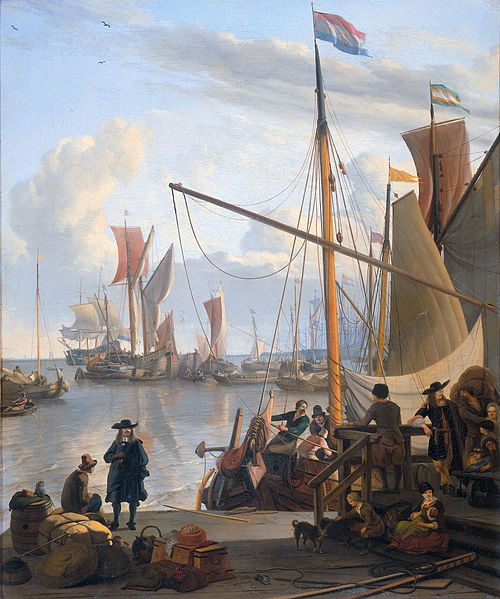
Voyages Maritime routes that shaped the Dutch North Atlantic world More → |
Zotero Bibliography Research Source: 17th century scholarly, non-fiction publications More → |
Genealogical Research What’s in a Name? Discover your ancestors’ origins More → |
Translations & Transitions Govert Loockermans, a Manhattan Merchant’s Correspondence & Papers More → |
Voyages Maritime routes that shaped the Dutch North Atlantic world More → |
Zotero Bibliography Research Source: 17th century scholarly, non-fiction publications More → |
Genealogical Research What’s in a Name? Discover your ancestors’ origins More → |
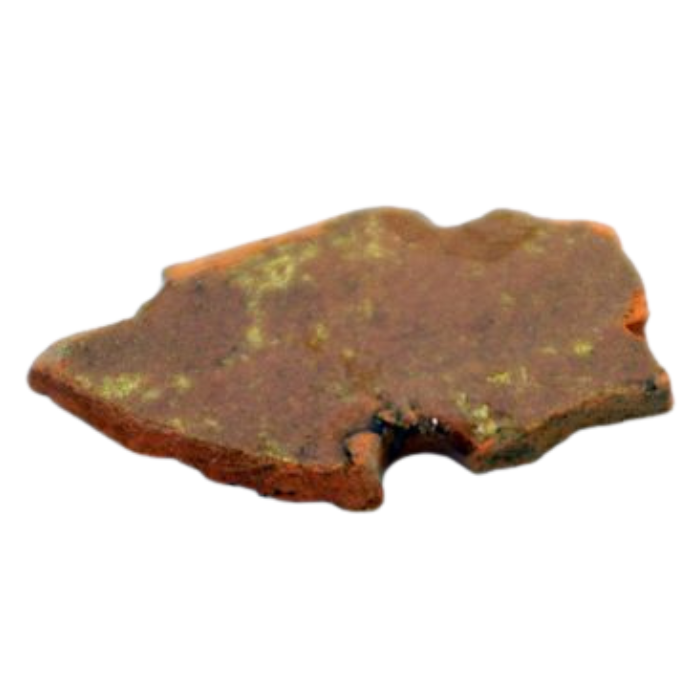
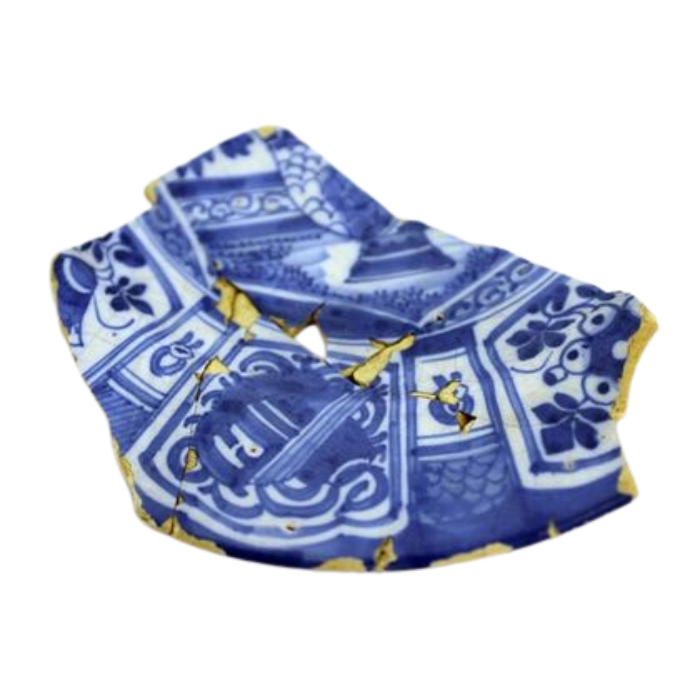
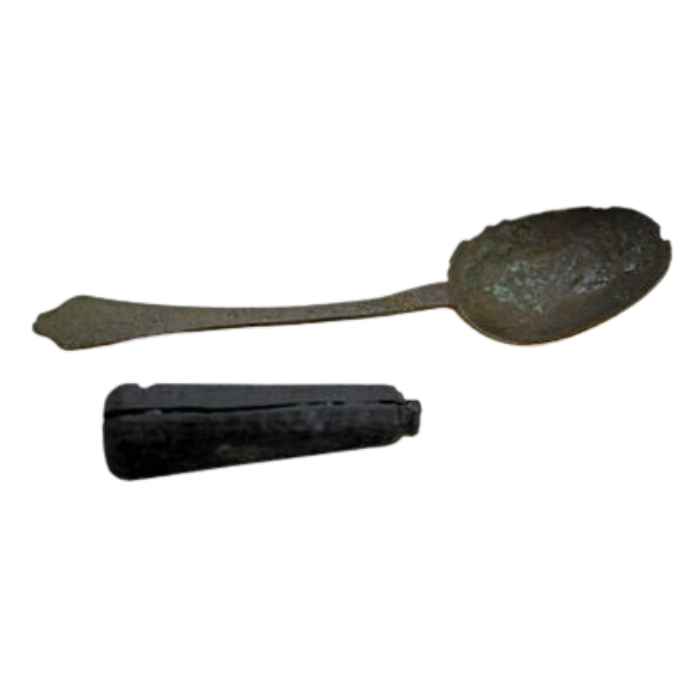
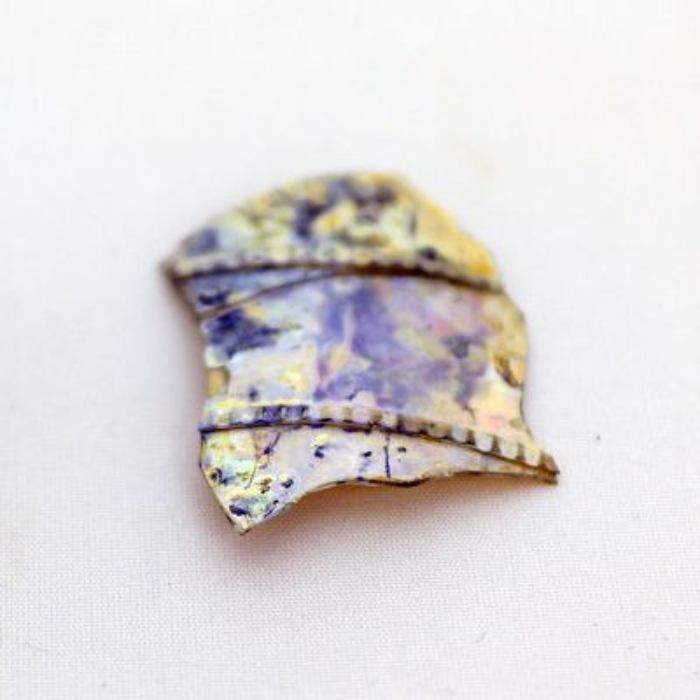
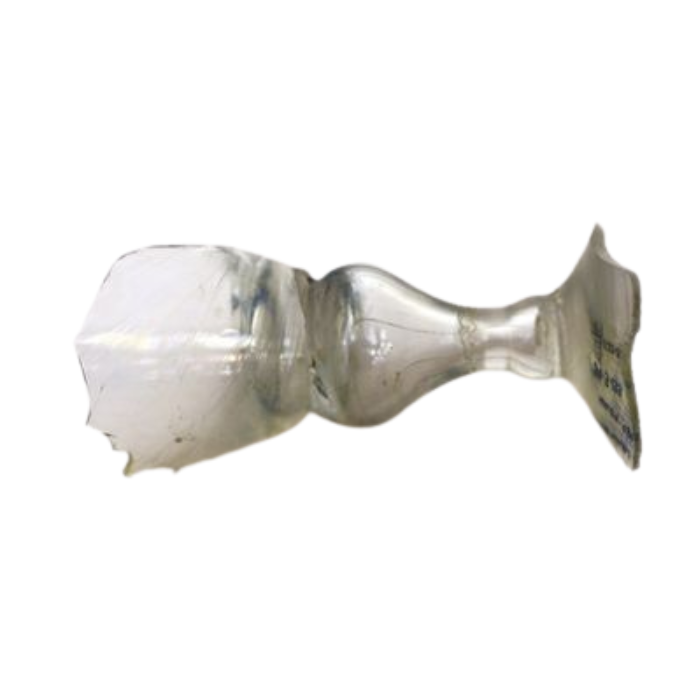
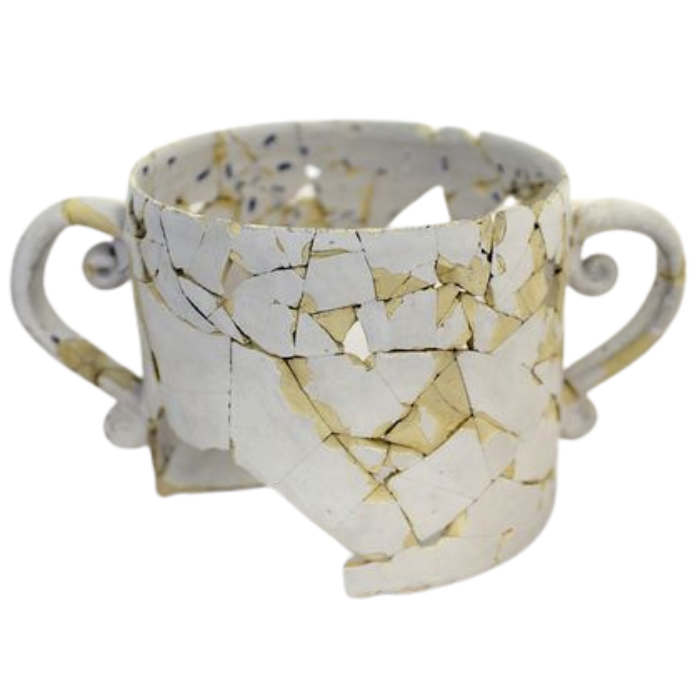
Excavations in lower Manhattan have unearthed how early settlers cooked and ate their daily repast. These excavations of lots once inhabited by the first settlers revealed the shards of cookware, tableware, bottles and drinking vessels displayed in this exhibit.
Much of the food that early settlers in New Amsterdam consumed came from gardens, fields and forests around them, but at least initially, the implements they used to prepare and eat food were brought with them or imported. Because the Dutch engaged in abundant trade with many countries, seventeenth-century settlers on the southern tip of Manhattan had access to a diverse assortment of household goods.
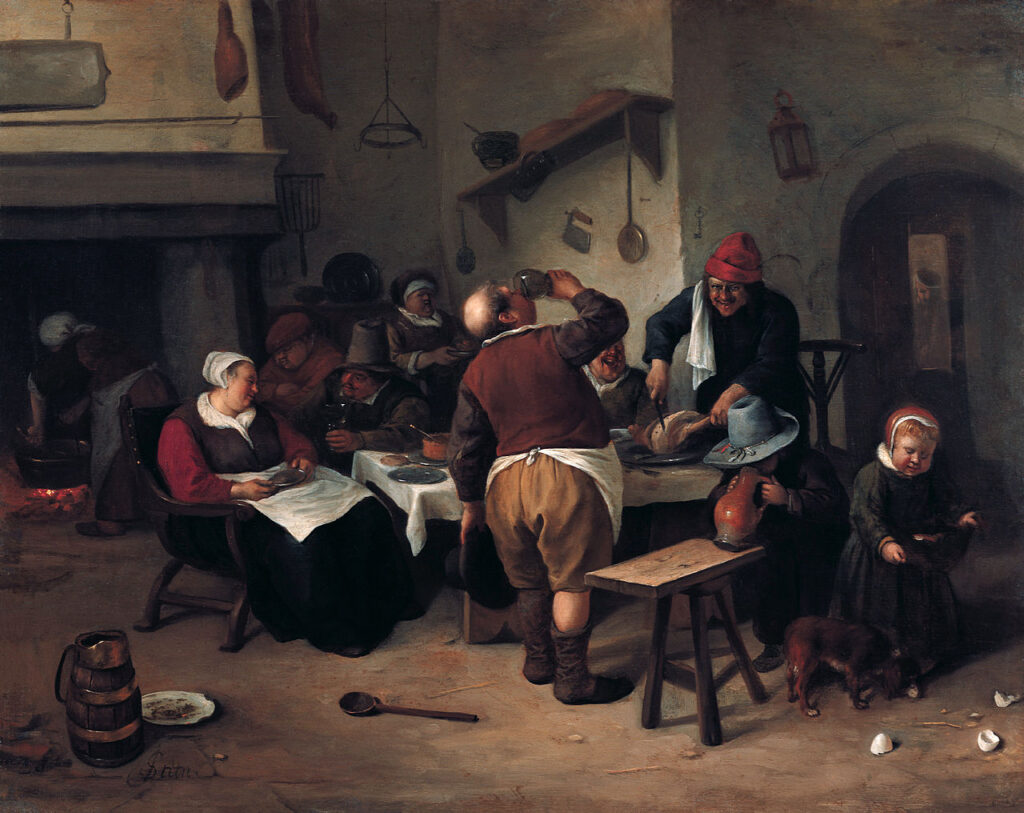
Excavations of lots once inhabited by the first settlers revealed the shards of cookware, tableware, bottles and drinking vessels displayed in this exhibit. All were in common use during this early period, and have been sourced using historical records, seventeenth-century Dutch paintings, and scientific analysis.
Exhibit Credits:
Based on “New Amsterdam Kitchen,” an exhibit of artifacts by the New York State Museum on display at the New Netherland Research Center in the New York State Library.
Online production by Steve McErleane.
Photography by Dietrich Gehring.
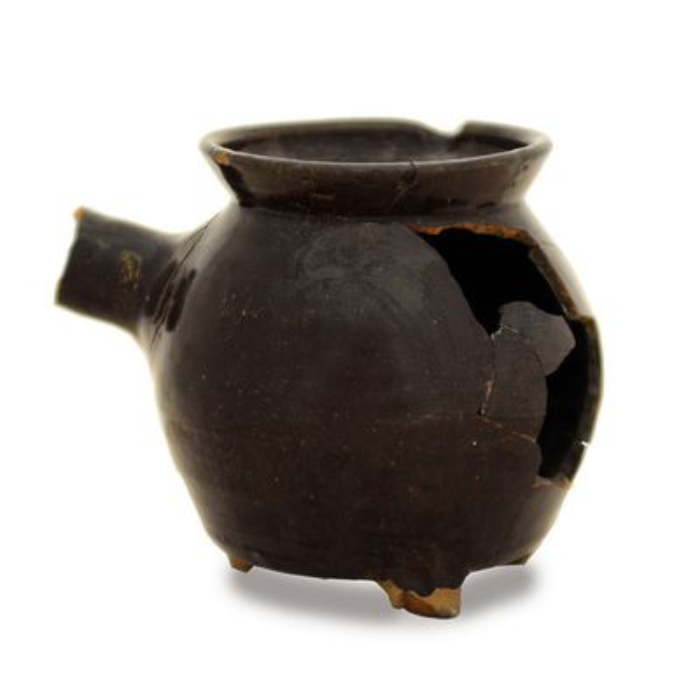
The kitchen of a typical seventeenth-century household contained not only metal pans and pots, but also earthenware vessels. For example, this three-legged redware pot (grape, in Dutch) was used to simmer food slowly over coals. The redware colander would have been used to drain fish, a popular food choice.
Delft plates, often decorated to resemble the admired Chinese porcelain Wan-li pattern, were familiar Dutch tableware. Metal spoons were the most frequently used eating utensil, and knives sported wooden or bone handles. Forks did not come into general use until the eighteenth century.
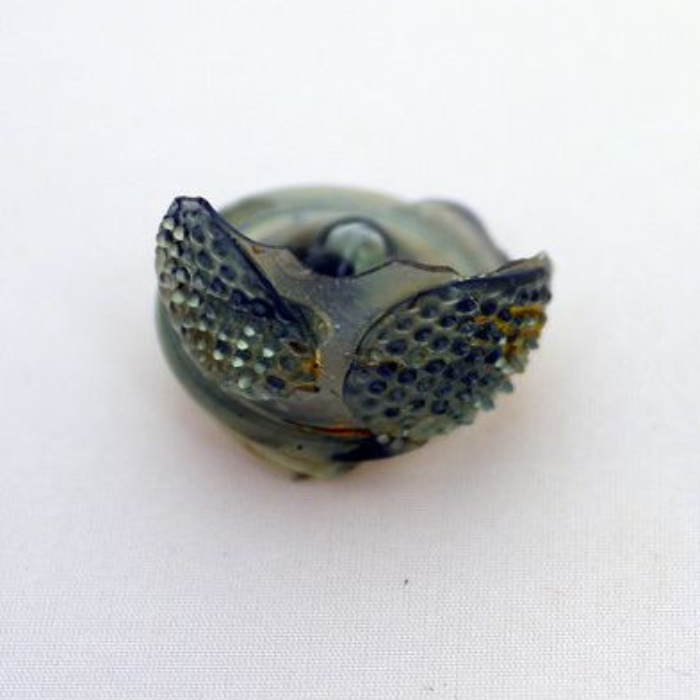
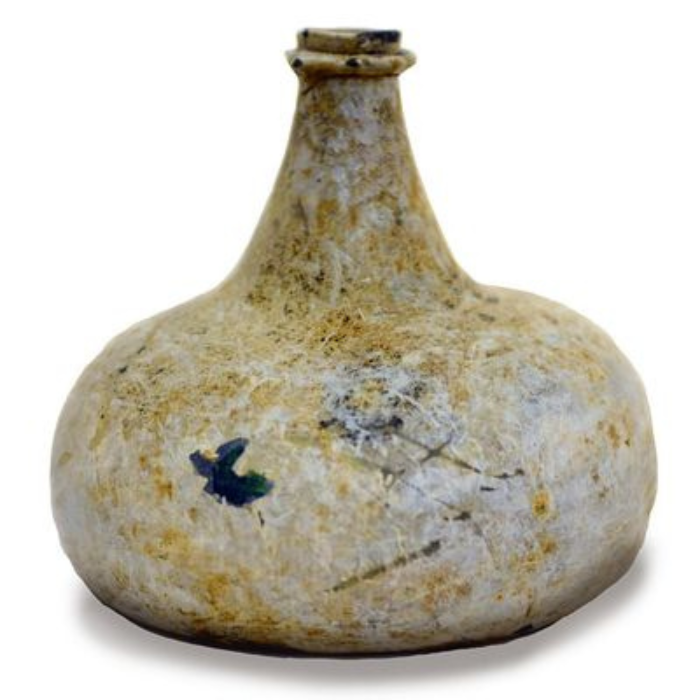
The ‘onion bottle’ (its name denotes its shape) originated in England. The contents of an onion bottle might have been served in a wineglass. They also could have filled a passglas with lines to mark the amount each person could gulp in a drinking game. Or, they might have been poured into a Roemer goblet whose raspberry prunts provided a better grip for greasy fingers. Both of the latter vessels originated in Germany.
Potters in the Rhine Valley produced a variety of gray, salt-glazed stoneware. Some from the Westerwald region were decorated with applied molding and incised designs colored in cobalt blue or manganese purple. Others, such as mottled brown Bartmann jugs and bottles, bore intriguing bearded faces.
For over three decades, NNI has helped cast light on America's Dutch roots. In 2010, it partnered with the New York State Office of Cultural Education to establish the New Netherland Research Center, with matching funds from the State of the Netherlands. NNI is registered as a 501(c)(3) non-profit organization. Contributions are tax-deductible to the extent permitted by law.
We use cookies to enhance your experience on our site. By continuing, you agree to our use of cookies. See our privacy policy page for the details.
Welcome! You can explore everything you're looking for in the NNI library. Simply type a keyword into the search bar and press Enter to begin your search.
Sign in to access exclusive features and keep track of your favorite content on NNI!
New membership are not allowed.
For over three decades, NNI has helped cast light on America's Dutch roots. In 2010, it partnered with the New York State Office of Cultural Education to establish the New Netherland Research Center, with matching funds from the State of the Netherlands. NNI is registered as a 501(c)(3) non-profit organization. Contributions are tax-deductible to the extent permitted by law.