Translations & Transitions Govert Loockermans, a Manhattan Merchant’s Correspondence & Papers More → |
Voyages Maritime routes that shaped the Dutch North Atlantic world More → |
Zotero Bibliography Research Source: 17th century scholarly, non-fiction publications More → |
Genealogical Research What’s in a Name? Discover your ancestors’ origins More → |
Translations & Transitions Govert Loockermans, a Manhattan Merchant’s Correspondence & Papers More → |
Voyages Maritime routes that shaped the Dutch North Atlantic world More → |
Zotero Bibliography Research Source: 17th century scholarly, non-fiction publications More → |
Genealogical Research What’s in a Name? Discover your ancestors’ origins More → |
PDF – Volume 11, Correspondence, 1647-1653 translation (scanned book images)
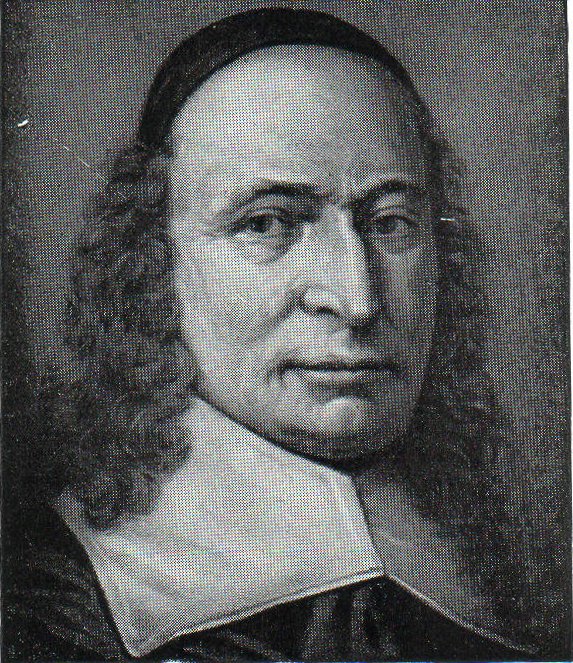
This collection of official correspondence records the first six years of Petrus Stuyvesant’s tenure as Director-General of New Netherland, replacing the disastrous Willem Kieft. Stuyvesant would serve in this position until 1664, when the English took New Netherland by force from the Dutch.
In 1647, when Stuyvesant first arrived in North America, he was forced to confront and resolve several problems inherited from his predecessor. To the north, British settlers occupied most of the land claimed by the Dutch along the Connecticut River. To the south, Swedish settlers challenged the Dutch claim to land along the Delaware River, setting up a rival trading post under the leadership of Peter Minuit, a former director of New Netherland. Closer to home in present-day Albany, Stuyvesant found himself in a land and leadership dispute with Brant van Slichtenhorst, director of the Van Rensselaer family’s patroonship.
This is the eleventh volume of the Dutch Colonial Manuscripts at the New York State Archives and the first of five volumes in the series Correspodence. In the 19th century, E. B. O’Callaghan reorganized the original 49 record books of New Netherland into this series based on document type and time period. These documents were translated by Charles Gehring and published in 2000 as Volume XI in the New Netherland Documents Series.

Petrus Stuyvesant was born in Weststellingwerf, Friesland in 1610 the son of a Reformed domine. He entered the service of the WIC at the age of twenty-five after attending the University of Franeker. His first assignments were as commissary of stores on the rat-infested island Fernando de Noronha in the South Atlantic and at Pernambuco in Dutch Brazil. A transfer to the island of Curacao off the coast of Venezuela in 1639 led to his appointment as governor of the Dutch possessions in the Caribbean less than three years later. Stuyvesant's rapid rise in the Company's service reflected high regard for his administrative and military abilities. He executed his new responsibilities with considerable energy and ingenuity. -- An excerpt from the editor's introduction.

WHAT WAS NEW NETHERLAND?
We use cookies to enhance your experience on our site. By continuing, you agree to our use of cookies. See our privacy policy page for the details.
Welcome! You can explore everything you're looking for in the NNI library. Simply type a keyword into the search bar and press Enter to begin your search.
Sign in to access exclusive features and keep track of your favorite content on NNI!
New membership are not allowed.
For over three decades, NNI has helped cast light on America's Dutch roots. In 2010, it partnered with the New York State Office of Cultural Education to establish the New Netherland Research Center, with matching funds from the State of the Netherlands. NNI is registered as a 501(c)(3) non-profit organization. Contributions are tax-deductible to the extent permitted by law.