

Podcast: “Episode 457: How Sint Eustatius Supplied the American Revolution”

Episode 457: How Sint Eustatius Supplied the American Revolution
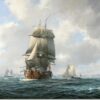
When the Continental Navy Brig Andrew Doria fired a cannon salute in the harbor of Sint Eustatius on November 16, 1776, the officials at the Dutch fort returned it.
That returned salute, known as The First Salute, stands as the first international recognition of the United States as an independent nation. Sint Eustatius, often spelled as St. Eustatius and known locally as Statia, became known as the “Golden Rock” and was one of the most important supply lines of the American Revolution.
Josh Perelman and Laura Arnold Leibman investigate the history of Sint Eustatius, how the island’s Jewish merchants helped supply the Revolution, and what supporting American independence cost them.
With support from

This episode was made possible with support from the New Netherland Institute and Dutch Culture USA, a program of the Kingdom of the Netherlands in the United States, to mark America 250.
Episode Summary
In your opinion, what might have happened if Sint Eustatius Governor Johannes de Graaff had refused to return the Andrew Doria salute on November 16, 1776? Or, as a two parter, what if Admiral Rodney had sailed north in the spring of 1781, instead of staying until July to collect Statia’s wealth? How do you think the American Revolution would have turned out differently?
Josh Perelman is the curator of The First Salute: An Untold Story of the American Revolution and a senior adviser at the Weitzman National Museum of American Jewish History in Philadelphia.

Laura Arnold Leibman is a professor of American Jewish studies at Princeton University, a historian of Jewish life in the early Atlantic world and the Caribbean, and a consultant on The First Salute exhibition. Her books include Once We Were Slaves: The Extraordinary Journey of a Multiracial Jewish Family.

Together, Josh and Laura guide us through the history of Sint Eustatius and its involvement in the American Revolution.
During our conversation, Josh and Laura reveal:
- How Jewish merchant networks across Atlantic port towns made the island a supply line for American revolutionaries
- How Dutch support for the Revolution helped draw the Dutch Republic into war with Great Britain
- How British Admiral George Brydges Rodney’s 1781 invasion of Sint Eustatius and long stay there inadvertently helped Franco-American forces defeat the British at Yorktown
What You’ll Discover
- The First Salute exhibition at the Weitzman National Museum of American Jewish History
- The Dutch Atlantic World
- The Dutch Caribbean colonies and their trade
- Sint Eustatius’ location and role in the Dutch Atlantic economy
- The people of Sint Eustatius
- The “Golden Rock” and its harbor
- Jewish merchant and family networks across the Atlanta World
- Jewish refugees, widows, and midwives on Sint Eustatius
- The Inquisition and the Sephardic migration to the Americas
- Trade between Sint Eustatius and British North America
- Why Sint Eustatius supported the American Revolution
- The First Salute of November 16, 1776
- Admiral George Bridges Rodney’s invasion of Sint Eustatius
- The Battle of the Chesapeake Capes and the Siege of Yorktown
- The fate of Sint Eustatius’ Jewish community after the American Revolution